Eclipse Ransomware Claims Irish Firm Realta
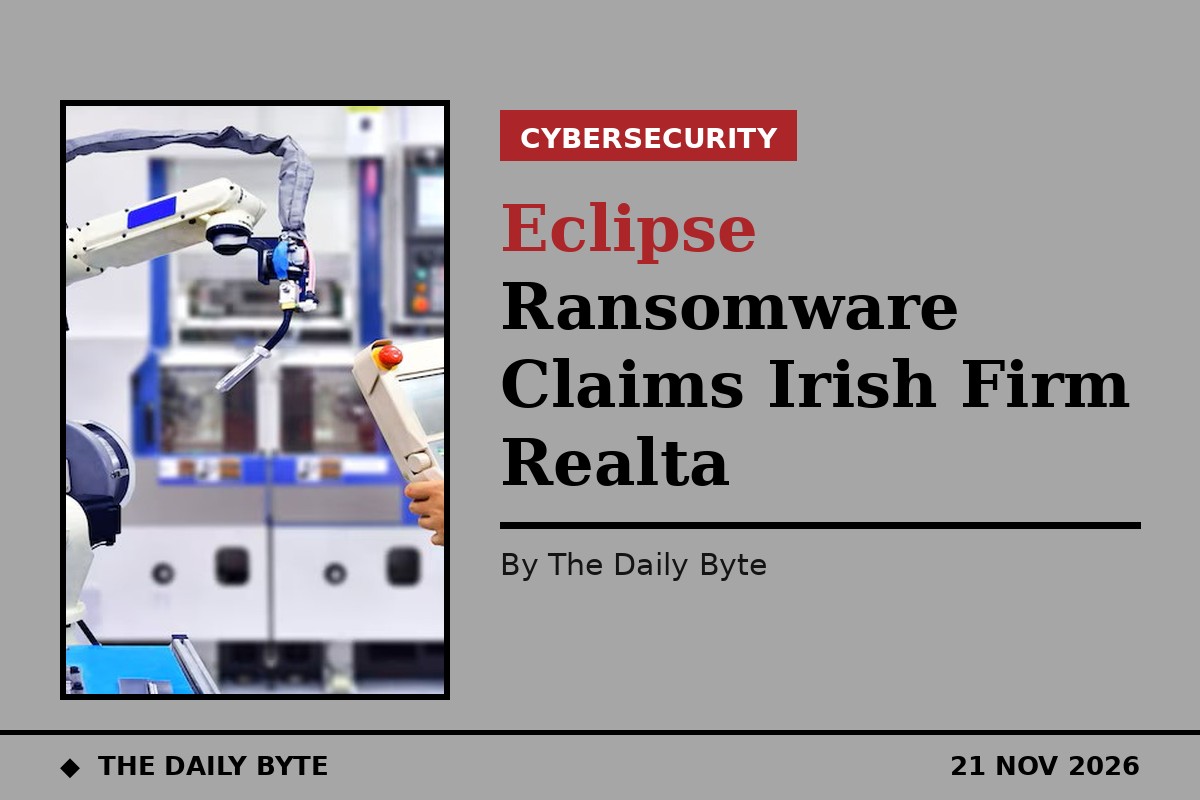
The Eclipse ransomware group has listed Irish automation and digital systems integrator Realta Technologies on its leak site, in a claim first recorded on Saturday 21 November. The claim has not been independently verified, and no evidence of a breach has been published alongside it.
The ransomware.live tracker records the listing as discovered at 06:51 UTC on 21 November, with the same day given as the estimated attack date. Realta Technologies, based in Ireland, describes itself as a global automation and digital system integrator, and threat trackers place the company in the technology sector.
Beyond the listing itself, the trackers record very little. No attack method has been disclosed, no volume of allegedly stolen data has been stated, no ransom demand or deadline has been published, and nothing has been said about whether the company's systems are disrupted. The tracker also notes an exposure report showing no critical passwords or cookies linked to the victim, and domain records showing the company's mail runs on Microsoft 365. Realta Technologies has not publicly confirmed the claim in the reporting seen so far.
A new group with an old playbook
Eclipse is a new name in the ransomware scene. The operation advertised itself as a ransomware-as-a-service business on an underground forum on 19 November, two days before the Realta listing appeared, seeking affiliates to run attacks on its behalf. According to threat intelligence reporting on that advertisement, the group offers separate lockers for Windows, Linux, network storage and virtualised infrastructure, claims its Windows locker is written in Rust, and says it combines ChaCha20 encryption with Kyber, the post-quantum algorithm standardised as ML-KEM.
The same reporting says Eclipse charges affiliates a 300 dollar entry fee, takes a 90/10 revenue split at first and 80/20 afterwards, and sets a minimum ransom demand of 70,000 dollars. It also says the group bars attacks on organisations in CIS countries and on non-profit organisations, and offers tools designed to disable endpoint protection to selected partners. None of those claims has been independently verified, and at the time of the advertisement no victim, data leak or ransomware sample had been publicly linked to the group.
Realta is the first victim Eclipse has publicly listed since that advertisement appeared. Cyber Threat Intelligence records 31 victims for the group in its database, a count that reflects the listings it tracks rather than confirmed intrusions.
Why an integrator is a worrying target
System integrators are sensitive targets because of the access they hold. An automation integrator builds and maintains the control systems that run factories and plants, and it often keeps remote access into its customers' operational and information technology environments so it can support them. A compromise at the integrator can therefore cascade into its clients' production networks, which is why threat analysts flag this kind of listing even when the underlying claim is unproven.
That risk is the reason the claim deserves attention rather than alarm. A leak-site listing is an assertion by the attackers, usually made to pressure a victim into paying. It is not proof that data was stolen, and it is not a finding by the company, a regulator or an independent investigator.
What to watch next
The developments that would change the picture are a statement from Realta Technologies, the publication of a data sample by the group, or further listings naming the company. Until one of those appears, the honest description is a ransomware group's claim, not a confirmed breach.
For organisations that rely on integrators, the practical lessons do not depend on whether this particular listing proves true. Third-party remote access should be reviewed and restricted, privileged accounts monitored, and backups isolated and tested, because a listing is often the first public sign of an intrusion that began days earlier.


