Ecuador floods test vote in Babahoyo before election
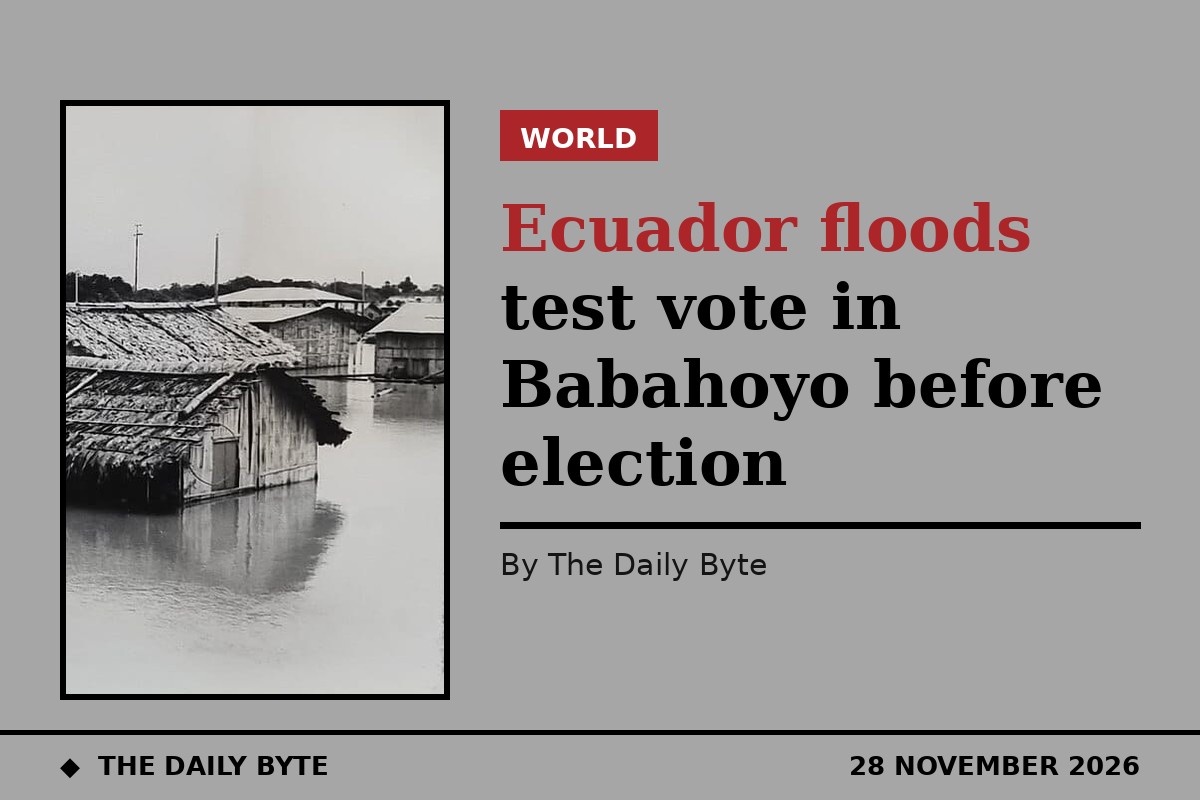
Flooding has disrupted preparations for Ecuador's local elections, with 22 polling stations already affected and 10 moved to new locations, two days before voters go to the polls on Sunday, 29 November.
As of 26 November, 22 polling stations for Ecuador's sectional elections had been affected by flooding, and 10 had already been moved to alternate locations, according to reports citing the National Electoral Council (CNE). The council said polling places could still be changed on election day itself.
The Rio Times reported that the election board twice failed to meet on 27 November to decide how voting would work in flooded Babahoyo, the river city in Los Rios province that has been hit hardest by the floods.
A vote under water
Babahoyo's emergency committee declared a 90-day state of emergency in the early hours of Monday, 23 November, after rivers burst their banks. Eight local rivers overflowed early that Monday, heavily affecting the parishes of La Union and Caracol, while rain and rising water flooded streets in Barreiro and El Salto.
Thirteen rivers were overflowing across Los Rios province on Tuesday morning, three of them in Babahoyo. The Babahoyo-Quevedo, Babahoyo-Montalvo and Babahoyo-Jujan roads were flooded, and the river washed away part of the asphalt on the road to Caracol. Schools in the city moved online.
More than 13,000 people had been affected by the rains in Los Rios province as of 23 November, according to the state risk management secretariat, with at least one temporary shelter active. By 26 November, the figure reported for the province had risen to 14,748 people affected, with Babahoyo among the hardest-hit areas and evacuations taking place as rivers overflowed.
Across Ecuador, the United Nations humanitarian agency OCHA reported that the El Nino rains had affected 93,000 people, killed 16, damaged more than 25,600 homes and affected more than 2,280 schools, in a report published on 22 November.
No quick count on Sunday
The CNE voted on Monday, 23 November, against running a quick count for Sunday's elections, which will choose local officials and seven members of the Council for Public Participation and Social Control.
The council decided that disruption from the El Nino weather could affect the statistical sampling a quick count needs. Voters will instead have to wait for the official preliminary count, with initial results expected to begin appearing in the CNE's results system between 18:00 and 18:30 on Sunday, after polls close at 17:00.
The election authority had already found the scale of the problem in a rehearsal on 15 November, when 21 polling locations in Guayas and Los Rios were identified as having flooding problems. Twenty were in Guayas and one in Los Rios. The council said at the time that it had more than 2,500 alternative spaces available nationwide.
Formal campaigning for the elections began on 12 November and ended on 26 November. Voting at home for qualifying registered voters was planned for 27 November, with general voting on Sunday.
For voters in the flooded areas, the practical step is to confirm their assigned polling location and watch for official CNE announcements about changes. The rehearsals and the relocations so far show the risks; whether every voter can still reach a ballot box on Sunday will only become clear on the day.


