Ecuador local elections test Noboa on Sunday
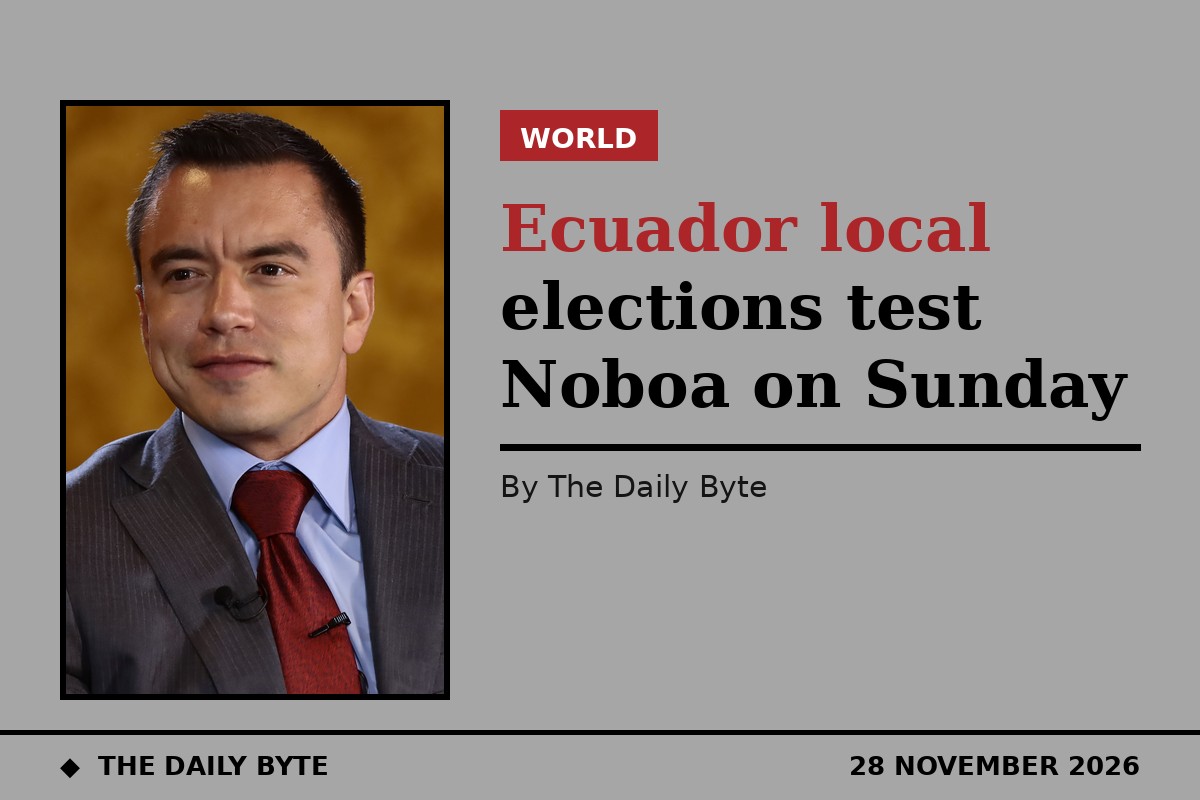
Ecuadorians vote on Sunday, 29 November, in local and regional elections that will test President Daniel Noboa's standing midway through his presidency. More than 13.8 million voters are called to choose 23 provincial prefects, 222 mayors and almost 5,500 councillors and parish board members, along with seven members of the Council for Citizen Participation and Social Control, the body that appoints senior judges and oversight officials.
The vote was brought forward from February because of the risks posed by the El Nino weather phenomenon, which has already brought heavy rain and flooding to coastal areas. Campaigns closed on Thursday after a two-week official campaign period, and electoral authorities have relocated 10 polling stations in five provinces because of flooding.
Noboa's party faces its first local test
For Noboa, the election is the first real measure of his National Democratic Action movement, known as ADN, at local level. The party is fielding local candidates for the first time, and the president took two weeks' leave from office to campaign for them across the country, touring cities including Guayaquil, the country's largest city and main port. His party is seeking to take control of major cities now held by opponents, including Quito, where Mayor Pabel Munoz is seeking re-election, and Guayaquil, where Fiorella Ycaza is standing for the movement that backs the detained former mayor Aquiles Alvarez.
The contest is taking place against a difficult backdrop. An October poll by Cedatos found that 60 per cent of Ecuadorians believe the country is on the wrong track, and about the same share said they were still undecided before polling day. Voting is mandatory for most adults, and average turnout in Ecuador is 76 per cent, rising to 81 per cent at the last local elections in 2023.
Opposition barred as mayors face arrest
The opposition faces the vote in unusual circumstances. The Citizen Revolution party of former president Rafael Correa has been suspended and barred from running, after prosecutors opened an investigation into alleged money laundering in the financing of the 2023 presidential campaign. Seven mayors have been arrested since 2025 in investigations into alleged embezzlement, illicit enrichment, money laundering or organised crime, according to the EFE news agency, and four of those detained took office with the backing of, or in alliance with, Citizen Revolution. Alvarez, the Guayaquil mayor, has been held since March in the El Encuentro maximum-security prison, a facility built on Noboa's initiative.
Noboa denies that the cases amount to political persecution, saying his government does not pursue competitors and cannot tolerate criminality. His critics argue that the elections are being held in an environment in which most institutions serve the interests of the executive. Since Noboa took office in November 2023, 28 officials and candidates have been killed, according to Latin Times, a reminder of the violence that has shaped Ecuadorian politics in recent years.
The president has said he expects 30 to 35 per cent of ADN candidates to win mayoralties and other offices. Even that would be a notable result for a movement contesting local elections for the first time, and the outcome in Quito and Guayaquil will be read as the clearest signal of whether voters are backing his security-led programme or turning against it. Results are expected to emerge through Sunday night and into Monday, with the count in the two largest cities watched most closely.


