Edinburgh Drug Consumption Room Plan Advances
Plans for a safer drug consumption room in Edinburgh have moved forward after councillors agreed to develop a business case for a facility in the city's Old Town, despite opposition from many of the people who would live next to it.
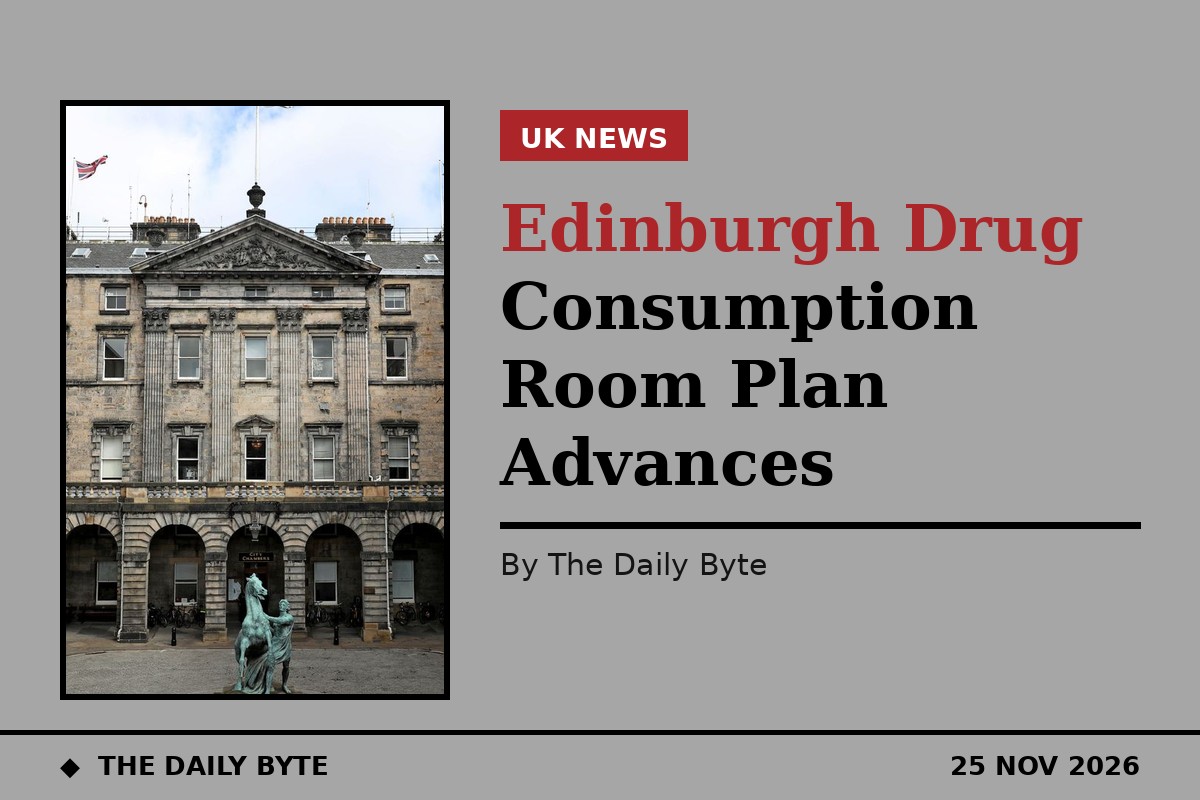
Members of the Edinburgh Integration Joint Board discussed the results of a public consultation at the City Chambers on Tuesday, 24 November, and approved plans to pursue a business case for opening a Safer Drug Consumption Facility, known as an SDCF.
The move does not approve a site and does not guarantee the facility will open. Officers will bring a report in February setting out the funds and partners needed. The board also agreed to write to the First Minister, urging him to back the plans.
However, the council does not have the money to develop the business case, according to board chair Lezley Marion Cameron. Scottish Government funding must be secured before the proposal can go further, and officials described the plans as having reached a critical juncture.
What a safer drug consumption facility is
An SDCF is a supervised healthcare clinic where people can inject drugs in the presence of trained health and social care professionals, in a safe and clean setting. They aim to reduce the harms of injecting drugs, such as blood-borne viruses like HIV and deaths from overdose.
At a facility modelled on the Thistle centre in Glasgow, which opened in January 2025, drug users would be able to inject heroin or cocaine under medical supervision. The Thistle was the first facility of its kind in the UK, backed by £2 million from the Scottish Government.
In its first year, the Glasgow centre recorded 11,348 visits by 575 registered people, with 7,827 injections at the facility. Staff treated 93 medical emergencies there. More recent figures show 25,615 visits since opening, 209 medical emergencies by the end of September — almost all overdoses, with no fatalities — and 612 referrals to other services in its first year.
Consultation split between supporters and neighbours
The Edinburgh consultation drew 1,089 responses from individuals and organisations. Most responses were supportive of the proposal, although the consultation was not a representative sample of the city. More than 1,000 people took part, most of them Old Town residents, social care professionals or loved ones of drug users.
Among people living in the Old Town, where the facility could be built, 44% were opposed to the plans while 42% were in favour. The main reasons for opposition were concerns about more antisocial behaviour and crime, as well as harm to the area's reputation, tourism and heritage status. The main reasons for support were saving lives, reducing drug-related deaths and creating a space free of stigma where injections can happen more safely.
David Williams, joint commissioning manager at the city's alcohol and drugs partnership, told the board there was broad support for the next phase of development, but that the least supportive were the people who would be the neighbours. He said they had expressed difficult and distressing experiences around drugs in the area around them now.
Officers told the board that public injection and non-fatal overdoses are most concentrated in the Old Town, according to public health data, and that the area was by far the most logical place for the facility. Leith was considered as an alternative location but was judged less impactful. Officers added that data did not indicate that such facilities attract an influx of drug users who are not already publicly injecting in the immediate area.
Calls to wait for the Glasgow pilot to finish
Councillor Max Mitchell tried to urge the board to halt the plans until the Glasgow pilot had concluded, and raised concerns about whether the council, NHS Lothian and the board would be fully compensated financially. His proposal was dropped when it did not receive support, and councillors agreed instead to move forward with the business case.
On Wednesday, 25 November, the proposal was also raised at First Minister's Questions. Scottish Green MSP Kayleigh Kinross-O'Neill said she was encouraged by First Minister John Swinney's response and called on him to follow it with action, including working with Edinburgh's health and council leaders and the Lord Advocate on replicating Glasgow's Thistle service.
Scotland has one of the highest drug death rates in the world, and drug deaths are recognised as a key contributor to the country's stalling life expectancy. In 2025, 1,133 people died as a result of drug use in Scotland, up 11% on the previous year, including 100 in Edinburgh.
More than 200 such facilities operate worldwide, in countries including Canada, Australia, Germany, France, Switzerland and Mexico, and are associated with reducing overdose risk, fostering safer injection practices and decreasing drug litter.


