Egypt Inflation Eases to 12.7% in October, CAPMAS Says
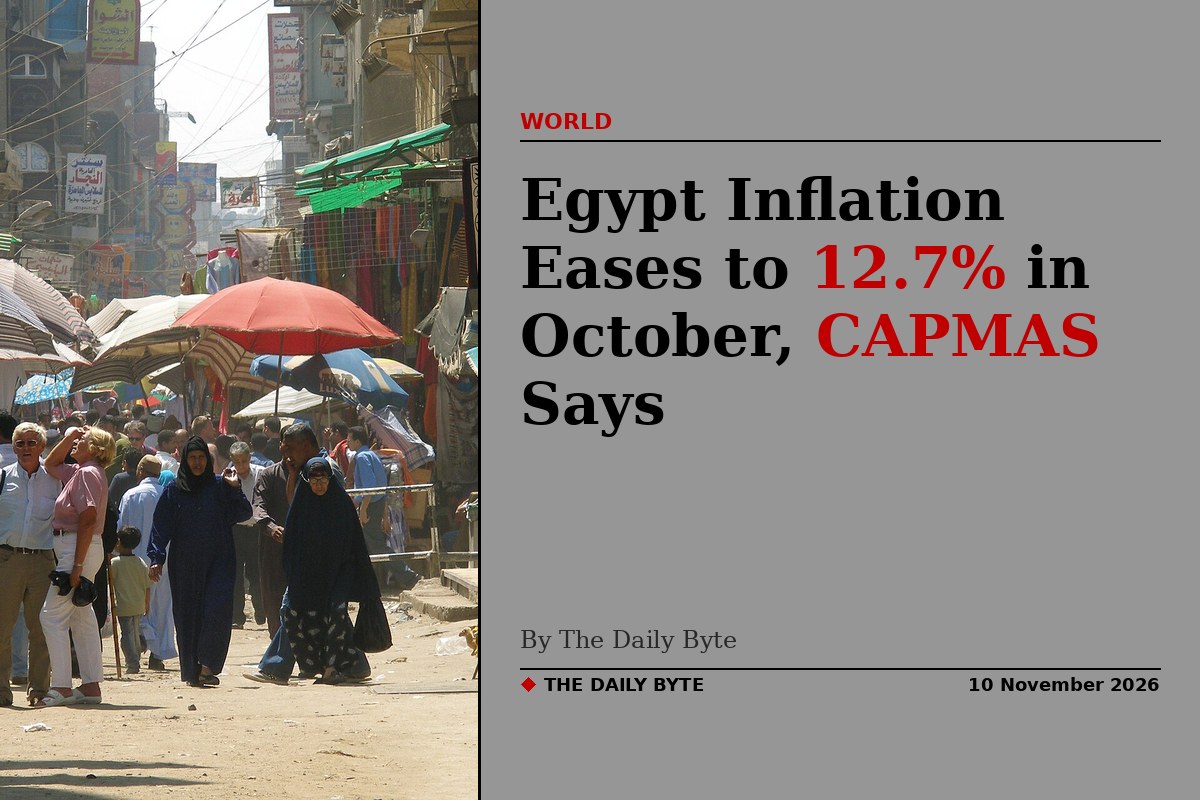
Egypt's annual urban inflation eased to 12.7 percent in October 2026, down from 13.9 percent in September, according to data from the Central Agency for Public Mobilization and Statistics (CAPMAS), the country's official statistics body.
The headline annual inflation rate for the whole country also fell, to 12 percent in October from 12.8 percent in September, Arab News reported, citing CAPMAS data. The consumer price index stood at 296.1 points in October. The figures were presented to the cabinet on Thursday, 5 November, by Planning and Economic Development Minister Ahmed Rostom, QNC News reported.
Food prices did much of the work
Slower food price growth pulled the overall rate to its lowest level since February. Cheaper fresh produce did much of the work, with fruit prices falling 2.9 percent in the month and vegetable prices dropping 2.6 percent, according to the statistics agency.
Other parts of the food basket moved the other way. Meat and poultry prices rose 3.2 percent in October, while dairy, cheese and egg prices climbed 2.5 percent. Measured over the full year, food and beverage prices were up 7.5 percent, clothing and footwear prices rose 12 percent, and alcoholic beverage and tobacco prices increased 6.7 percent.
Underlying pressures are cooling too
Core inflation, published by the Central Bank of Egypt and excluding volatile items, slowed to 13.1 percent in October from 14.1 percent in September, suggesting that underlying price pressure is gradually cooling.
Not all prices are easing at the same pace. Prices under housing, water, electricity, gas and fuel rose 24.1 percent year on year in October, while transport and communications prices climbed 22.3 percent and telecommunications prices recorded a 10.5 percent annual rise.
What it means for households and policy
The October reading keeps Egypt's disinflation path intact after the rate peaked far higher earlier in the decade, but officials remain cautious. A falling annual rate means prices are rising more slowly, not that they are falling, and household budgets remain under strain after years of rapid increases.
The Central Bank of Egypt has said it expects price pressures to remain broadly stable before gradually easing towards its target of 7 percent, plus or minus two percentage points, in the second half of 2027. Analysts say food prices, energy costs and the exchange rate will decide whether inflation keeps falling towards single figures in 2027, and many expect policymakers to hold interest rates steady until the downward trend is firmly established.
For Egyptian households, the October figures offer some relief after September's interruption, when the headline rate had climbed to 12.8 percent from 12.7 percent in August. The return to the downward path will be welcomed, but with housing and transport costs still rising by more than a fifth over the year, the cost of living squeeze is far from over.


