Eisenkot vows new Israeli government within eight days
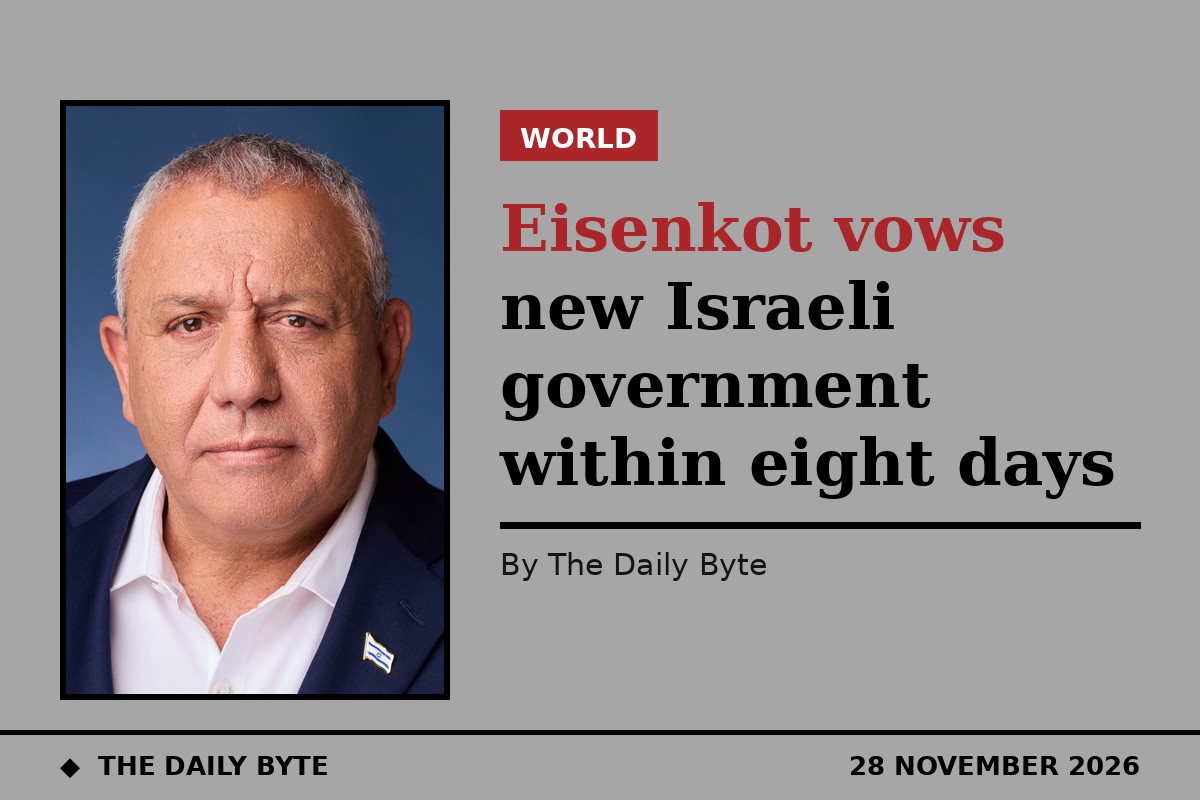
Gadi Eisenkot, the former military chief tasked with forming Israel's next government, has said he will bring a new government to a vote within the eight days remaining in his mandate, accusing Benjamin Netanyahu's Likud party of stalling unity talks.
In a statement on Friday, Eisenkot said the two sides had held five meetings over two weeks, but Likud had refused to put a single concrete proposal on the table or compromise on key issues. Those issues include removing far-right parties from the government, setting up a state commission of inquiry into the 7 October 2023 attack, and passing legislation to broaden military service. “Unity is about substance and values, not about who gets which job or who goes first,” Eisenkot said, questioning whether Likud was ready for serious negotiations “or keep up appearances and continue to stall.”
Netanyahu offers to go second in rotation
Netanyahu responded on Saturday by saying he would be willing to temporarily give up power in a unity government led first by Eisenkot. Likud emerged from the 27 October election as the largest party in the Knesset, but without the majority needed to govern. Eisenkot has until 6 December to form a government, with the possibility of a 14-day extension, although he has said he intends to finish within the original deadline and bring a government to a parliamentary vote as early as next week.
Eisenkot has already signed coalition agreements with the left-wing Democrats and the right-wing Yisrael Beiteinu party, and is holding talks with the ultra-Orthodox United Torah Judaism party. He invited Netanyahu to serious negotiations on core policy issues, saying he had already sent a detailed proposal with significant compromise positions through a secret channel a week ago, to which Netanyahu had not responded. The two men later agreed to meet on Sunday morning.
Allies split over the offer
Reactions to Netanyahu's offer split Eisenkot's allies. Yair Golan, head of the Democrats, called it a stunt, and former prime minister Yair Lapid described it as a transparent con, proposing instead that an Eisenkot-led government be sworn in without Netanyahu. Former prime minister Naftali Bennett, by contrast, welcomed the statement as the right decision. Much of the scepticism traces back to 2020, when Netanyahu entered a rotation deal with rival Benny Gantz but refused to pass a state budget, triggering new elections before Gantz could take his turn as prime minister.
Eisenkot's most straightforward path to replacing Netanyahu still relies on some form of support from the Arab parties. In a Saturday night interview, Mansour Abbas, leader of the Raam party, signalled cooperation on legislation defining Hamas as a terrorist organisation, one of Eisenkot's conditions for parties joining his government.


