Energy price cap to rise 26% to £2,166 in January
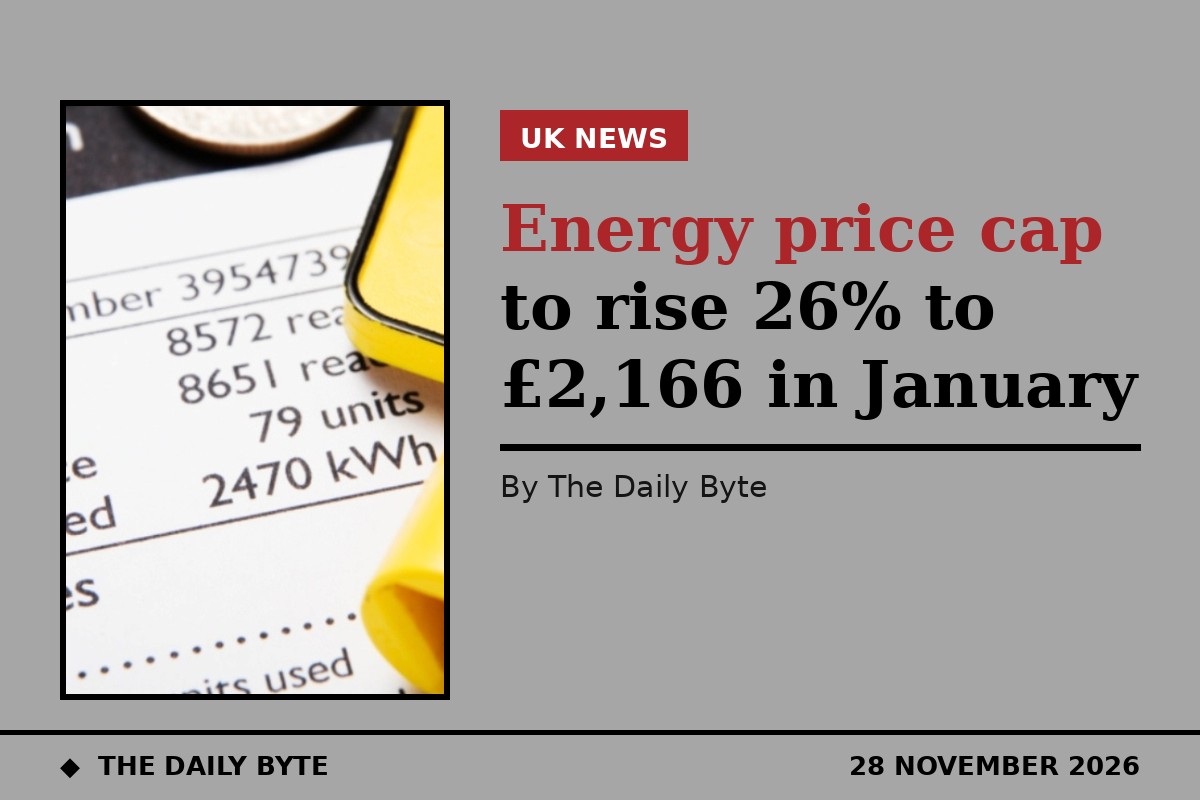
The energy price cap will rise by 26% from January 2027, taking the typical household bill to £2,166 a year. Ofgem announced the new cap on 25 November 2026, confirming that a typical dual-fuel household paying by Direct Debit will pay £443 more a year than the current £1,723.
The new cap runs from 1 January to 31 March 2027 and is the largest rise since January 2023. It comes as wholesale energy costs climb and European gas storage heads into winter at historically low levels.
What changes on 1 January
For a typical household paying by Direct Debit, the annualised bill rises from £1,723 to £2,166 if the new level was sustained for a year. The typical electricity bill rises from £858 to £1,017 a year, and the typical gas bill from £865 to £1,149 a year.
Average Direct Debit unit rates will be 32.69p per kilowatt hour for electricity, up from 26.32p, and 10.96p per kilowatt hour for gas, up from 7.97p. Standing charges are broadly unchanged, at 54.77p a day for electricity and 29.65p a day for gas.
The rise is about £37 a month for a typical household, taking the illustrative monthly figure from about £144 to about £180. The current £1,723 cap remains in place until 31 December 2026.
Why bills are rising
Ofgem says the rise reflects higher wholesale costs, driven by the continuing conflict in the Middle East pushing up international gas prices and by historically low European gas storage heading into winter. Independent analysts Cornwall Insight said the increase would mean energy bills reaching their highest level since 2023.
The confirmed figure of £2,166 is about £167 above Cornwall Insight's earlier forecast of £1,999, which was based on wholesale prices at the end of September. Forecasts moved higher as wholesale markets rose through the autumn.
The cap is updated every three months to reflect changes in the underlying costs of supplying energy. Ofgem will announce the next cap, for 1 April to 30 June 2027, by 23 February 2027.
What the cap does and does not do
The price cap limits the unit rates and standing charges that suppliers can charge customers on default tariffs in Great Britain. It does not set a maximum bill: households that use more energy will pay more, and those that use less will pay less.
The £2,166 figure is a typical-usage illustration based on Ofgem's typical consumption values of 2,500 kilowatt hours of electricity and 9,500 kilowatt hours of gas a year. The cap applies in England, Scotland and Wales; Northern Ireland has a separate framework.
Households on fixed deals are not affected by the cap change, as their contracted rates do not change. The figures are general information about the published cap, not financial advice, and households should check their own tariff and usage with their supplier.
The full announcement is published by Ofgem at Energy price cap to rise by 26% from January 2027.


