England Plans Safety Checks for School AI and EdTech Tools
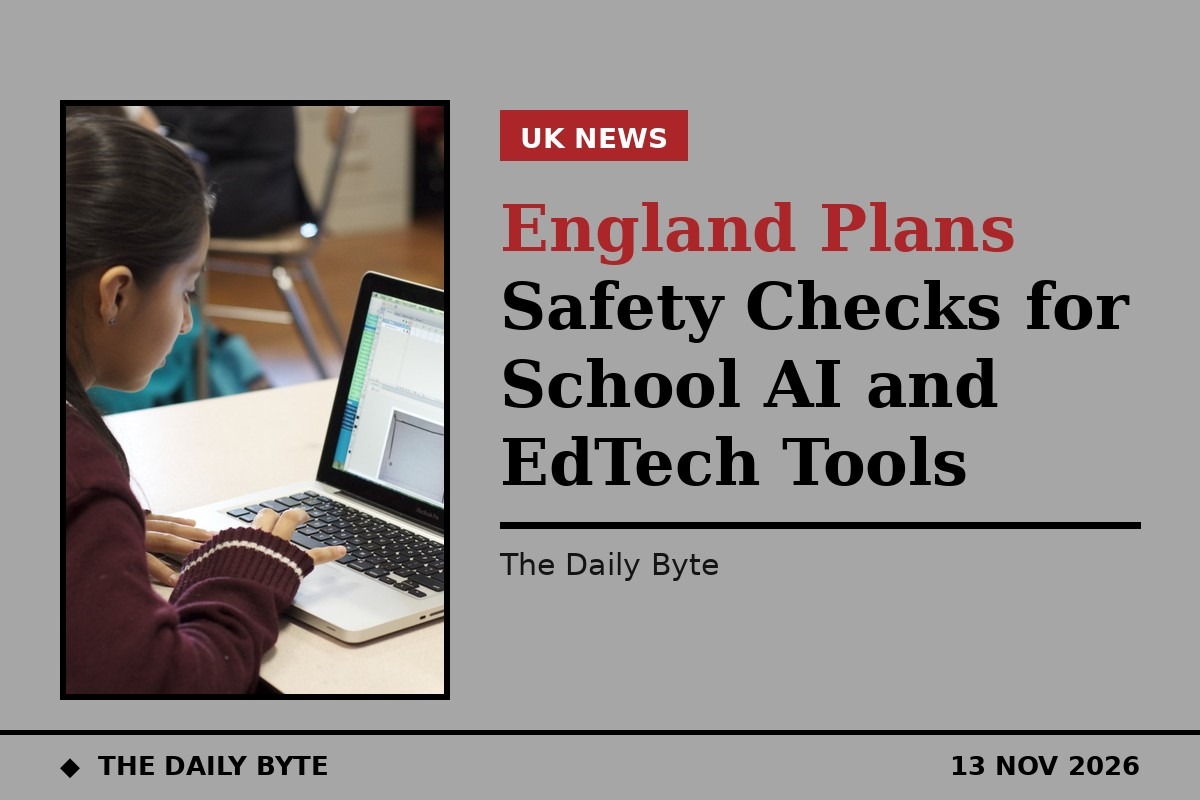
Schools in England could soon have an independent safety check for the classroom technology and artificial intelligence tools they buy, under proposals published by the Department for Education (DfE) on 10 November 2026. A public consultation on the plan is open until 4 February 2027.
The proposed scheme would certify education technology and AI products used in early years settings, schools and colleges in England, giving schools an independent way to judge whether a product meets defined safety standards before they buy it.
Which products would be covered
Four categories of product would fall within the scope of the scheme: web filtering products; education technology that carries out high-risk processing of children's data; pupil-facing generative AI tools; and pupil-facing personalised learning tools. In practice, that would include AI tutoring tools, special educational needs and disabilities (SEND) platforms, management information systems and behaviour and safeguarding systems.
Out of scope would be general office and communication tools, interactive whiteboards, computers and tablets, and staff-facing generative AI and administrative systems that do not involve high-risk processing of children's data.
How certification would work
The DfE would own the scheme and set the safety criteria. The United Kingdom Accreditation Service (UKAS) would accredit the bodies that assess products, against the international standard ISO/IEC 17065 for product certification bodies. Suppliers would pay for assessment, with assessors setting their own fees. Products would need to be recertified every three years, and generative AI products every year.
The safety criteria would include whether a product is designed to minimise the risk of emotional or developmental harm to children, whether it supports compliance with legal duties including data protection, and whether the system, its data and its users are secure. Pupil-facing generative AI tools would be assessed against eight standards drawn from the department's existing generative AI product safety standards, including the effects on pupils' mental health and cognitive skills.
Voluntary in law, expected in practice
The scheme would be "technically non-mandatory". The DfE says it has no power to require schools to buy only certified products, or to require suppliers to seek certification. But statutory guidance would carry a clear expectation that settings seek assurance for products in scope, and Schools Week reports that ministers have said participation could become a legal requirement if uptake is low.
The department says it needs at least 18 months to set up the scheme once the consultation has closed, followed by a transition period, so no product could carry a certificate until well into 2028 at the earliest. It plans to publish its response to the consultation in spring 2027. The consultation is open to everyone, including parents and pupils, through the DfE's consultation website.
Why the government is acting now
The consultation follows a report by the Information Commissioner's Office that found recurring gaps in data protection compliance among education technology products. The DfE's technology in schools survey 2025 found that half of school leaders said safeguarding and data concerns were a barrier to increasing their use of technology.
A government minister had earlier warned that schools were having to navigate a "Wild West" of education technology products, according to Tes. The foreword to the consultation was written by Paul Waugh, the minister for early education, and the Secretary of State for Education wrote to the chair of the Education Committee on 9 November to announce that the consultation would open the following day.
Frequently asked questions
Does the scheme cover the whole UK? No. The consultation and the proposed scheme apply to England only. Education is devolved, so Scotland, Wales and Northern Ireland have their own arrangements.
When will certified products be available? Not for some time. The consultation closes on 4 February 2027, the government response is expected in spring 2027, and the DfE says it needs at least 18 months after that to set up the scheme.
Would schools have to stop using uncertified products? No, under the current proposals. The scheme would be technically voluntary, although statutory guidance would expect schools to seek assurance for products in scope.
How can I respond to the consultation? Responses can be submitted through the DfE's consultation website until 11:59pm on 4 February 2027. The consultation is open to teachers, school leaders, parents, pupils, suppliers and researchers.