England Schools to Set Daily Time for Reading for Pleasure
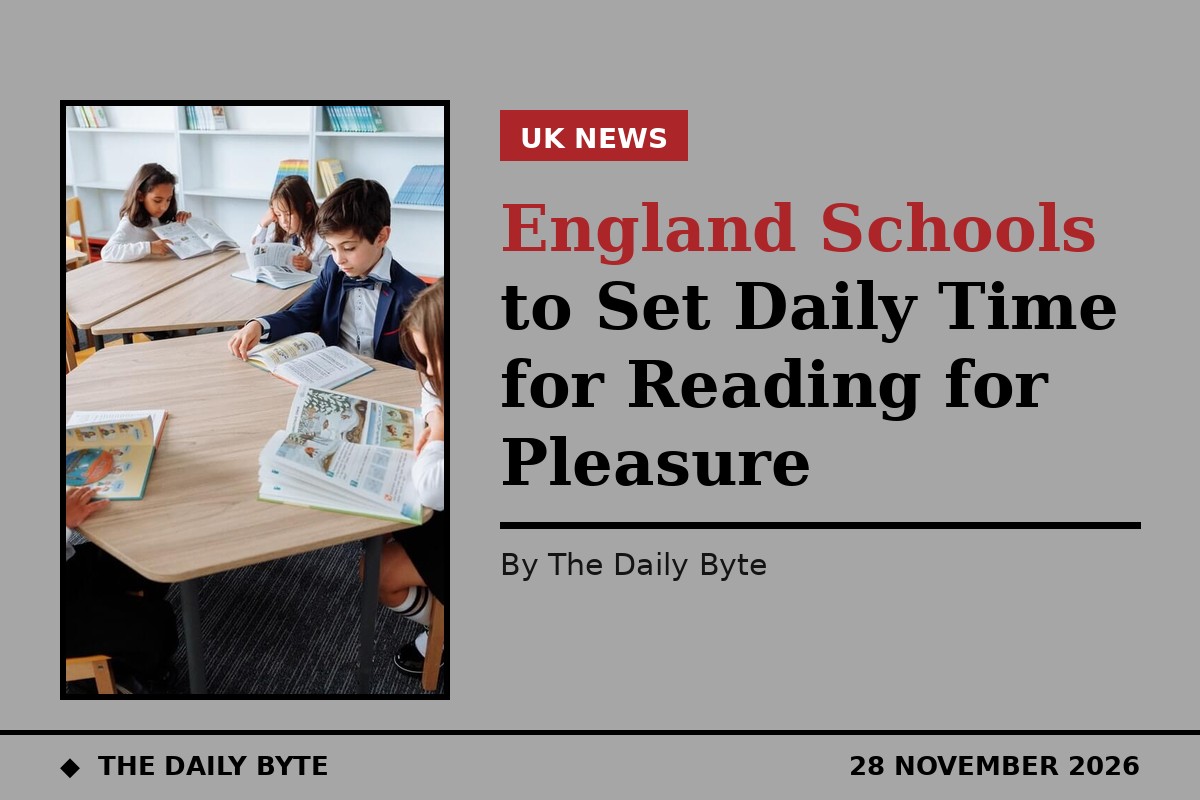
Schools in England will have to set aside time for children to read for pleasure under Labour's overhaul of the national curriculum, the biggest shake-up of what pupils are taught in more than a decade.
Education Secretary Lucy Powell will announce the plans to Parliament on Monday. Primary schools will have to create time every day for children to read, while secondary schools will have to do so several days a week, in an effort to counter the time pupils spend scrolling on their phones.
Secondary schools will also be expected to ensure pupils focus on entire books, poems and other literature, and teenagers will face a statutory reading test in year 8, at age 12 to 13.
Reading at the centre
Reading will be the "golden thread" running through the refreshed curriculum, the Department for Education said. All schools will have to set aside regular dedicated time for reading for pleasure, so children from all backgrounds have the chance to discover books they enjoy.
The move follows research showing that reading enjoyment among children and young people in the UK has fallen to its lowest level in two decades. The Department for Education said reading enjoyment and daily reading levels remain too low, particularly among disadvantaged children and boys.
The government will also unveil a new target to halve the reading disadvantage gap by 2035, with a goal of at least 80 per cent of pupils meeting the expected standard in reading. It will spend £650,000 turning the National Year of Reading into a permanent "national reading movement".
Ms Powell told The Times: "Across the world, we are seeing a ticking timebomb for our future generations as reading and literacy levels are falling, with too many children seeing reading as a chore or missing out altogether."
Slimmer GCSEs and a wider overhaul
The announcement will mark the biggest government overhaul of what is taught in schools since the reforms of former education secretary Michael Gove more than a decade ago.
Ms Powell will also set out the programmes of study for the curriculum in England, spelling out what pupils must learn at every key stage of compulsory education. The reforms are expected to include slimmed-down GCSEs, which could lead to shorter exams in some subjects, with history, geography and modern foreign languages among the courses most likely to be slimmed down.
Secondary schools have also been told not to teach GCSEs early, with the government seeking a "richer, more engaging" experience at key stage 3. Some schools had been starting the GCSE syllabus in year 9 or below to give pupils a head start.
The statutory reading test for year 8 pupils follows a recommendation by Professor Becky Francis in her year-long curriculum review. It is designed to identify children who need extra help so they no longer slip through the cracks.
Reaction and the road ahead
Shadow education secretary Laura Trott welcomed the move, while stressing that it must be paired with a serious effort to reduce screen time in classrooms.
Schools are already facing stricter guidance on phone use, with pupils set to be barred from accessing their devices at all during the school day under guidance coming into force from September 2027.
The full draft of the new curriculum is expected to be published next week, with the reading measures forming part of a wider package aimed at lifting literacy and giving every child the chance to discover a love of reading.


