Equinor cyberattack stopped as second energy firm hit
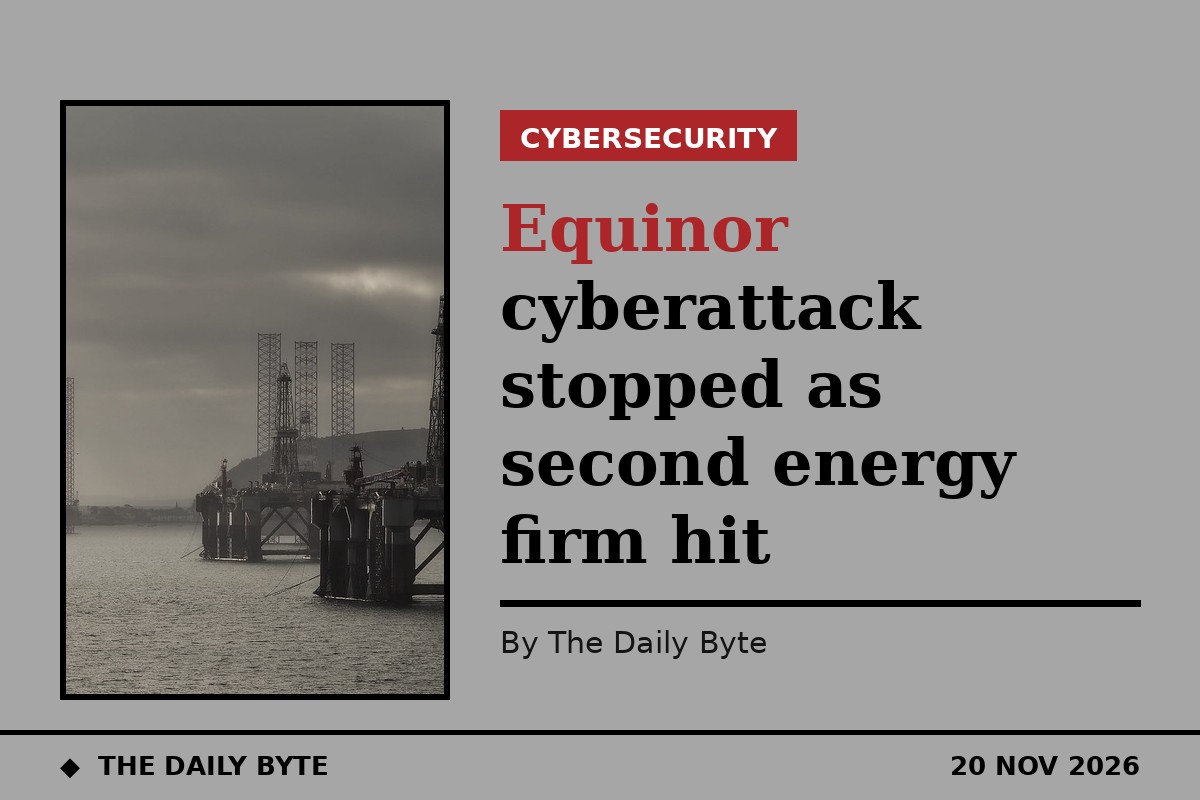
Equinor said on Friday 20 November that the cyberattack against its IT systems has stopped, three days after the Norwegian energy group first disclosed the incident. Oil and gas production ran normally throughout, the company said, and there is no indication that data was stolen or altered.
The company confirmed the end of the attack at 08:55 CET, saying production was running as normal and there was no indication of negative consequences for employees, partners or suppliers. It has not said what kind of attack it was, which systems were affected, who was behind it, or what measures brought it to an end.
Three days of updates
Equinor first disclosed the incident on the evening of 17 November, saying it had detected an ongoing attack against certain IT systems and had mobilised resources to neutralise it and restore full integrity. In an update the following morning, the company said it had gained a clearer understanding of how the attack was carried out and which systems were affected. It also said the incident was not a virus attack, so there was no risk of it spreading.
By the morning of 19 November the attack was still going on, and Equinor said it was too early to say how long full recovery would take. In that update the company said the attack did not appear to be specifically targeting Equinor, and that it was in continuous contact with the relevant national security authorities and had reported the matter to the police. Reuters reported during the incident that internal email was unavailable and some internal applications were disrupted, citing a person at the company.
A second Norwegian energy firm hit
The Equinor incident did not stand alone. A day after Equinor's first disclosure, Norwegian power utility Skagerak Energi said outsiders had broken into some of its own IT systems. The company said operations and production were unaffected and there was no indication that information had leaked. It notified the Norwegian Water Resources and Energy Directorate, KraftCERT and the National Security Authority.
Skagerak said on 19 November that it had taken the necessary measures and was still handling the incident. Its spokesperson, Kjell Løyland, told the trade publication Energiteknikk that the company is routinely probed by outsiders, but that in this case someone had come a bit further, which the company takes seriously. Unlike Equinor, Skagerak has not notified the police, and it has declined to comment on who was behind the attack.
There is no evidence yet that the two incidents are connected. The disclosures read remarkably similarly and arrived within a day of each other, but similarity of wording is not proof of a shared attacker, and neither company has suggested a link.
Norway's energy sector on alert
Other companies in the sector have reacted anyway. Oil and gas producer Aker BP said it had mobilised its emergency preparedness and strengthened its monitoring, and hydropower company Statkraft said it was closely monitoring the situation. Norway raised its cyber threat assessment to four on a five-point scale in October, and Norwegian security officials have said successful cyber operations against domestic organisations tripled over the preceding six months.
The attention is understandable. Equinor is state-controlled and Europe's largest gas supplier, so any incident at the company is watched by governments and energy traders as well as by other operators. For now, the outcome is the best available one: the attack is over, production never stopped, and nothing has been shown to have been stolen. What is still missing is the explanation — how the attackers got in, and whether the two Norwegian incidents were coincidence or campaign.


