Erdogan tells Trump Turkey opposes new Iran strikes
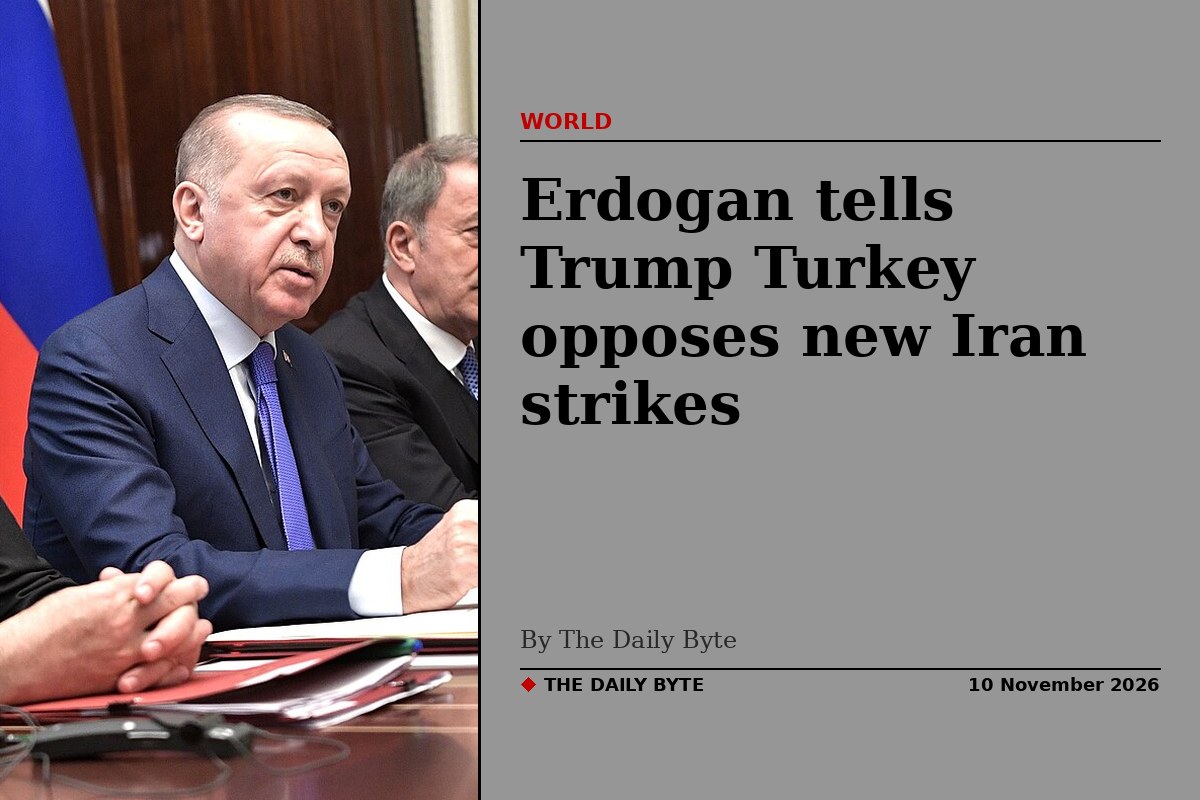
Turkish President Recep Tayyip Erdogan has told US President Donald Trump that Turkey opposes a new wave of attacks on Iran and is ready to help open a path to diplomacy, according to a transcript of his remarks shared by his office on Monday, 9 November.
Speaking to reporters on his return flight from Azerbaijan, Erdogan said Ankara did not want fresh strikes on Iran or deeper instability across the region. He said he had raised Turkey's concerns directly with Trump in a recent telephone call.
“We emphasize at every opportunity that it is possible to resolve these issues through dialogue and diplomacy. Unfortunately, we see a negative shift once again. We are doing our utmost to prevent this,” Erdogan said.
Turkey offers to help open talks
Erdogan said Turkey had told both sides that it was prepared to step in to help start negotiations.
“I conveyed our concerns to Trump. We expressed our readiness to step in to open the door to peace and diplomacy,” he said. “We do not want to see a new wave of attacks launched against Iran or our region plunged into further instability.”
The two presidents spoke by telephone on Saturday, 7 November. According to a statement from Turkey's Presidential Communications Directorate after that call, Erdogan told Trump that tensions between the United States and Iran needed to end through diplomatic means and that Ankara would keep contributing to peace efforts.
Seven-point plan described by Turkish intelligence chief
Turkish intelligence chief Ibrahim Kalin, speaking at a conference in Ankara on Monday, said Erdogan had urged Trump over the weekend not to launch another round of strikes on Iran. He warned that any US attack would trigger another vicious cycle of regional violence.
Kalin said Turkey and other regional mediators were making progress on a seven-point plan, which he described as a fair agreement. Under the proposed deal, Iran would receive sanctions relief and gain access to frozen funds. In return, Tehran would commit not to obtain nuclear weapons and would engage with the International Atomic Energy Agency to begin separate nuclear negotiations. Iran would then unblock the Strait of Hormuz, Kalin said.
“If you can get this agreement in the next few days, then there will not be a strike,” Kalin said, adding that without a deal, fresh US attacks on Iran could come within days.
Regional stakes
Erdogan warned that renewed fighting would impose costs far beyond the countries directly involved, affecting Turkey, the Gulf states, Iraq and Syria, as well as countries across Europe and Asia.
His intervention comes as Washington and Tehran remain locked in a tense phase of the conflict that began in late February, when US and Israeli strikes opened the war. Trump said on Monday that he planned to hold off on new military strikes against Iran for the time being after appeals from countries in the region, including from Qatar's prime minister in White House talks, while remaining ready to resume strikes if necessary.
Turkey has maintained diplomatic contacts with both Washington and Tehran during the conflict, positioning itself as a potential intermediary. Erdogan is expected to host regional leaders in Antalya on the sidelines of the COP31 climate summit, which mediators see as a possible opportunity to advance an agreement.
For now, no deal has been announced, and the diplomatic track remains the stated route both Ankara and Washington say they prefer.


