Estonia to close Russia border crossings from 1 December
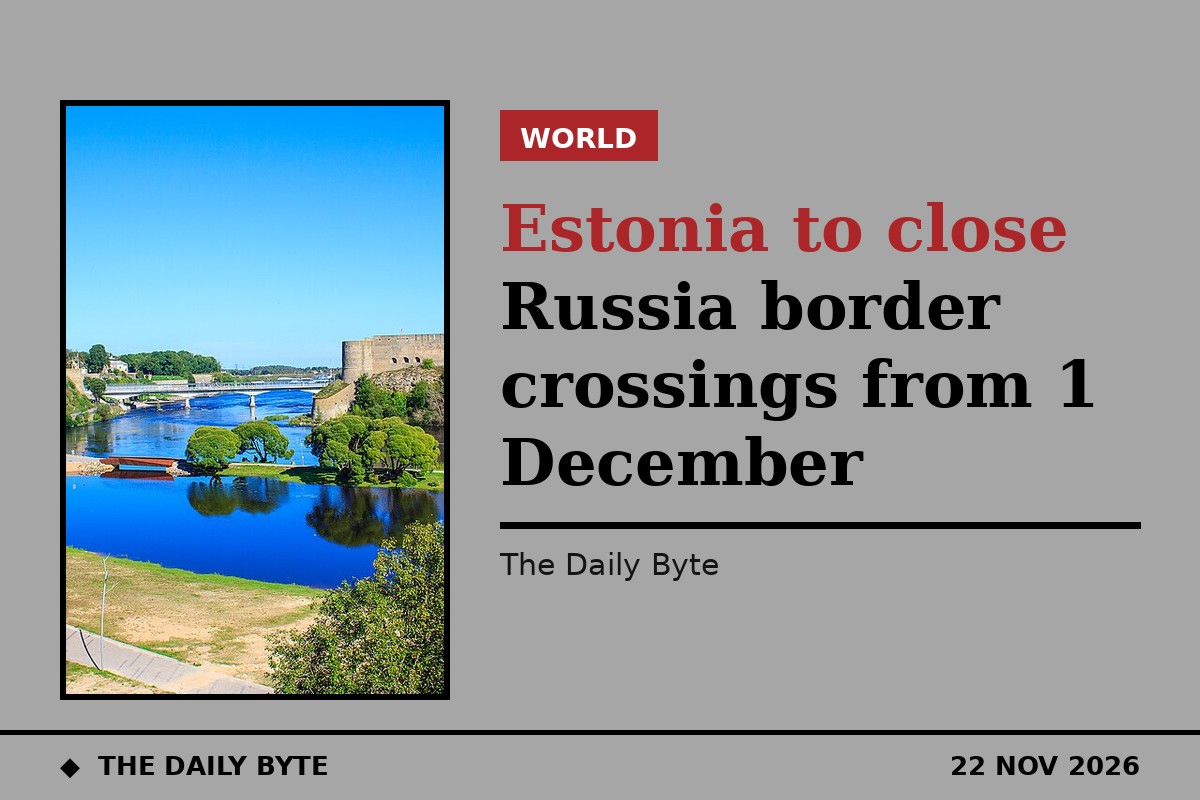
Estonia will close all five of its road border crossings with Russia from 1 December 2026, for six months, in response to what Tallinn calls Russia's continued hostile activities. The government announced the decision on 20 November 2026, and residents on both sides of the frontier have been rushing to cross before the deadline.
People carrying suitcases, backpacks and plastic bags have been gathering in the Russian border town of Ivangorod, hoping to cross into Estonia while they still can. The queues reflect a decision that will affect not only cross-border travel but families with relatives living on opposite sides of the frontier.
Which crossings will close
The suspension covers all five road crossing points: Narva-1, Narva-2, Koidula, Luhamaa and Saatse. The Narva crossing, which links the Estonian town of Narva with Ivangorod across the Narva River, is the busiest. Rail freight will continue under the restrictions already in force, with strict customs checks.
The government says it will review the security situation after six months and then decide whether to extend or amend the measure. Foreign Minister Margus Tsahkna said the closure was not a reaction to a single incident, but the next step after Russia's aggression against Ukraine and the increasing frequency of sabotage and hybrid operations in Europe.
The drone factory attack behind the decision
The decision followed an attempted arson attack on 14 November at the premises of Estonian drone manufacturer Threod Systems in Viimsi, north of Tallinn. Estonia's Internal Security Service said Russia's military intelligence agency, the GRU, was behind the attempted attack. The Kremlin has dismissed the accusation as unfounded.
According to the Estonian government, closing the border will make it harder for Russian intelligence services to recruit and influence people crossing into Estonia, and will help prevent sanctions evasion. Estonia's foreign ministry has also urged Estonian citizens in Russia to plan their return well in advance, warning that alternative routes will be considerably longer and more expensive.
Families divided by the frontier
The human cost falls most heavily on the border region. Narva, a predominantly Russian-speaking Estonian town of more than 50,000 people, lies directly across the river from Ivangorod, and the two towns have longstanding family, social and economic ties. Narva Mayor Jaan Toots has urged the government to consider humanitarian exemptions for people who need to visit elderly relatives, attend funerals or handle other urgent family matters.
Travel between the two countries has already fallen sharply since the start of the war in Ukraine. Estonian public broadcaster ERR reported that annual crossings dropped from more than four million before 2022 to around 760,000 in 2026, with the majority of this year's crossings made through the Ivangorod-Narva bridge. The closure is also expected to affect jobs in the region, where border guards and customs officers are among the local workforce.
Frequently asked questions
When does Estonia close its border with Russia? Road crossings at all five checkpoints will be suspended from 1 December 2026, for six months, after which the government will review the decision.
Why is Estonia closing the border? Tallinn says the move responds to Russia's continued hostile activities, including an attempted arson attack on drone maker Threod Systems on 14 November, which Estonia attributes to Russia's GRU military intelligence agency.
Can people still travel between Estonia and Russia? Road crossings will be suspended, but rail freight continues. Travellers will need alternative routes through neighbouring countries such as Latvia, making journeys longer and more expensive.
The decision was announced by Estonia's Ministry of Foreign Affairs, and the queues at Ivangorod were reported by Brussels Reporter.


