Estonia warns of drone threat as NATO jets scramble
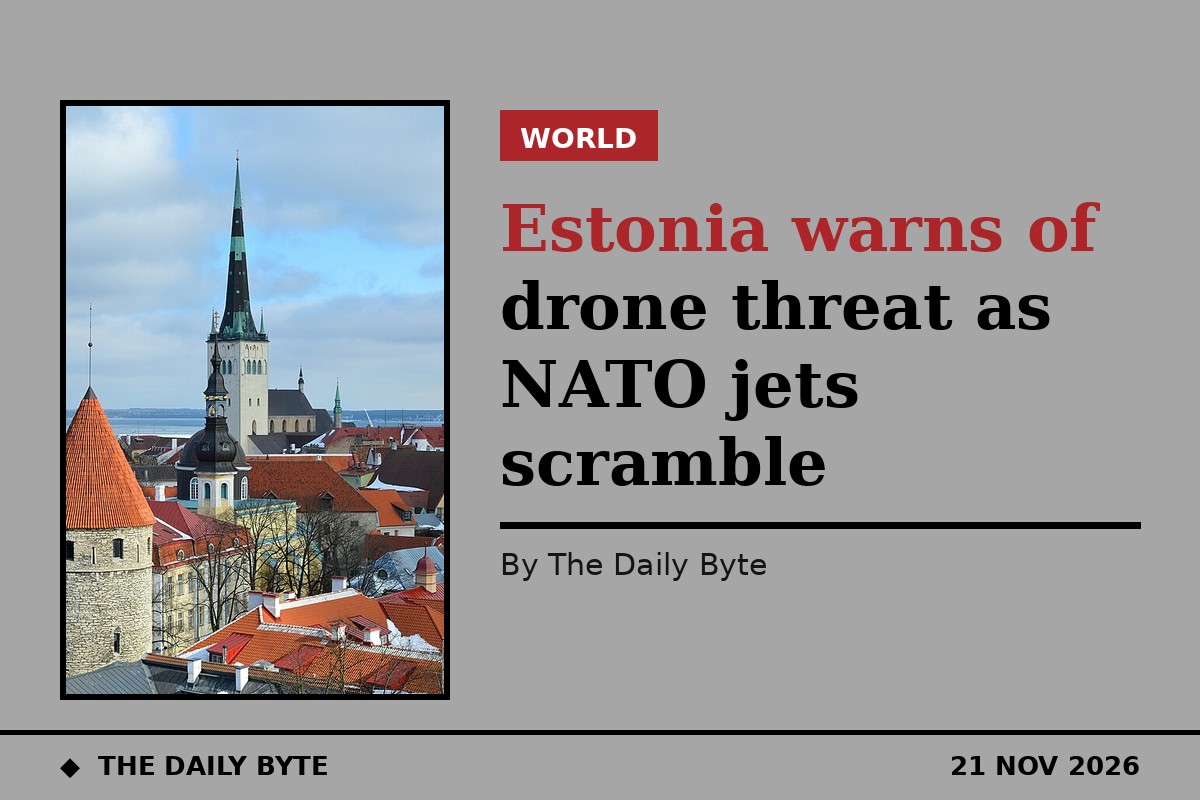
Estonia warned residents in two north-eastern counties of a possible drone threat in the early hours of Saturday, scrambling NATO fighter jets, before lifting the alert about two hours later with no airspace violation reported. The alarm was the latest sign of how the war in Ukraine keeps spilling onto the territory of NATO’s eastern flank states.
The alert went out at 04:42 through Estonia’s public warning system, EE-ALARM, covering Ida-Viru and Lääne-Viru counties in the north-east of the country. The Estonian Defence Forces confirmed to the public broadcaster ERR that NATO fighter jets, specifically Turkish aircraft, were airborne in response. A resident of Väike-Maarja in Lääne-Viru county reported hearing a drone at about 06:13, followed roughly a minute later by the sound of a fighter jet. At 06:49 the defence forces announced that the aerial threat in the two counties had passed, and said there had been no reported violations of Estonian airspace during the alert.
Finland restricted traffic in the Gulf
Across the water, Finland imposed temporary restrictions on maritime areas and airspace in the eastern Gulf of Finland early on Saturday. The Finnish military said the restrictions, which took effect shortly after 04:00, were a precautionary measure to keep bystanders safe and to leave the authorities free to act against drones if needed. The restrictions were lifted on Saturday afternoon. Finland had imposed similar restrictions just over a week earlier.
The alert came on a morning of intense drone activity around the Gulf of Finland. A Russian cargo ship, the Sparta II, was hit by drones in international waters, caught fire and drifted into Finnish waters, where its sixteen crew members were evacuated. Finnish officials said Ukraine was likely behind that attack, although no party has claimed it. A Russian helicopter was separately suspected of violating Finnish airspace near Loviisa at midday, reaching about 4.1 kilometres inside Finnish territory. Russian regional officials gave changing figures through the morning for drones shot down over the neighbouring Leningrad region, first six and then ninety-three, and those figures could not be independently verified.
A familiar alarm
Estonia has used the same warning system before. The defence forces most recently issued similar EE-ALARM air threat warnings across eight southern and eastern counties, including Lääne-Viru and Ida-Viru, early on 11 November, when Ukrainian drones struck the Russian port of Ust-Luga in Leningrad Oblast, about thirty-six kilometres from the Estonian border. The system is used both to warn the public of potential aerial threats and to tell residents when they are required to take shelter. Prime Minister Kristen Michal has previously said Estonia has not authorised the use of its airspace for drone flights, and Ukraine’s Foreign Ministry has dismissed Russian claims that Ukraine uses Baltic airspace to carry out strikes on Russian territory.
Saturday’s alert ended without an incursion, which is itself the point of the system: to give residents and allied aircraft time to react before a threat arrives rather than after it. It came a day after Russian missiles and a drone came down in south-eastern Poland during a huge Russian attack on Ukraine, and on the same morning that Finland was dealing with a burning cargo ship in its waters. For the Baltic states, the pattern is now a regular one, and each alert tests how quickly NATO aircraft can be put in the air.
Sources: Bytes Europe (ERR News) and Prime Newz Online and Sweden Herald.


