Estonia Expels Russian Oil Worker Over Spy Links
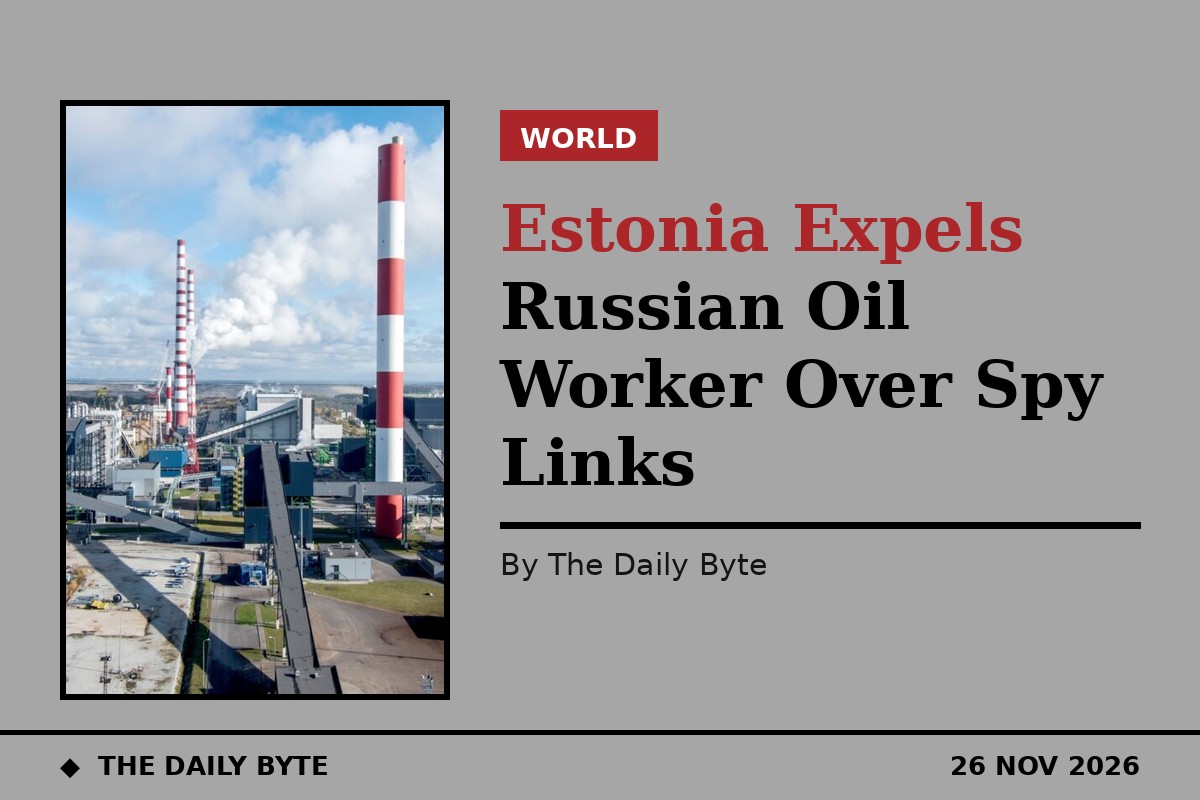
Estonia has expelled a Russian citizen who worked at an oil plant in the country after its security service identified contacts with Russian intelligence services.
The man, Anton Zuev, was expelled on Tuesday 24 November at the proposal of the Internal Security Service, known as KAPO. Police said the purpose was to prevent and counter a security threat.
Zuev worked at the Auvere Enefit oil plant in north-eastern Estonia. KAPO spokeswoman Marta Tuul said he regularly travelled to Russia and, while working in Estonia, informally carried out work tasks at Russian strategic facilities.
Working at such facilities requires a permit from the Russian special service FSB, according to the Estonian police account of the case.
Foreign minister's response
Estonian Foreign Minister Margus Tsahkna commented on the deportation, saying: “Now you can communicate with Russian intelligence services as much as you want. In Russia.”
Estonian authorities did not publicly disclose the nature of Zuev's contacts with Russian intelligence, or whether he was suspected of carrying out specific operations.
Wider security crackdown
The expulsion follows an attempted arson attack on Estonian drone maker Threod Systems on 14 November, which Estonian authorities attributed to Russia's military intelligence agency, the GRU. Threod cooperates with Ukraine, and Estonia's security service has warned that Russian intelligence is targeting defence companies supplying Ukraine.
Estonia has recently stepped up measures against suspected Russian intelligence and sabotage operations. A day before the expulsion was announced, British intelligence and defence officials warned companies supplying Ukraine's military that they could face Russian sabotage attacks and urged them to strengthen security.
British officials said Russia had stepped up sabotage attempts against European defence facilities in recent months, often using recruited operatives to carry out arson attacks and other operations aimed at weakening support for Ukraine.
Neither account of the expulsion reports any criminal charge against Zuev; the action was taken as a security measure on KAPO's proposal, rather than as part of a prosecution.
The expulsion is not the first such case this month. Earlier in November, Estonia also expelled Russian citizen Leonid Karabeshkin and banned him from entering the Schengen Area, in a separate case linked to suspected intelligence activity.
KAPO is Estonia's domestic security service, responsible for counter-intelligence and for identifying threats to the country's constitutional order and security. Its proposal was the basis for the police decision to expel Zuev, and the service's spokeswoman was the main official source for the details of the case.
The Auvere oil shale complex in Ida-Viru County, where Zuev worked, lies about two kilometres from the Russian border and is considered a critical part of Estonia's energy security infrastructure.


