Ethereum-Linked Wallet Sells 2,500 ETH for $3.88m
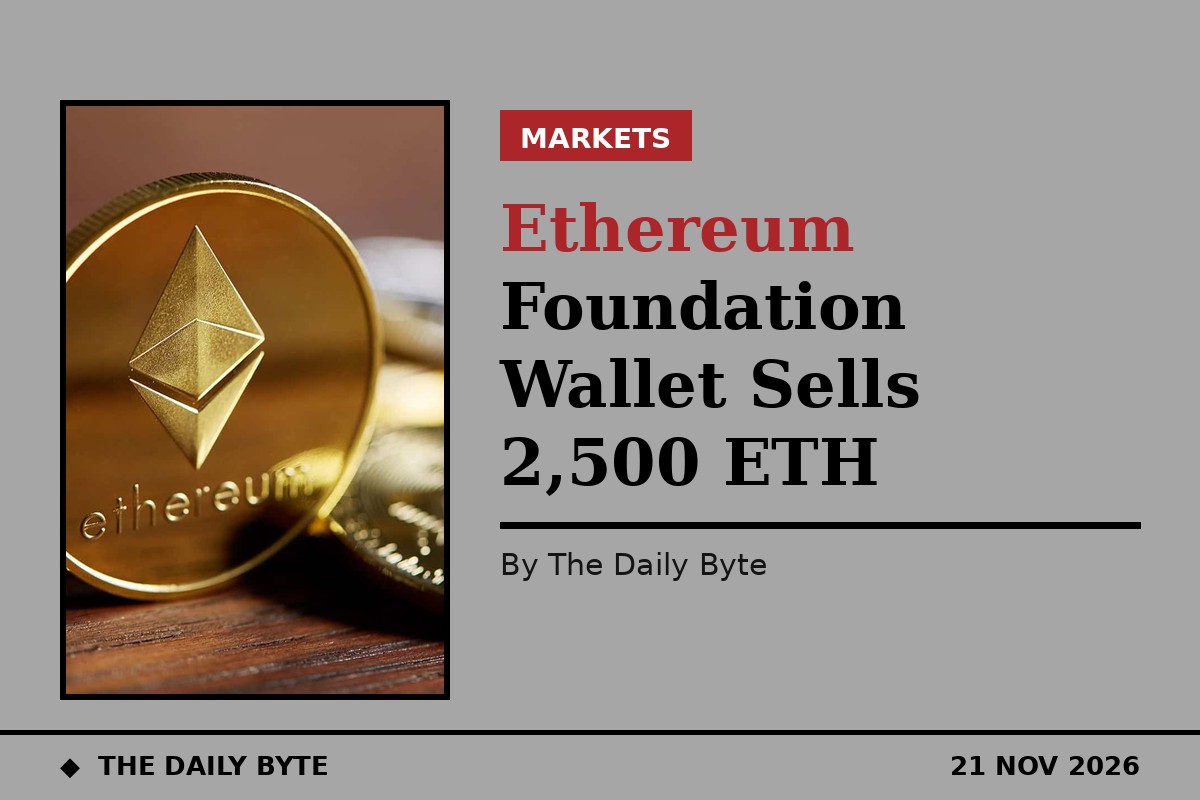
A wallet linked to the Ethereum Foundation sold 2,500 ether, worth about 3.88 million dollars, on Saturday 21 November, according to on-chain data, the latest in a long pattern of disposals by wallets connected to the foundation.
The sale was flagged by on-chain tracker Lookonchain and reported against Arkham data. The wallet, identified by the address prefix 0x5CBC, sold the coins at an average price of about 1,552 dollars each. It still holds an estimated 44.8 million dollars in digital assets, including 38.4 million dollars in the SUSDS stablecoin and 6.41 million dollars in ether.
The transfer is described as a sale by the trackers, but the label carries a caveat worth stating plainly. The wallet is described as Ethereum Foundation-linked on the basis of on-chain monitoring and earlier public disclosures associating the address with the foundation's treasury, rather than on a fresh statement from the foundation itself. No official announcement accompanied this transfer, and the destination of the coins and the purpose of the funds have not been disclosed.
A decade-long pattern of selling
What makes the sale notable is not its size but its place in a pattern. Foundation-linked wallets have been selling ether for a decade, and the amounts add up. Over the past ten years, addresses associated with the foundation have moved a cumulative 49,751 ether to exchanges, at an average selling price of about 658 dollars per coin, a figure that looks modest today only because most of those tokens were obtained when ether traded below one dollar.
The recent pace has been steady rather than frantic. On 12 October, two other foundation-linked wallets transferred a total of 4,393 ether, valued at about 11.1 million dollars at the time, to the Kraken exchange. In June, blockchain infrastructure firm BitMine acquired 10,000 ether from foundation-linked wallets at an average price of 2,292 dollars. A week earlier, a similar amount was sold for 2,387 dollars per coin.
Earlier in November, the foundation sold 7,500 ether over four days, between 11 and 14 November, through the CoWSwap decentralised exchange, receiving about 14.52 million USDS, with the proceeds transferred to a Safe multisig wallet. Adding the latest sale takes the reported November total to at least 10,000 ether.
Why the foundation sells
The foundation has never presented these sales as market calls. It is a non-profit organisation that funds research, development and projects across the Ethereum ecosystem, and it pays its costs by drawing on a treasury held largely in ether. Its treasury management policy, published in June 2025, caps annual operating expenditure at 15 per cent of treasury assets and targets reserves covering two and a half years of operations.
That structure means sales are a matter of routine funding rather than a verdict on the price. Even so, traders watch them closely, because a sale by the organisation behind the network is easily read as a signal, fairly or not, and this one landed on a bad day for the market.
A rough day for ether
Ether was already under pressure when the sale was flagged. CoinGecko data recorded the coin at 1,618.99 dollars at 1.30am UTC on Saturday, down 6.3 per cent over 24 hours. Bitcoin had fallen below 60,000 dollars for the first time since July and touched a low of about 55,830 dollars, its weakest level since September 2024.
Leveraged traders bore much of the damage. Liquidations across major exchanges reached 1.57 billion dollars in 24 hours on 20 November, according to CoinGlass data, with 265,525 traders seeing positions closed and long bets accounting for 1.43 billion dollars of the total. Bitcoin accounted for 554.28 million dollars of the liquidations, and ether traders faced 331.08 million dollars as the price fell below 1,700 dollars.
Against that backdrop, a 3.88 million dollar sale is small. It is roughly a thousandth of a single day's liquidations. But the foundation's sales have a way of attracting attention out of proportion to their size, because they come from the one seller whose timing the market cannot help but read into. The sale itself changes little; the attention it draws says more about the mood of a market in which every large holder's move is scanned for meaning.