Ethiopia Closes EU Services Talks in WTO Accession Push
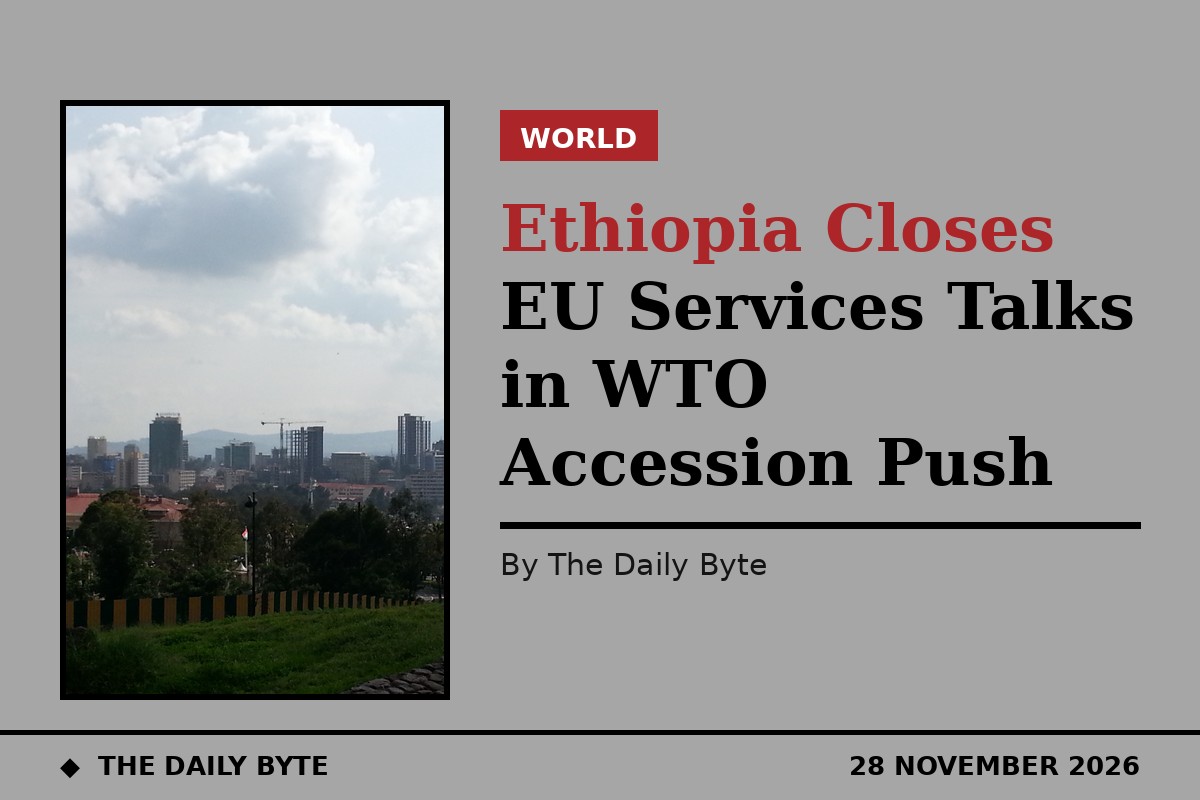
Ethiopia and the European Union have concluded bilateral talks on trade in services and narrowed their remaining differences over goods, a step forward in Ethiopia's long-running effort to join the World Trade Organization.
State Minister of Trade and Regional Integration Endalew Mekonen announced the progress in Addis Ababa on 26 November, saying it followed a meeting in Geneva on 9 November. The breakthrough brings Ethiopia closer to completing negotiations with the EU, but it does not mean the country is ready to join the WTO.
Accession also requires agreements on market access with individual members and a review of whether Ethiopian laws and regulations meet WTO rules. Ethiopia's bid has been under way for more than two decades: its WTO Working Party was established in 2003.
What remains before membership
Ethiopia has signed 11 of the 17 bilateral agreements it began negotiating, with several of the six outstanding deals nearing completion, according to the Ethiopian delegation. The EU talks on services are now concluded, while differences over goods have been reduced, although the announcement gave no details of the remaining points and did not say a goods agreement had been finalised.
After all bilateral agreements are completed, the WTO Secretariat will combine the commitments into draft schedules for technical verification. Separately, Ethiopia has reviewed more than 460 legal instruments as part of the multilateral process, and the Secretariat has welcomed progress while saying further legislative and regulatory reforms are needed.
WTO members have until 8 December 2026 to submit written questions before the Secretariat revises the draft Working Party Report. No date for Ethiopia's accession has been announced.
Why the EU talks matter
Trade between Ethiopia and the EU reached about 2.7 billion euros in 2025, according to EuroCham figures cited by Endalew. The EU's Everything But Arms scheme gives eligible least-developed countries duty-free, quota-free access for products other than arms, without requiring reciprocal tariff cuts. Ethiopian exports to the EU under the scheme are led by agricultural goods, including coffee, spices and horticultural products.
At the eighth Working Party meeting in Geneva on 9 and 10 November, Trade Minister and Chief Negotiator Yasmin Wohabrebbi Saeed reaffirmed that the government formed in October accords the highest priority to WTO accession. She told members: "Bringing a market of more than 130 million people, the fifth-largest economy in Africa, into a system of predictable, non-discriminatory rules is critical."
Progress matters for Ethiopian businesses seeking access to overseas markets, as well as for foreign firms considering trade and investment in the country. But the government still has to close the remaining bilateral deals and finish the legal reforms before WTO members can approve a final accession package.


