Ethiopia fighting spills into Kenya, 10,000 displaced
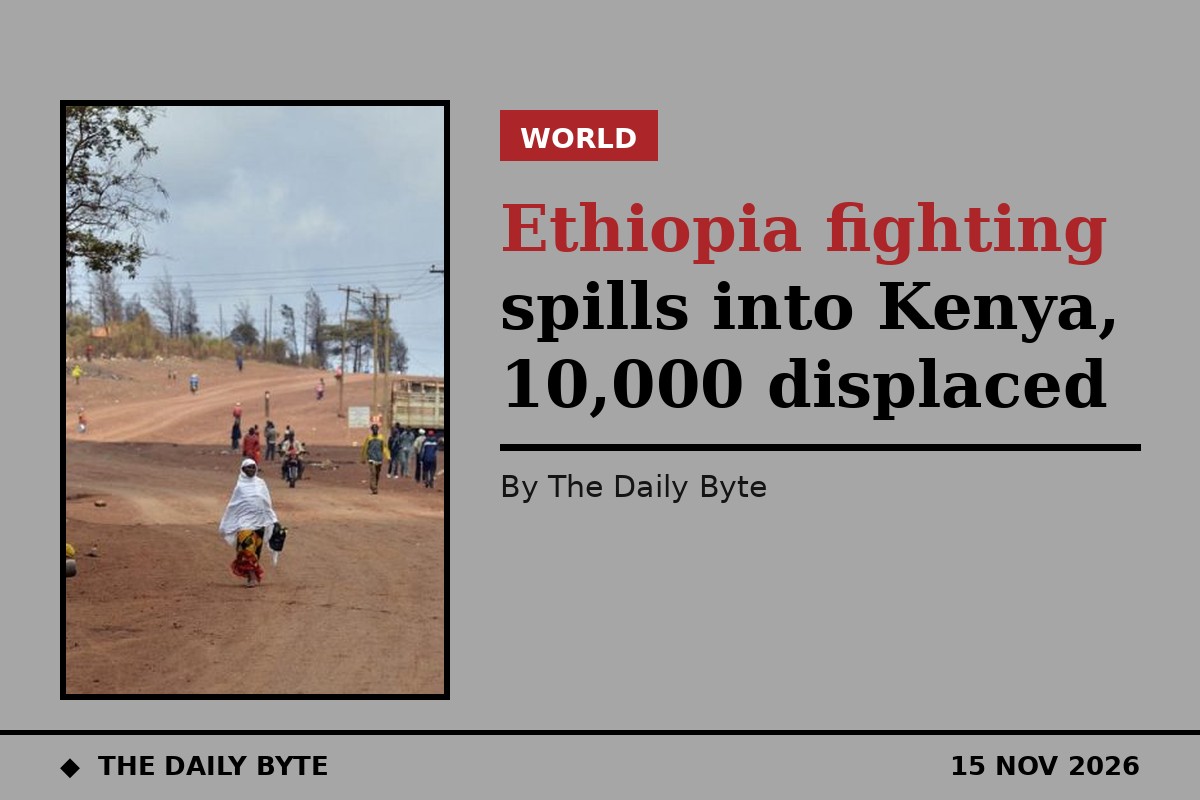
At least two Kenyans have been killed and 22 wounded by stray bullets, and roughly 10,000 residents displaced, as fighting in neighbouring Ethiopia spills across the border, Marsabit County Governor Mohamud Ali said on Friday.
The governor cited a government-led assessment that found approximately 10,000 residents had been displaced within Marsabit County. The same assessment estimated that more than 50,000 Ethiopians have crossed into the county to escape clashes in the Oromo and Somali areas of southern Ethiopia.
Gunfire and explosive devices tied to the conflict are threatening civilian settlements, forcing Kenyan border communities from their homes. Moyale, about 750 kilometres north of the capital Nairobi, has been hit hardest. Thousands of displaced families are now sheltering in temporary facilities and private homes.
Schools, power and trade disrupted
Governor Ali said the fighting has disrupted schools, national examinations, electricity supplies and cross-border trade. He warned that unexploded ordnance landing near homes and public facilities poses a serious danger to civilians, especially children.
"The human cost of this conflict is already devastating," he said in a statement. He added that the county was particularly alarmed by the public health risks arising from overcrowded shelters, shortages of essential medicines, worsening nutritional conditions and confirmed cases of measles and rubella. Without urgent medical aid, vaccinations, better sanitation and nutritional support, he cautioned, further disease outbreaks could follow.
Local authorities are working with national agencies and humanitarian organisations to deliver emergency food, water, healthcare and shelter. The governor appealed for more international support, saying existing resources cannot meet the escalating emergency, and urged community leaders to discourage retaliation and keep the conflict from inflaming ethnic tensions.
A border dispute that keeps escalating
The violence erupted on 18 October after a dispute over a regional flag and the killing of a 13-year-old girl. It has since spread to several districts along Ethiopia's disputed Oromia-Somali boundary, where longstanding territorial tensions continue to threaten communities on both sides of the border.
The latest killings underline how the crisis is worsening. At least eight Somali civilians, including women and children, were killed on Saturday morning in an attack in the Malkamari area of Ethiopia's Dawa Zone, opposite Mandera County in north-eastern Kenya. Local officials blamed armed Oromo militiamen, although the circumstances and the perpetrators' involvement have not been independently confirmed. Elders and the local member of parliament condemned the attack and called on security agencies in both countries to investigate and arrest those responsible.
Humanitarian agencies are scaling up their response. The UN refugee agency, UNHCR, has deployed an emergency team to Moyale and is working with the Kenyan government, the Department of Refugee Services, the International Organization for Migration, UNICEF, the World Food Programme and the Kenya Red Cross Society. UNHCR is mobilising emergency relief supplies, including household items and temporary shelter materials, for nearly 12,000 people.
The UN allocated $3 million from its Central Emergency Response Fund on 6 November, and the agencies have jointly appealed for $8.9 million to support up to 50,000 people over three months. A rapid assessment found that 71% of displaced households in Moyale have no food, while many are sleeping in the open without blankets, cooking utensils or bedding.


