EU 22nd Russia Sanctions Hit 60 Banks and SWIFT
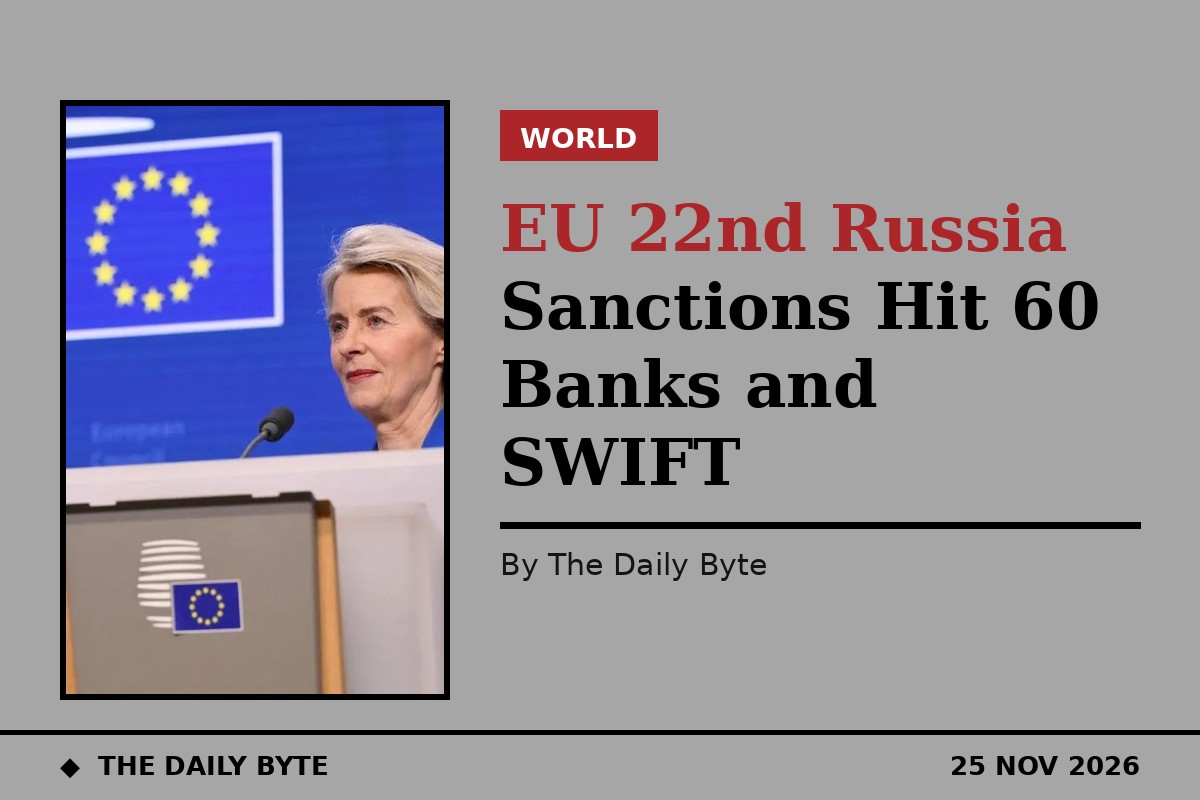
The European Commission has proposed its 22nd package of sanctions against Russia, targeting about 60 banks, crypto networks used to evade existing measures, the Kremlin's shadow fleet of oil tankers and Russian teams competing under their flag at events in the EU.
Commission President Ursula von der Leyen presented the package in Strasbourg on Monday, 23 November, saying the aim was to keep pressure on Russia to end its war in Ukraine. "We will continue to propose new sanctions until Russia shows genuine intent for a lasting peace in Ukraine," she said.
Sixty banks cut off from SWIFT
The headline financial measure extends the EU's transaction ban to about 60 Russian banks, all of which would be removed from the SWIFT messaging system used for international payments. The package also cracks down on crypto and payment networks, including in third countries that help Russia evade sanctions, and launches a Crypto Sanctions Task Force to support that work.
On energy, the Commission is expanding its energy services ban so that no European company can help Russia build, operate or repair its energy infrastructure, notably its refineries. For the first time, the ban also covers electricity services. On the shadow fleet, the package lists more than 70 additional ships and proposes banning all tanker vessels insured in Russia from European ports.
Visa ban for ex-combatants
The package also proposes a visa ban for Russians who have served in the armed forces since 24 February 2022 and were directly involved in combat operations. "Russian ex-combatants pose a security risk to Europe," von der Leyen said. "They cannot be allowed to wander freely across our countries. Therefore, entry into the European Union will be off limits."
Europeans would also be barred from continuing to occupy posts in the governing bodies of companies in Russia. "There cannot be business as usual in our economic relations with Russia," von der Leyen said.
Sports and culture
On sports and culture, the Commission proposes bans on Russian teams and athletes competing under the Russian flag at events in the EU, a ban on the display of official Russian symbols, restrictions on financial flows from Russian sponsors to European sports and cultural associations, and restrictions on Russians holding posts in the governing bodies of European sports federations.
"Sports events cannot be a forum for propaganda activities," von der Leyen said, adding that the package was "shutting the door" to Russia's participation in European sports and cultural events.
Still needs all 27 governments
The package is a proposal, not yet law. It must be endorsed by all 27 EU member states before it can enter into force, a process that can take weeks, and the planned measures are likely to be modified during negotiations between capitals.
The bloc has already sanctioned more than 4,700 people and entities, including President Vladimir Putin, and its biggest single listing just over a month ago targeted almost 1,600 Russian officials and companies linked to the arms industry. Von der Leyen said the EU was giving Ukraine "the strength to secure peace, and Russia every reason to choose it".


