EU Unveils 22nd Sanctions Package Against Russia
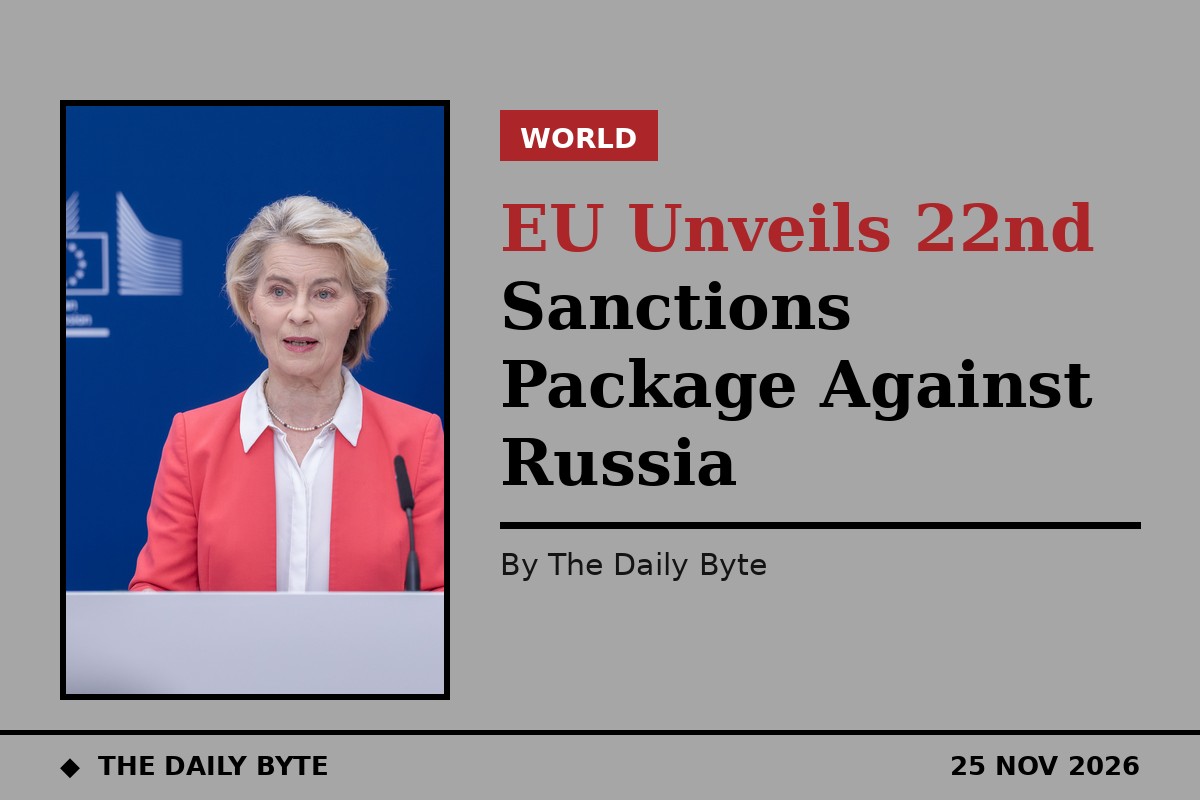
The European Commission has proposed its 22nd package of sanctions against Russia, widening the net to around 60 banks, the shadow fleet, crypto networks and Russian athletes competing in the European Union.
Commission President Ursula von der Leyen unveiled the package in Strasbourg on Monday 23 November, saying the aim was to keep pressure on Moscow to end its war in Ukraine. "We will continue to propose new sanctions until Russia shows genuine intent for a lasting peace in Ukraine," she said.
The package is a proposal, not yet law: sanctions require the unanimous agreement of all 27 EU member states, and the text is likely to change as governments negotiate it.
Sixty banks cut off from SWIFT
The financial measures are the centrepiece. The Commission wants to extend the transaction ban to some 60 Russian banks, removing all of them from SWIFT, the messaging system banks use to instruct cross-border payments. It is also cracking down on the crypto and payment networks Russia uses to move money around the restrictions, and has created a Crypto Sanctions Task Force to police enforcement.
The Commission said it would also target third countries that help Russia evade the restrictions, including through banks and crypto companies. It has said the focus on circumvention is a major part of the new package.
Energy, shadow fleet and sport
On energy, the Commission proposes expanding the energy services ban so no European company can help Russia build, operate or repair energy infrastructure, notably refineries. More than 70 additional shadow-fleet vessels would be added to the sanctions list, and the package would ban all tanker vessels insured in Russia. Electricity companies would be targeted for the first time.
Russian participation in European sport and culture is also in the firing line. Under the proposal, Russian teams and athletes would be barred from competing under the Russian flag at sports events in the EU, and the display of official Russian symbols would be banned. The Commission also wants to limit Russian sponsorship money flowing to European sports and cultural organisations and to restrict Russians serving on the governing bodies of European sports federations. Europeans would also be barred from holding posts in the governing bodies of companies in Russia.
Visa ban for ex-combatants
The package proposes a way to implement an EU visa ban on Russian ex-combatants, which member states agreed in principle in the previous package, adopted in July, pending a workable mechanism. The Commission has issued guidelines to help countries identify people who fought in Russian forces and scrutinise their visa applications, and recommends tightening visa restrictions on Russian tourists.
The 22nd package follows the 21st, adopted in July, and the 20th, adopted in April. More than 100 new listings are proposed, including companies accused of helping Russia circumvent existing restrictions and entities in the military-industrial sectors of Russia and Belarus.
EU governments must now assess the proposals and agree which to adopt. Any sanctions decision requires unanimity, and negotiations over past packages have often taken weeks.


