EU Agrees New Green Fund Rules in SFDR Overhaul
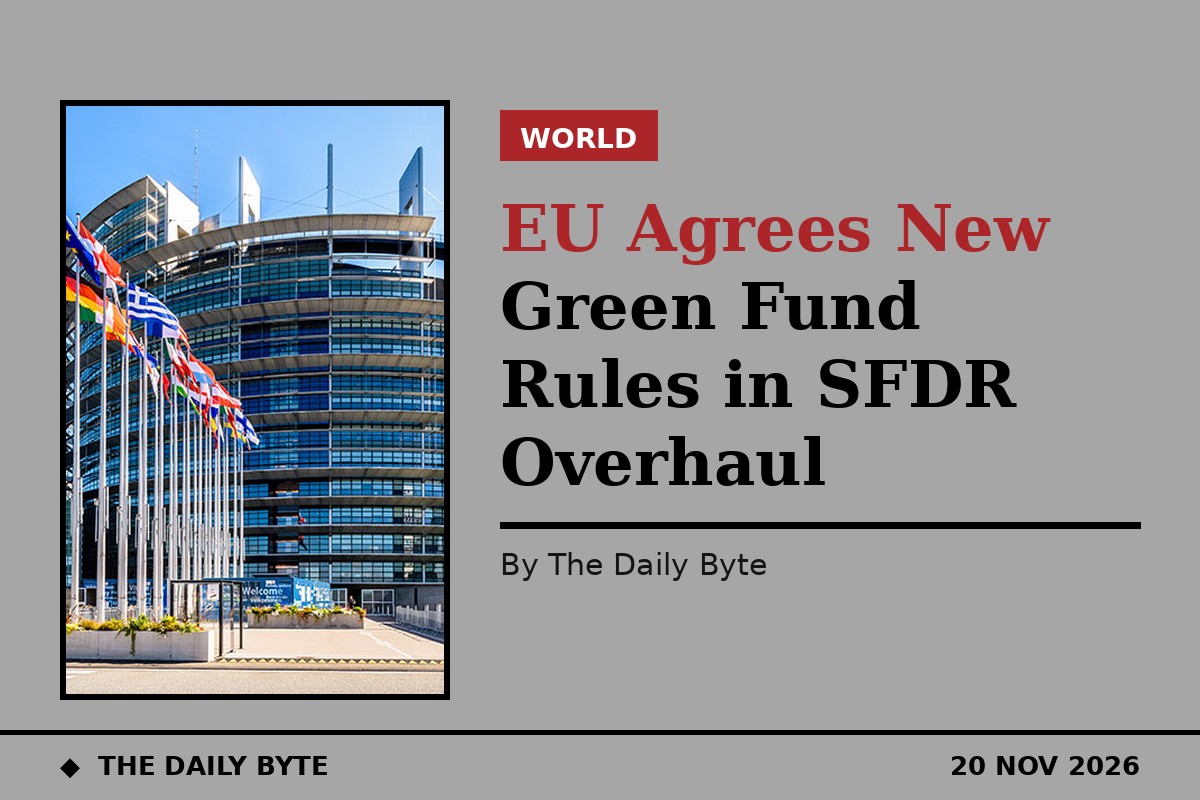
European Union countries and the European Parliament have struck a provisional deal to overhaul the bloc's rules on green investment claims, creating three new labels for funds that say they invest sustainably. The agreement, reached late on Wednesday, is the biggest rewrite of the Sustainable Finance Disclosure Regulation (SFDR) since it came into force in March 2021.
The European Commission welcomed the deal on Friday, calling it an important step towards a simpler and clearer framework that investors can understand and compare. The new system replaces the old Articles 8 and 9 categories, which had become the default labels for funds making environmental or social claims but were widely criticised as confusing and open to abuse.
Three new labels for green funds
Under the agreement, financial products that make sustainability claims will fall into one of three categories. The top category, "sustainable", covers products that already contribute to sustainability goals such as tackling climate change or protecting the environment. The middle category, "transition", covers products that channel money into companies or projects that are not yet sustainable but are on a credible path away from unsustainable activities. The basic category, "ESG basics", covers products that take environmental, social and governance factors into account but do not meet the stricter tests of the other two categories.
To qualify for a category, a fund will have to invest at least 70 per cent of its assets in line with the strategy behind that label. The change is designed to make it harder for funds to present themselves as green while holding only a small share of genuinely sustainable assets, a practice often described as greenwashing.
Fossil fuels and the transition compromise
The treatment of fossil fuel companies was one of the hardest points in the negotiations. Under the deal, transition funds may include fossil fuel companies only if those companies put at least 20 per cent of their capital spending into activities aligned with the EU taxonomy of green economic activities and have a measurable, time-bound plan to cut their emissions. The compromise sits between the Commission's original proposal for a full exclusion and the looser positions taken by member states and parts of Parliament.
The agreement also sets exclusions for activities including tobacco and weapons, and requires investment firms to run due diligence and monitoring processes for categorised products, reviewed at least once a year. Reuters reported that the changes could affect about 7.5 trillion euros of funds in Europe, underlining how widely the new labels will be felt across the investment industry.
Lighter paperwork for firms
Alongside the new labels, the deal streamlines the disclosure duties that have burdened fund managers since 2021. Disclosure requirements for financial firms at entity level will be cut back, and the information funds must publish about the negative effects of their investments on the climate and society will be reduced and simplified. Professional investors will be exempt from some requirements, and financial advice and portfolio management will fall outside the scope of the rules, although firms will still be able to recommend products that genuinely match a client's sustainability preferences.
The Commission said the simpler framework would make sustainability information easier to understand and compare, while the Council said the changes would ease administrative burdens and help investors judge products more clearly. The deal also fits the EU's wider drive to cut red tape for businesses and sharpen the bloc's competitiveness.
What happens next
The agreement is provisional and must still be formally confirmed by both the European Parliament and the Council before it becomes law. Once adopted, the legal text will be published in the EU's Official Journal, enter into force 20 days later, and start applying two years after that, giving the industry a two-year transition period to adapt.
Aleksandra Palinska, executive director of the sustainable investment forum Eurosif, described the deal as an important step forward for sustainable investment. Others in the industry are likely to watch closely how the final text treats engagement with companies, after campaigners warned that the deal weakens requirements for investors to push the companies they own towards better behaviour. For savers, the promise is simpler: a fund labelled sustainable, transition or ESG basics should mean something clear, and comparable, across the whole of Europe.
Sources: Council of the European Union | Reuters


