EU Opens Antitrust Probe Into Coca-Cola Bottler
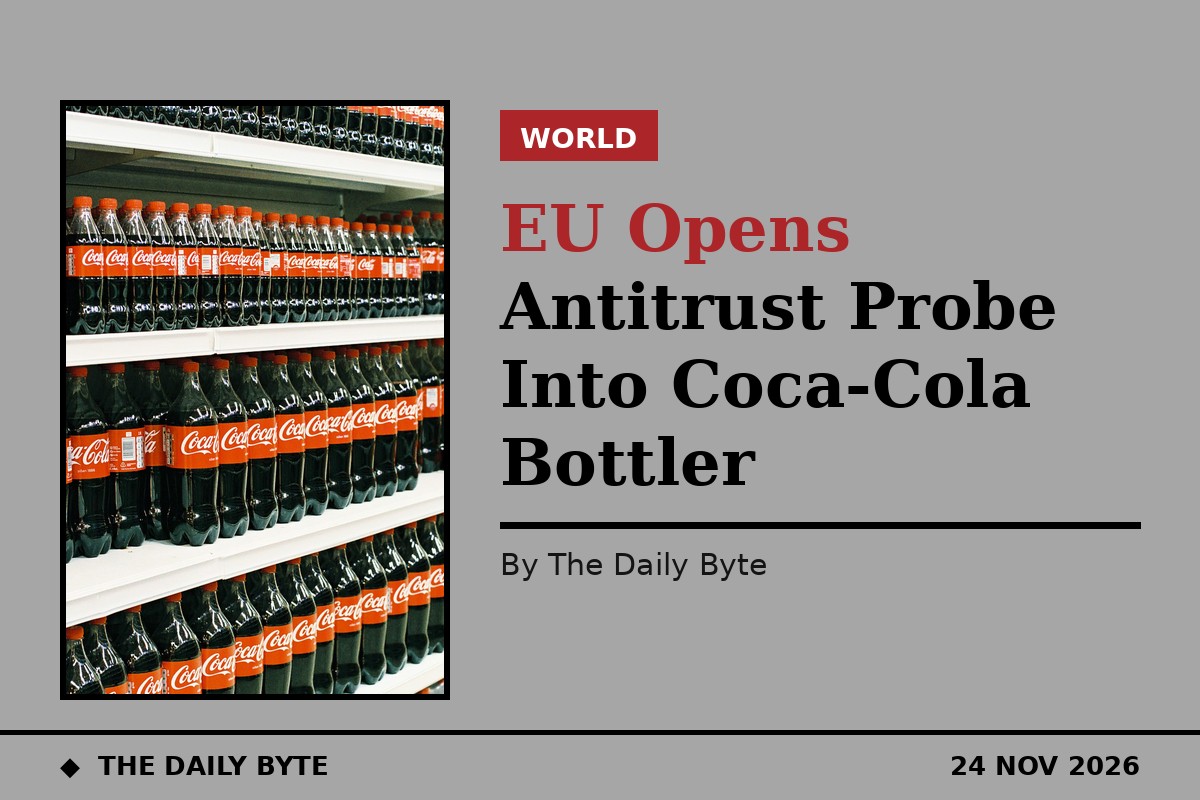
The European Commission has opened a formal antitrust investigation into Coca-Cola Europacific Partners, the company that bottles and sells Coca-Cola drinks across much of western Europe, over concerns that it may have abused its dominant position by stopping shops from buying drinks where they are cheapest. The Commission announced the investigation on Monday 23 November, saying it would examine whether the bottler broke EU competition rules by hindering trade between member states.
CCEP, which is based in the UK, is one of the two largest European bottlers supplying drinks under The Coca-Cola Company's brands, and the largest supplier of carbonated soft drinks in Belgium, France, Germany, Luxembourg, the Netherlands, Portugal, Spain and Sweden. The Commission said it was concerned that the company may have abused its dominant position in the wholesale supply of carbonated soft drinks and sports drinks to off-trade customers, meaning supermarkets and other retailers that sell drinks for people to take home. Reuters reported that the investigation will focus on whether the bottler restricted cross-border trade and denied wholesale customers the chance to negotiate supply deals covering several countries at once.
The practices under scrutiny
Investigators will look at four specific practices. The first is whether CCEP made wholesale price reductions conditional on the drinks not being exported to another EU member state, effectively rewarding retailers for keeping cheaper stock at home. The second is whether the company used different packaging volumes in different countries with the aim of making cross-border resale harder, so that a bottle bought cheaply in one market could not easily be sold in another.
The third line of inquiry is whether CCEP gave incentives to retailers to restrict imports of non-alcoholic drinks into Spain, and the fourth is whether it refused to let wholesale customers negotiate procurement for several countries together, instead requiring separate deals country by country. Taken together, the Commission argues, such practices would fragment the EU's single market for soft drinks, leaving retailers unable to shop around and consumers facing higher prices or less choice depending on where they live.
European Commission Executive Vice-President Teresa Ribera, who oversees competition policy, said consumers should not have to pay more simply because they live in one EU country rather than another. The Commission said it remains committed to bringing down unjustified barriers to the free movement of goods between member states, including territorial supply constraints, and is running a public consultation on tools to tackle such restrictions where competition rules do not reach.
What the company says
CCEP said it always takes competition law very seriously and is firmly committed to complying with all applicable laws and regulations in every market in which it operates. The company said it would continue to engage fully with the Commission's investigation. The opening of a formal investigation does not prejudge its outcome, the Commission stressed, and there is no set deadline for a final decision. If the Commission ultimately finds that CCEP breached the rules, the company could face a fine of up to 10 percent of its global annual turnover.
The case is registered as AT.40860 on the Commission's competition case register. It follows unannounced inspections carried out by Commission officials at the company's premises in several member states in March 2025. The Commission will now carry out its in-depth investigation as a matter of priority, gathering evidence from the company, retailers and other market participants before deciding whether to bring formal charges.
How the case got here
This is not the first time the bottler's market practices have drawn regulatory attention. In 2023, CCEP, alongside fellow bottler Coca-Cola HBC and The Coca-Cola Company, escaped a regulatory probe after EU antitrust officials decided there were insufficient grounds to pursue the case against the three companies. The new investigation is narrower and more specific, focused on identifiable practices affecting trade between named member states rather than the broader market structure examined before.
The probe also lands at a time when the Commission is paying closer attention to how everyday consumer goods are priced across borders. Differences in the price of the same branded product from one EU country to another have long frustrated shoppers and retailers, and Brussels has repeatedly said that unjustified territorial restrictions are a target for enforcement.
What happens next depends on the evidence. If investigators find that discounts were tied to export bans, or that packaging and contracting practices were designed to keep national markets separate, the Commission could issue a statement of objections, the formal step before a decision and any fine. If the evidence does not support the concerns, the case can be closed without action.


