EU Boards Russian Shadow Fleet Tanker Midag
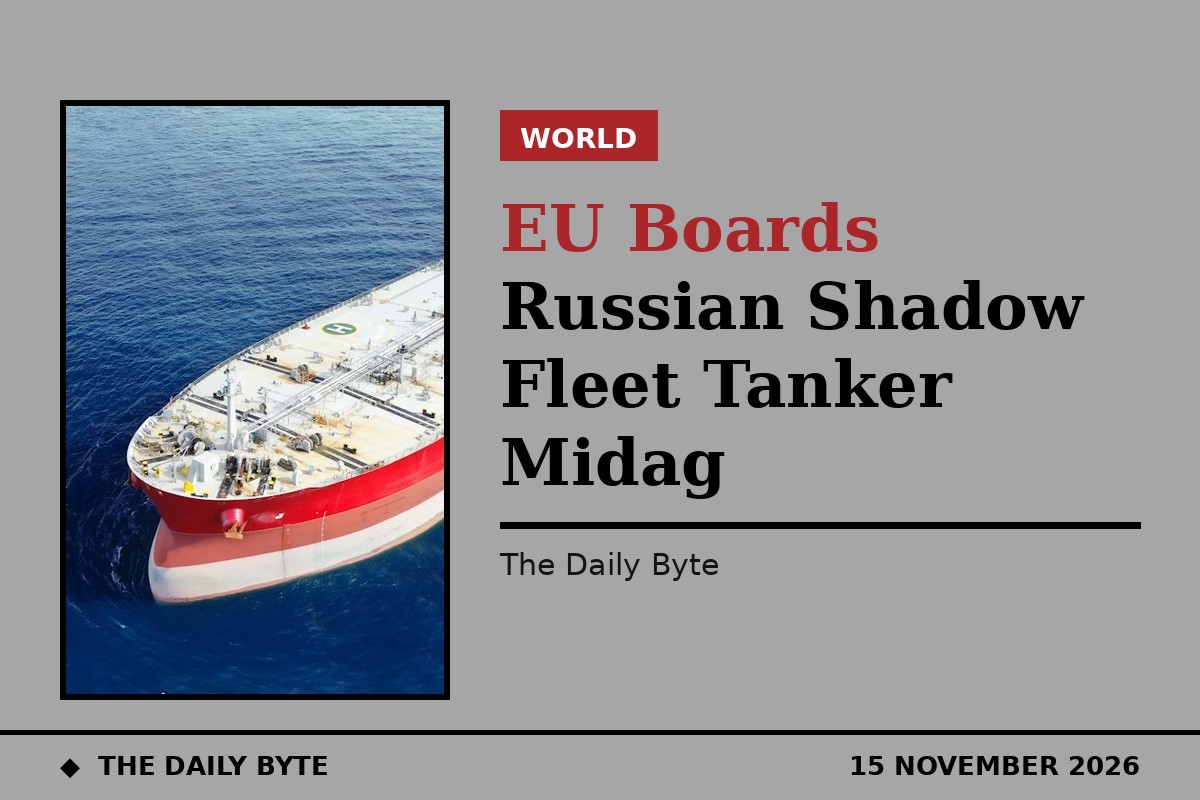
European Union naval forces have boarded a suspected Russian shadow fleet tanker in the Mediterranean and confirmed that it was sailing under a false flag, the EU's foreign policy chief has said.
The vessel, the crude oil tanker MV Midag, was boarded on Friday by troops from the EU's Operation Irini, Kaja Kallas said in a social media post on Sunday. The boarding was carried out under Article 110 of the United Nations Convention on the Law of the Sea, which allows a warship to board a foreign vessel on the high seas where there is reasonable ground to suspect it is without nationality or is in fact of the same nationality as the warship.
"The boarding, carried out in accordance with Article 110 of the UN Convention on the Law of the Sea, confirmed that the MV Midag was sailing under a false flag," Kallas wrote. "The EU will keep disrupting Russia's shadow fleet at sea and through diplomatic means."
What is known about the MV Midag
Ship tracking data describes the Midag as a crude oil tanker sailing under the flag of Zimbabwe. Publicly available tracking information showed its location north-east of Algiers, the capital of Algeria, on Sunday morning.
Russia uses its so-called shadow fleet of ageing tankers and supporting vessels to move oil while avoiding Western sanctions imposed after its full-scale invasion of Ukraine in early 2022, according to Western officials. The fleet relies on complex ownership structures, flags of convenience and other tactics designed to mask the origin of its cargo.
The boarding is the latest in a series of EU interceptions of suspected shadow fleet vessels in the Mediterranean this year. In August, forces from the Italian Navy ship ITS Thaon di Revel boarded the MV Sun, another suspected shadow fleet tanker, to verify its flag south of Sicily.
Operation Irini's widened role
Operation Irini, formally known as EUNAVFOR MED IRINI, was launched in March 2020 with the task of enforcing the United Nations arms embargo on Libya. Its work also covers countering arms trafficking, gathering information on oil smuggling, helping to disrupt human smuggling and training Libyan law enforcement.
In October, the operation's mandate was renewed through to 31 March 2029, with new objectives including helping to constrain Russia's shadow fleet, which the operation says uses the Mediterranean as a key transit and transfer area.
New sanctions expected on Monday
Kallas said EU foreign ministers meeting on Monday are expected to approve new sanctions lists targeting Russia, including banks, buyers and companies supporting the shadow fleet. The measures are also expected to cover Russian oil refineries and firms linked to the network of vessels used to bypass international restrictions.
The boarding and the planned sanctions underline a hardening of the EU's approach to the shadow fleet, moving from monitoring and diplomatic pressure to direct action at sea. EU officials argue that disrupting the fleet cuts off revenue that funds Russia's war in Ukraine, while Moscow has consistently denied that the vessels are part of any sanctions-evasion scheme.
Further details of the Midag boarding, including what happens to the vessel and its crew, have not yet been published by the EU operation. Newsweek and UNN both reported Kallas's announcement on Sunday.


