EU budget plan faces rejection ahead of summit
European Council President António Costa's compromise plan for the European Union's next long-term budget ran into open opposition from several governments on Monday, leaving EU leaders with wide gaps to close when they meet in Brussels on 26 and 27 November. The Czech and Hungarian prime ministers rejected the proposal outright, while France and Germany objected from opposite directions.
Costa presented the revised plan on Saturday 21 November. It sets the budget for 2028 to 2034 at €1.582 trillion, a cut of €40 billion from a proposal put forward by the Irish EU presidency in October and €180.6 billion below the European Commission's original plan, Reuters reported. Because the budget requires the agreement of all 27 member states, any single government can block it.
Babis calls the plan "absolutely unacceptable"
Czech Prime Minister Andrej Babis was the bluntest of the critics. Speaking before travelling to Bratislava for a meeting of the Visegrad Group, he called the proposal "absolutely unacceptable" and said the positions were so far apart that he could not imagine how agreement could be reached. He argued that too small a share of the money would go to member states rather than to central programmes, and he said funding for Ukraine should be kept separate from the budget.
His criticism echoed Hungarian Prime Minister Péter Magyar, who said earlier on Monday that the proposal was not bringing member states closer to an agreement and that Ukraine should also be treated separately. Magyar told reporters he did not consider the plan a basis for negotiations in any way, and said he had written to Costa to question the point of spending two days negotiating unless significant changes were made, Rapporteur reported.
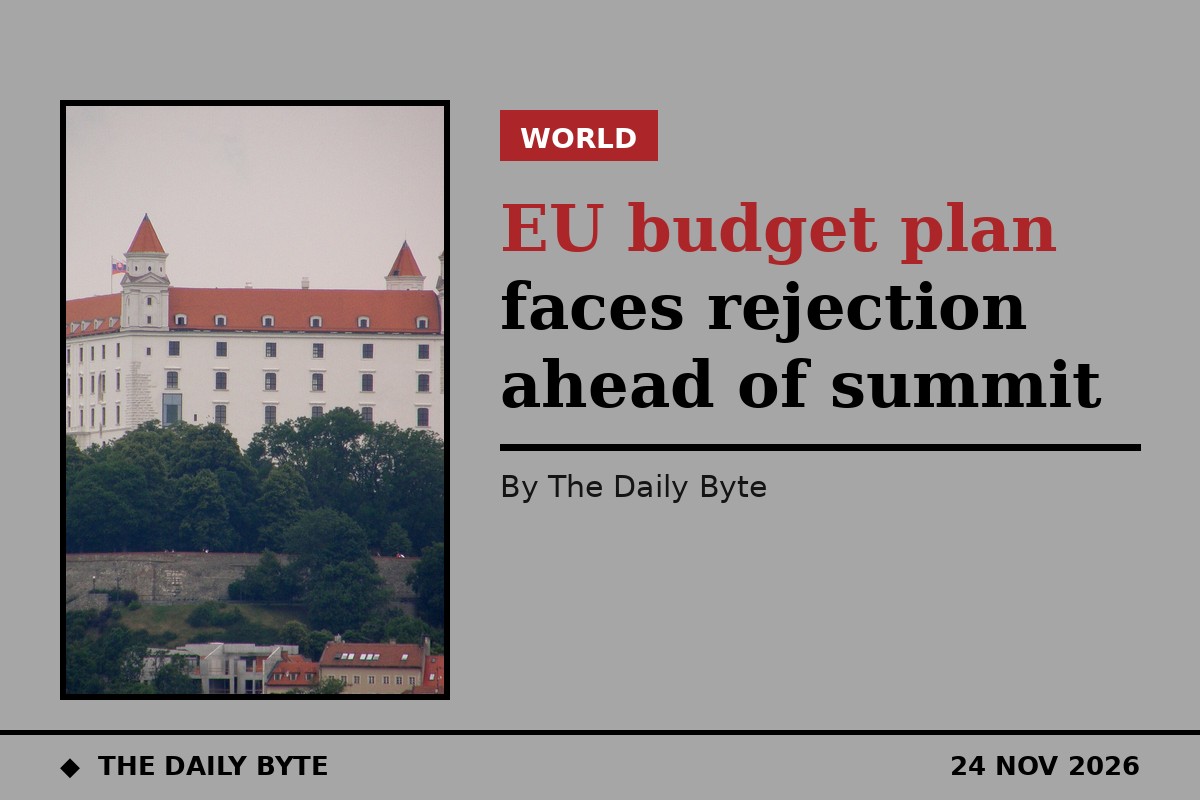
Slovak Prime Minister Robert Fico, who hosted the Bratislava meeting of the Visegrad countries and Austria, accused German Chancellor Friedrich Merz of blackmail for linking the budget with aid for Ukraine. The five leaders at the meeting said they would coordinate their negotiating positions at Thursday's European Council, focusing on cohesion funding, agricultural subsidies and energy policy.
Objections from both sides
The plan has drawn fire from both camps in the budget debate. Germany, the biggest net contributor, says the total is still too high, while France has criticised it for failing to protect farmers' incomes. The European Parliament's chief budget negotiator, Siegfried Muresan, said the numbers were a step backwards.
France's objection matters because farm spending is one of the most politically sensitive parts of the budget in Paris. Costa's draft had offered France a concession it had long demanded, a proposed levy on the turnover of large digital companies, but Paris said the text still fell short on guaranteeing income support for farmers.
Germany's objection runs the other way. Merz has described the draft as a first step but warned that overall spending remains too high, and Berlin has linked its approval to all 27 member states sharing the costs of financing Ukraine fairly. That linkage is itself contested: Fico and Magyar both argue that support for Ukraine should be financed outside the seven-year budget framework, while Poland's Prime Minister Donald Tusk and Austria's Chancellor Christian Stocker defended continued assistance to Kyiv as a security interest.
What happens next
EU leaders will discuss Costa's proposals at the special summit on 26 and 27 November, with the aim of narrowing the differences between net contributors and net beneficiaries and reaching an agreement in December. The budget finances everything from farm support and regional development to technology, industry and research, so the shape of the deal will affect spending across the bloc for seven years.
For now, the distance between the camps is wide. Babis said Western European countries that once used EU money to build their own infrastructure did not want to keep funds available for newer members still building highways and fast rail connections. Magyar said Hungary was in no hurry to conclude the negotiations and would only accept an agreement serving Hungarian citizens and businesses. With unanimity required, the summit will test whether Costa can find a compromise that satisfies governments pulling in opposite directions.


