EU carbon permits: Irish presidency seeks slower cuts
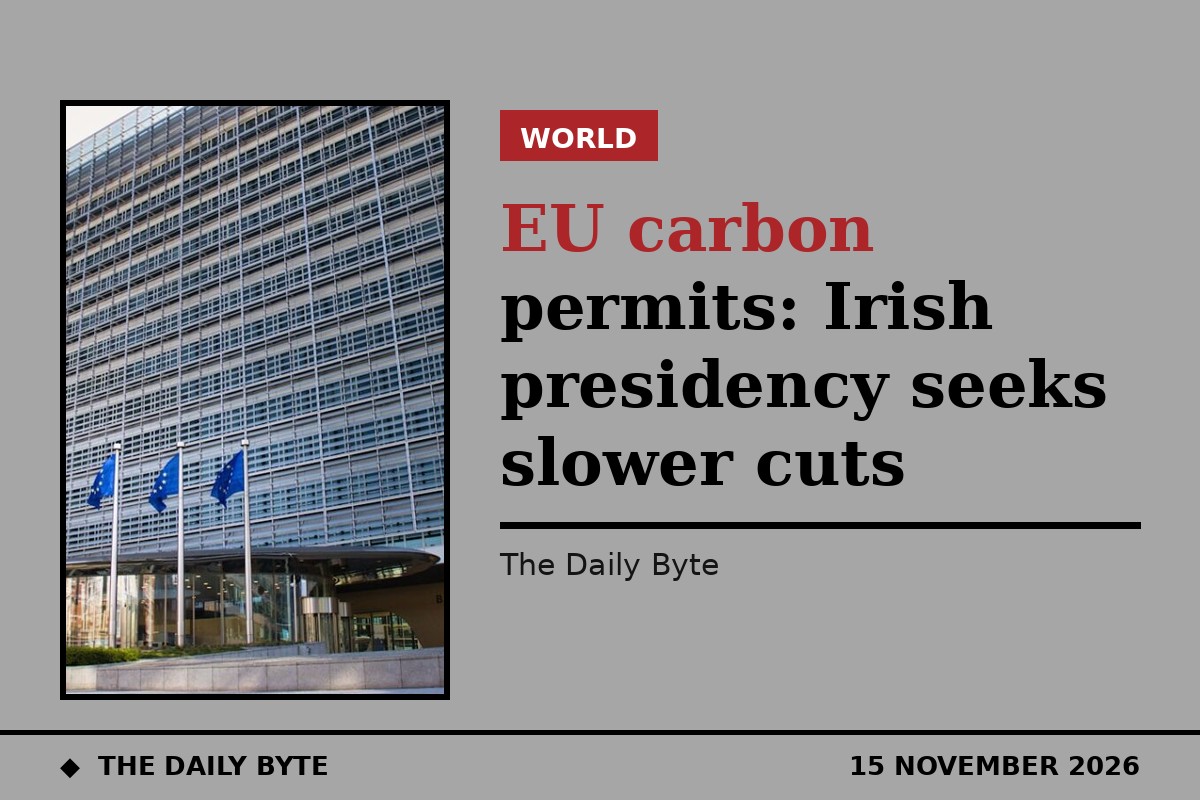
The European Union's Irish presidency has proposed slowing the phase-out of free carbon permits for industry and exempting smaller installations from new decarbonisation requirements, according to a compromise text seen by Reuters on Sunday.
The text, which EU countries will debate on Wednesday, is part of talks on the European Commission's review of the EU Emissions Trading System (ETS). Brussels is redesigning the scheme to meet the EU's legally binding goal of cutting net greenhouse gas emissions by 90 per cent by 2040, compared with 1990 levels.
How the carbon market works
The ETS covers power generation, industry, aviation and shipping. It puts a price on carbon by requiring companies to surrender a permit for every tonne of carbon dioxide they emit. The scheme was designed to deliver the EU's 2030 climate target and, if left unchanged, would reduce the supply of permits to near zero by 2039.
Free permits matter because they shield energy-intensive industries, such as steel, chemicals, cement and fertilisers, from the full cost of the carbon price while they invest in cleaner production. How quickly those free permits are withdrawn is therefore one of the most contested questions in the review.
What the Irish text would change
A key change concerns industrial benchmarks, which determine how many free permits each sector receives. The text would base benchmarks on the most efficient installations representing 10 per cent of a sector's production volume, and would phase in benchmark cuts through annual updates rather than in one step every five years, resulting in a more gradual reduction in free allowances.
Under the compromise, small installations, defined as those that received fewer than 5,000 free permits over the previous allocation period, would be exempt from the Commission's proposed requirement to submit decarbonisation investment plans in order to qualify for free permits.
For larger installations, companies would be able to access the final 20 per cent of their free allocation once construction begins on an eligible decarbonisation project, rather than waiting until the project is completed, as the Commission proposed.
What happens next
"The Irish Presidency is taking a constructive approach to deliver agreement on the ETS1 Review at the December Environment Council," a spokesperson for the Irish presidency said on Sunday. EU governments and the European Parliament must each agree their negotiating positions before entering talks to agree a final law.
The proposal is a compromise, not a final decision. Industry groups have pressed for a slower withdrawal of free permits, while climate campaigners argue that free allocation weakens the incentive to cut emissions. The debate on Wednesday will show how far member states are willing to go in softening the Commission's original plan while keeping the 2040 target within reach.
Source: Reuters.


