EU Creates Sanctions Office and Crypto Task Force to Close Russia Evasion Loopholes
Enforcement takes centre stage
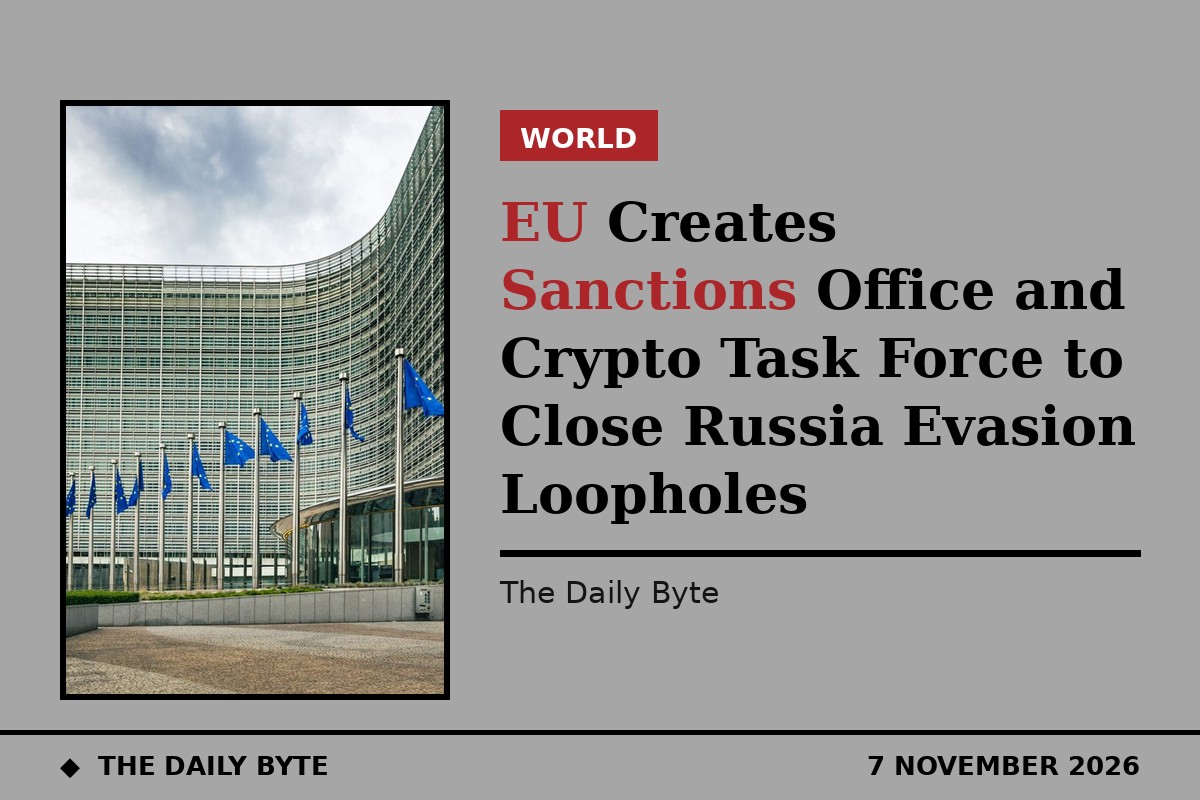
The European Union is shifting its Russia sanctions strategy from writing new packages to enforcing the ones it already has. Financial Services Commissioner Maria Luís Albuquerque announced on 5 November the creation of a dedicated Commission office to monitor EU sanctions across their entire economic lifecycle, alongside a new task force focused on cryptocurrency evasion.
The announcement came as Albuquerque chaired the tenth meeting of the High-Level Group on Union Restrictive Measures in Brussels. EU Sanctions Envoy David O'Sullivan convened a separate forum with partners including the United States, the United Kingdom, Japan, Canada and Ukraine.
What the new office will do
The office will cover sanctions "from policy design to outreach, implementation, and of course circumvention", Commission spokesperson Siobhan McGarry confirmed on Friday. Its aim is to give member states quicker access to guidance, data sharing and technical analysis, and to harmonise how sanctions are applied so their impact on Russia is maximised.
The crypto task force will bring together experts from the Commission and national governments to close loopholes that allow digital assets to be used to bypass restrictions. An EU diplomat said the task force is initially expected to operate for 12 months.
The evasion problem
The focus on enforcement reflects how far evasion networks have adapted since Russia's full-scale invasion of Ukraine began in February 2022. The Brussels discussions covered crypto-asset transactions, foreign payment networks, military procurement and the maritime infrastructure supporting Russian oil exports, including the shadow fleet.
The EU's 21st sanctions package, adopted on 23 July, extended transaction bans to another 33 Russian financial institutions and four banks in third countries, and barred EU operators from dealing with 14 crypto platforms. Officials acknowledge that restrictions only bite if applied evenly across member states.