EU Equal Pay Day: Women Work Unpaid From 20 November
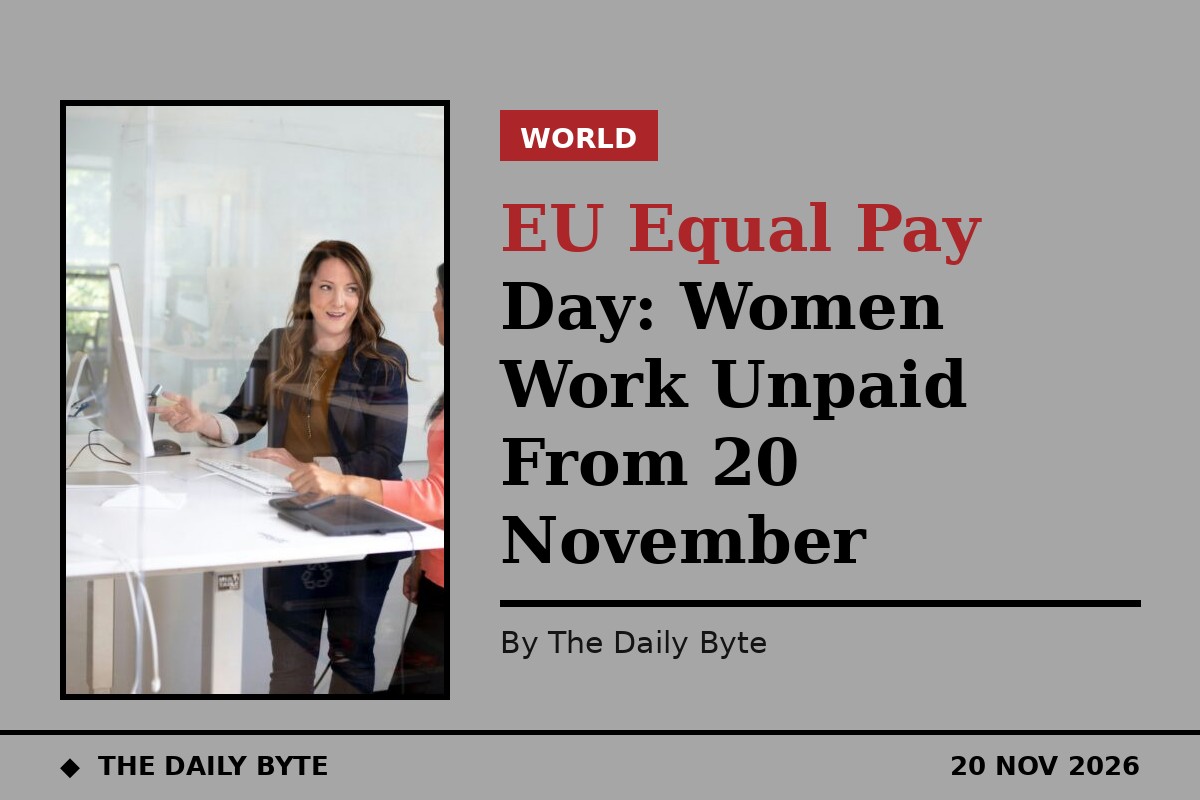
Women across the European Union symbolically stopped being paid on Friday 20 November, the date the European Commission marks as the EU's Equal Pay Day for 2026. From today, the average woman in the EU is effectively working without pay for the rest of the year, compared with the average man.
The date is calculated from the EU gender pay gap. In the EU's 27 member states, the average gross hourly earnings of male employees were 11.1% higher than those of female employees in 2024, according to the Commission. That gap is equal to around one and a half months of salary per year.
Equal Pay Day falls on a different date each year because it moves with the latest pay gap figure. The Commission marks the day annually to draw attention to the fact that women in Europe still earn less on average than their male colleagues, even though equal pay for equal work has been a fundamental right in the EU treaties for more than six decades.
What the 11.1% gap means
The figure compares average gross hourly earnings across the whole economy. It does not mean that a woman is paid 11.1% less than a man doing the same job in the same workplace. Instead, it reflects differences in average earnings across the workforce, including the types of jobs women and men tend to hold, working hours and career patterns.
That distinction matters, but the Commission argues the headline figure still points to a real problem. Women remain under-represented in higher-paid roles and sectors, and the gap accumulates over a working life into lower pensions and savings.
The symbolic date is deliberately stark: it is the point in the year at which the average woman's earnings, measured against the average man's, run out. Women do, of course, continue to be paid after 20 November. The date is a way of visualising the size of the gap, not a claim that pay stops.
A date marked across Europe
The day is marked at EU level and in 12 member states, which organise their own Equal Pay Day according to their national pay gap. The countries include Austria, Belgium, Cyprus, Czechia, Germany, Estonia, France, the Netherlands, Slovakia, Portugal, Spain and Sweden.
Awareness activities range from trade union actions and public debates to seminars and press conferences, all aimed at showing the effect of unequal pay on women's working lives.
What Brussels says it is doing
Ahead of the day, the Commission's Executive Vice-President for Social Rights, Roxana Mînzatu, and Commissioner for Equality, Hadja Lahbib, said equal pay was a fundamental right but that women continued to earn less than men throughout the EU. "True equality cannot be just a principle on paper," they said in a joint statement.
They said the gap was not inevitable and that closing it would benefit the economy by creating more inclusive, productive and competitive jobs. They also said the Commission would keep monitoring progress and encouraging member states to turn EU rights into rights workers can actually exercise.
The Commission points to recent legislation, including directives on equal pay, work-life balance, gender balance on corporate boards and pay transparency. It says the gap has narrowed year by year but adds that progress is not happening fast enough.
For campaigners, the test is whether the symbolic date moves later in the year. Each day it shifts back towards December means the gap has narrowed; each day it moves earlier means it has widened. In 2026, the EU date stands at 20 November.
Sources: European Commission and Nine O'Clock.


