EU Puts Military Fuel at Heart of Oil Security Plan
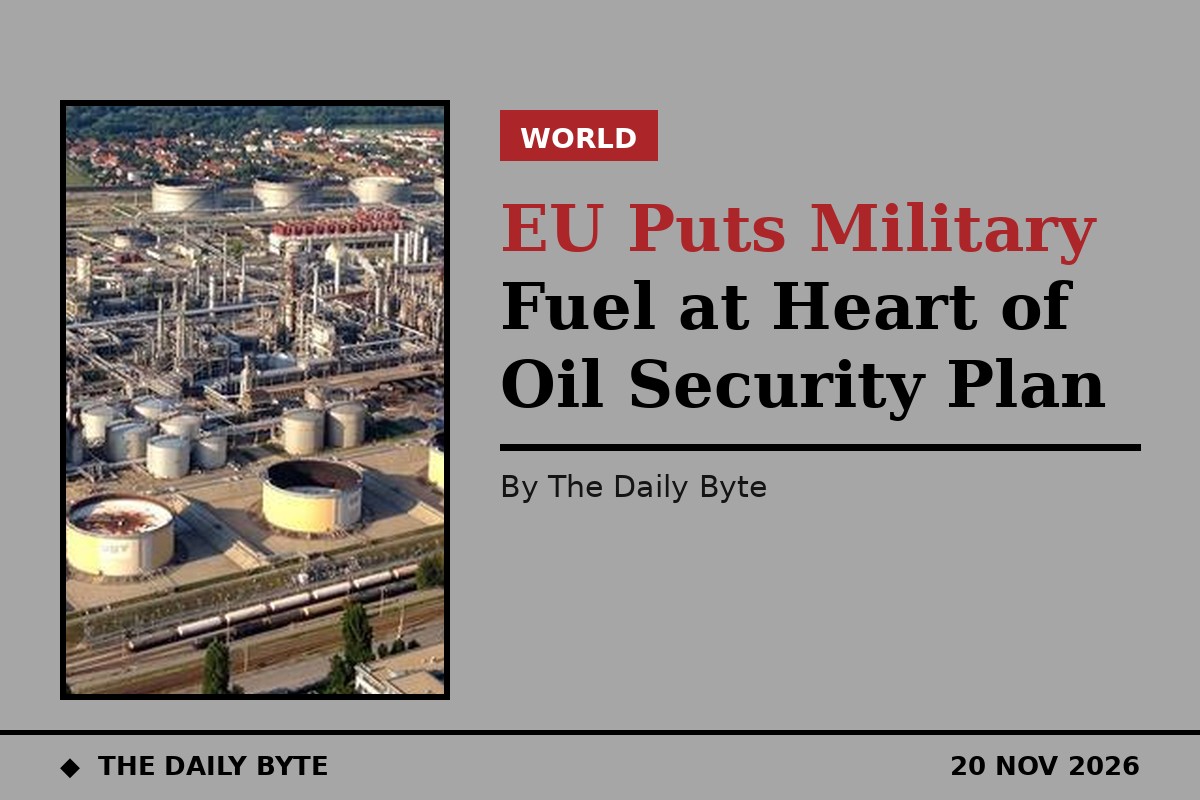
The European Commission is preparing to put military fuel needs at the heart of the European Union’s oil security rules, under a draft proposal expected to be unveiled on 2 December, according to a draft document seen by Euronews.
The overhaul would require EU governments to look beyond crude oil stockpiles and make sure they hold enough diesel, jet fuel and other refined products to keep essential services and military operations running during a prolonged crisis.
A structural shortage of jet fuel
A recent NATO energy security study found that the EU’s ability to fuel its armed forces could be undermined by a shrinking refinery industry, growing dependence on foreign suppliers and insufficient jet fuel reserves. “Jet fuel is precisely the product on which NATO Europe is structurally short. It is also the fuel most likely to retain (or even grow) its demand to 2050, and the product with the least amount of stock cover at 49 days,” the study said.
Europe imports between 27 and 30 per cent of its jet fuel from outside the region, and dependence is highly concentrated: 36 per cent of external imports come from one supplier, while three countries account for 65 per cent of all external supplies.
More than half of EU countries — 61.54 per cent — reported trouble ensuring sufficient fuel access when armed forces move across the continent, according to a 2025 Commission impact assessment. Defence Commissioner Andrius Kubilius has warned that the EU must prepare for a substantial increase in military fuel consumption during a conflict, noting that NATO could need to move and sustain 100,000 troops during the first ten days of a crisis.
From stockpiles to refineries
Under the current rules, EU countries must hold emergency oil stocks equivalent to at least 90 days of net imports or 61 days of domestic consumption, whichever is higher. According to Eurostat, EU emergency reserves totalled 103.5 million metric tons in July, including 43.7 million tons of crude oil and 36.5 million tons of gasoil and diesel. The draft would require member states to align their reserves more closely with national fuel consumption and refining capacity, and to allow temporary military access to emergency fuel reserves in exceptional circumstances.
The pressure on supplies has been building for months. The war in Iran added about 40 billion euros to Europe’s diesel import bill between March and September, and the International Energy Agency said last week that its members would release another 71 million barrels of stocks through February, including around 15 million barrels of diesel, largely from France and Germany.
The draft also puts the spotlight on refineries, an industry in decline across Europe for almost two decades. Energy Commissioner Dan Jørgensen said after a dialogue with refiners: “We need to counter this trend and ensure that we have adequate and flexible refining capacity in Europe. Today and for the future. This is not just a matter of economic competitiveness. It is also a matter of security.”
Environmental campaigners have argued that reviving refineries could slow the bloc’s goal of cutting carbon dioxide emissions, and the draft could still change before the Commission’s planned approval in early December.
Sources: OilPrice; Euronews.


