EU Parliament Approves 2027 Budget
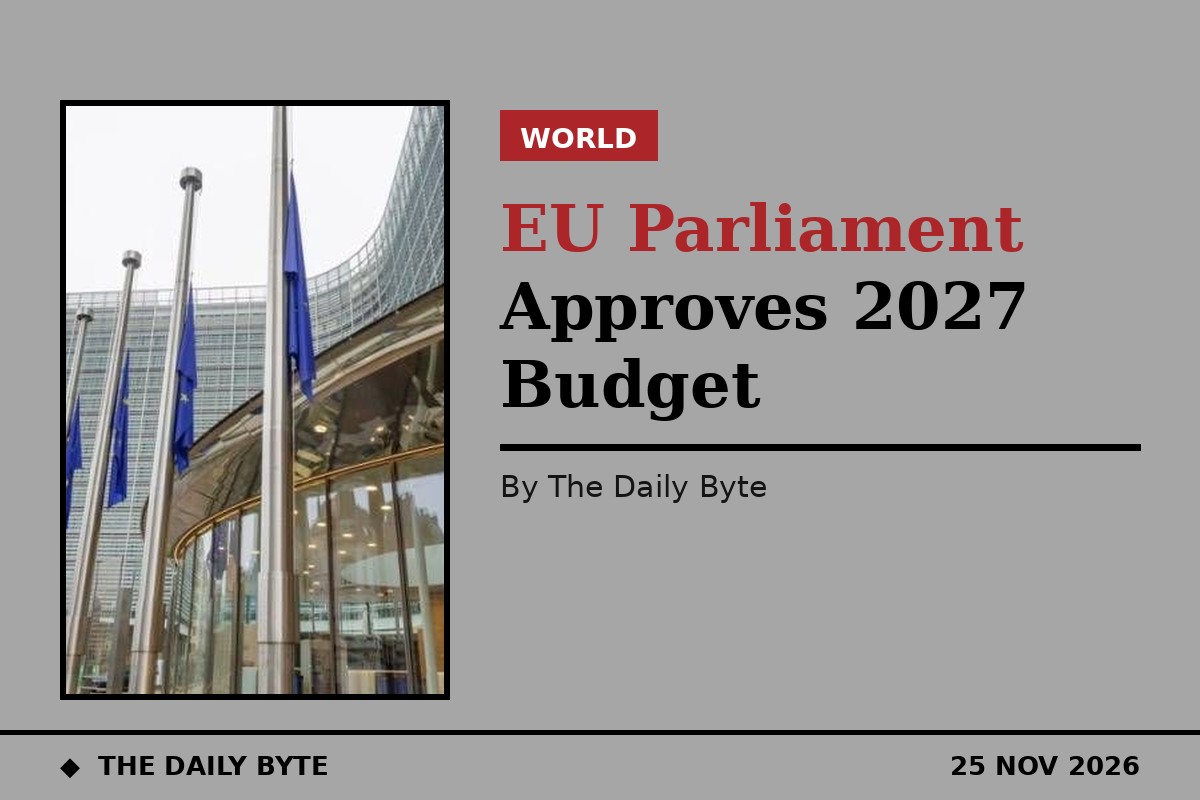
The European Parliament has approved the EU's 2027 budget, the last annual spending plan under the bloc's current seven-year framework, and its president signed it into law on Wednesday.
MEPs in Strasbourg adopted the budget by 406 votes to 184, with 69 abstentions. It sets commitment appropriations, legal promises to pay now or later, at 199.7 billion euros and payment appropriations at 211.5 billion euros, equal to 0.99% of EU gross national income. The Council of member states had endorsed the deal on Monday, after negotiators reached agreement on 11 November.
Extra money for research, education and defence
Parliament secured an additional 300 million euros above the Commission's proposal for its priorities. The increases include 21.5 million euros for the Horizon Europe research programme, 22.5 million euros for transport and energy networks, 14 million euros for Erasmus+, 13.5 million euros for the civil protection mechanism, 30 million euros for humanitarian aid, 30 million euros for border management and migration, and 10 million euros for military mobility.
The budget also deals with 4.9 billion euros in higher-than-expected borrowing costs for the NextGenerationEU recovery fund through an agreed cascade mechanism, and sets aside 650 million euros to service debt on the Ukraine Support Loan. More than 93% of the budget goes directly to EU programmes serving 27 countries and 450 million people.
A smaller budget than many MEPs wanted
The budget committee chair, Johan Van Overtveldt, said the plan was too focused on the past given the war in Ukraine and technological rivalry, while the general rapporteur, Nils Usakovs, described reversing 1 billion euros in Council cuts and adding 300 million euros as a realistic outcome. The budget enters into force on 1 January 2027, and attention now turns to the larger and more contested negotiation over the 2028-2034 long-term budget.


