EU Parliament Backs Czech Public Media Safeguards
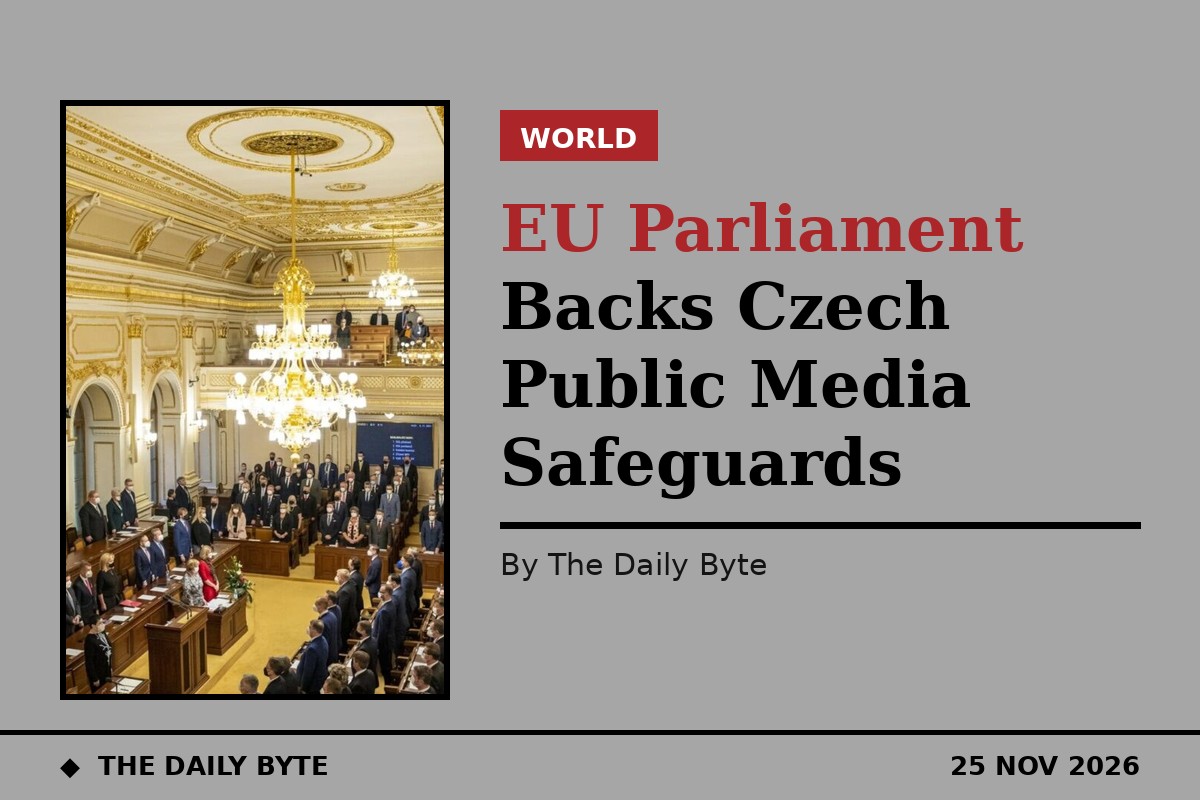
The European Parliament has voted to demand safeguards for the independence of Czech public broadcasters, calling on the government in Prague to amend a funding reform that critics say would leave Czech Television and Czech Radio dependent on politicians. The joint resolution was adopted in Strasbourg on Wednesday 25 November.
The resolution, co-signed by the EPP, Socialists and Democrats, Renew Europe, the Greens and The Left, calls on the European Commission to assess the Czech proposal under the European Media Freedom Act and to take enforcement action if it breaches EU law. It also calls for the Commission to involve the European Board for Media Services and to report regularly to Parliament.
The reform at the centre of the row
Prime Minister Andrej Babiš's government wants to scrap the monthly household licence fee of 205 crowns, about $9.45, that funds the two broadcasters, and pay for them directly from the state budget instead. The plan would also cut their funding by about 15 percent. Critics, including the broadcasters' own staff, say dependence on annual budget decisions would give politicians leverage over institutions whose job is to scrutinise those in power. The government insists the plan will not affect editorial independence or programme content.
The bill passed its first reading in the Czech parliament in the early hours of Saturday 24 October, at 4:36 a.m., and the broadcasters' staff held a one-day strike on 3 November. On Sunday 15 November, organisers said between 350,000 and 450,000 people gathered at Letná in Prague in the largest demonstration in the capital since the Velvet Revolution; police published no crowd count. The campaign to scrap the fee has been spearheaded by the far-right SPD party, whose chairman Tomio Okamura is now parliament's speaker.
What the resolution demands
The resolution calls for adequate, sustainable and predictable funding for the broadcasters, safeguards for editorial independence, proper parliamentary debate, consultation with both broadcasters and their employees, and a published assessment of the consequences for jobs, regional coverage and public service programming. It also demands transparency over media ownership and protection for journalists against political intimidation and abusive lawsuits.
Renew Europe, whose MEP Veronika Cifrová Ostrihoñová co-signed the text, said the concerns extend beyond Czechia, pointing to political interference in public broadcasters in Lithuania and Slovakia as well. The European Media Freedom Act requires public media funding to be adequate, sustainable and predictable and set by transparent criteria, and fourteen media and press freedom organisations asked the Commission in April to test the Czech bill against that rule.
| Fact | Detail |
|---|---|
| Vote | European Parliament plenary, Strasbourg, 25 November 2026 |
| Resolution | Joint motion RC-B10-0508/2026 (PPE, S&D, Renew, Greens, The Left) |
| Reform | Replace 205-crown monthly licence fee with state-budget funding; about 15% cut |
| First reading | 4:36 a.m., Saturday 24 October 2026 |
| Protest | 15 November, Letná, Prague; organisers said 350,000–450,000 people |
| Next step | Commission to assess the proposal under the European Media Freedom Act |
FAQ
What would change for Czech Television and Czech Radio? The household licence fee would be abolished and the broadcasters funded from the state budget, with about 15 percent less money than they receive now.
What can the Commission actually do? The resolution asks it to assess the reform under the European Media Freedom Act and take enforcement action if the proposal breaches EU law, including its rules on adequate and predictable public media funding.
Is the Czech bill already law? No. It has passed only a first reading in the Czech parliament, and further debate is expected. The opposition has said it would challenge the law in the Constitutional Court if it passes.


