EU Parliament Backs Syria Transition Strategy
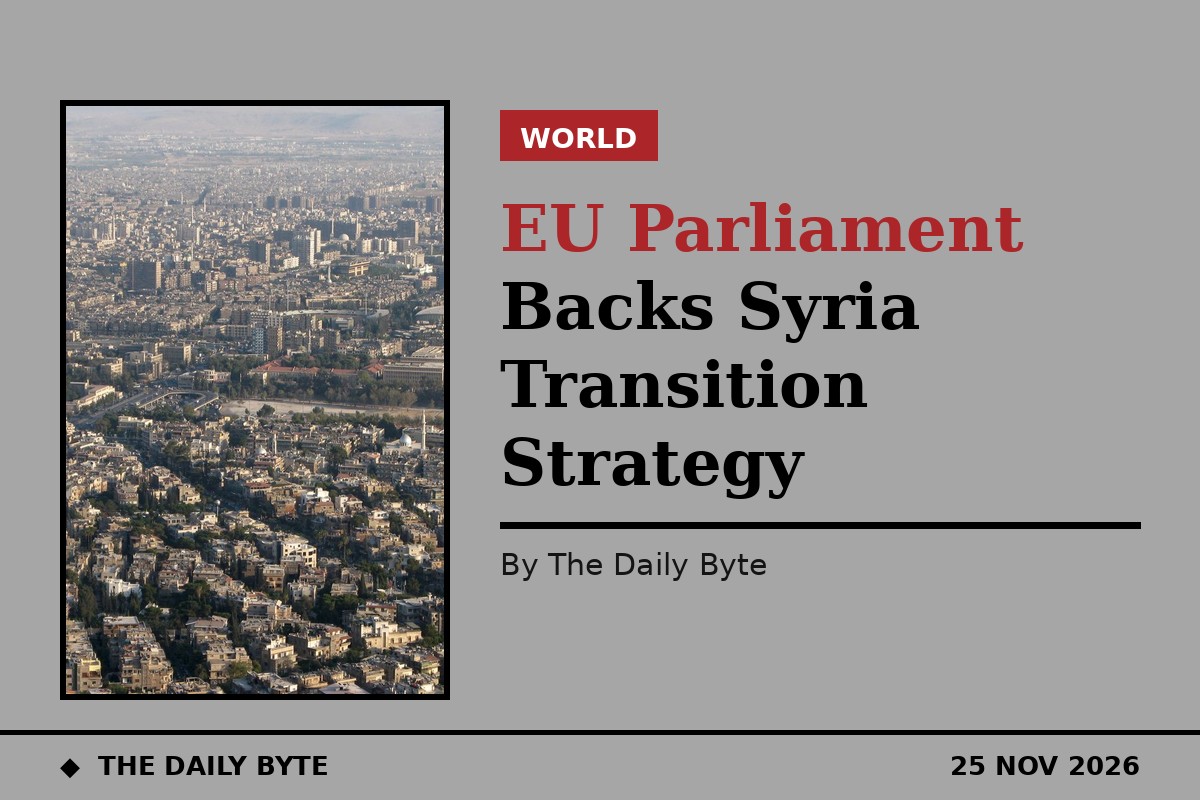
The European Parliament has called on the European Union to develop a comprehensive, long-term strategy to support Syria's political transition, strengthen its state institutions and assist the country's recovery. MEPs adopted the report on Wednesday, 25 November, by 416 votes in favour, 126 against and 101 abstentions.
The vote comes nearly two years after the fall of the Bashar al-Assad regime on 8 December 2024. Assad fled Syria for Russia that day, ending nearly 25 years in power and decades of Baath Party rule. Lawmakers said the Syrian people had a historic opportunity to build a free, democratic and peaceful country, and the report, drawn up by rapporteur Nathalie Loiseau of the Foreign Affairs Committee, sets out Parliament's priorities for the EU's relationship with the new Syria.
The report stressed that EU support should respect Syria's territorial integrity, protect human rights and minority communities, and address security threats including terrorism, organised crime and foreign interference. It also calls for an inclusive democratic transition, with all of Syria's communities represented in the country's political future.
Conditional and reversible support
Parliament welcomed the renewal of EU-Syria relations, including EU foreign ministers' agreement to revive a cooperation deal with Damascus that had been frozen for nearly two decades. But lawmakers insisted that European assistance, reconstruction funding and any suspension of sanctions should remain conditional and reversible, linked to measurable progress in the rule of law, constitutional and security sector reforms, accountability and the protection of all communities.
That conditional approach reflects the scale of what Syria still has to rebuild. The country's transitional authorities have sought to expand state authority across the country and tighten control over border crossings since Assad's fall, but large parts of Syria remain damaged after more than a decade of civil war, and the new administration's control is still being consolidated.
Humanitarian need and security
Highlighting that more than 15.6 million people in Syria need humanitarian assistance, Parliament urged the EU and its member states to maintain humanitarian aid and support for early recovery efforts. The report argues that keeping aid flowing is essential while longer-term reconstruction is planned, and that early recovery work should reach communities across the country.
MEPs also expressed concern about the continued presence of Daesh and other terrorist organisations in Syria, stressing the need for stronger cooperation between Syria's transitional authorities, the EU and international partners to counter terrorism. The report calls for the EU to work with Damascus on security while insisting that counter-terrorism efforts respect human rights and international law.
As an own-initiative report, the vote does not itself create EU policy or release funding. It sets out Parliament's position and calls on the Commission and the Council to develop the strategy it describes, including clear conditions for aid and a framework for supporting Syria's transition. The EU's foreign policy chief and the Commission will now be expected to respond, as the bloc weighs how far and how fast to deepen its engagement with Damascus.


