EU Parliament Demands ICC Protection from US Sanctions
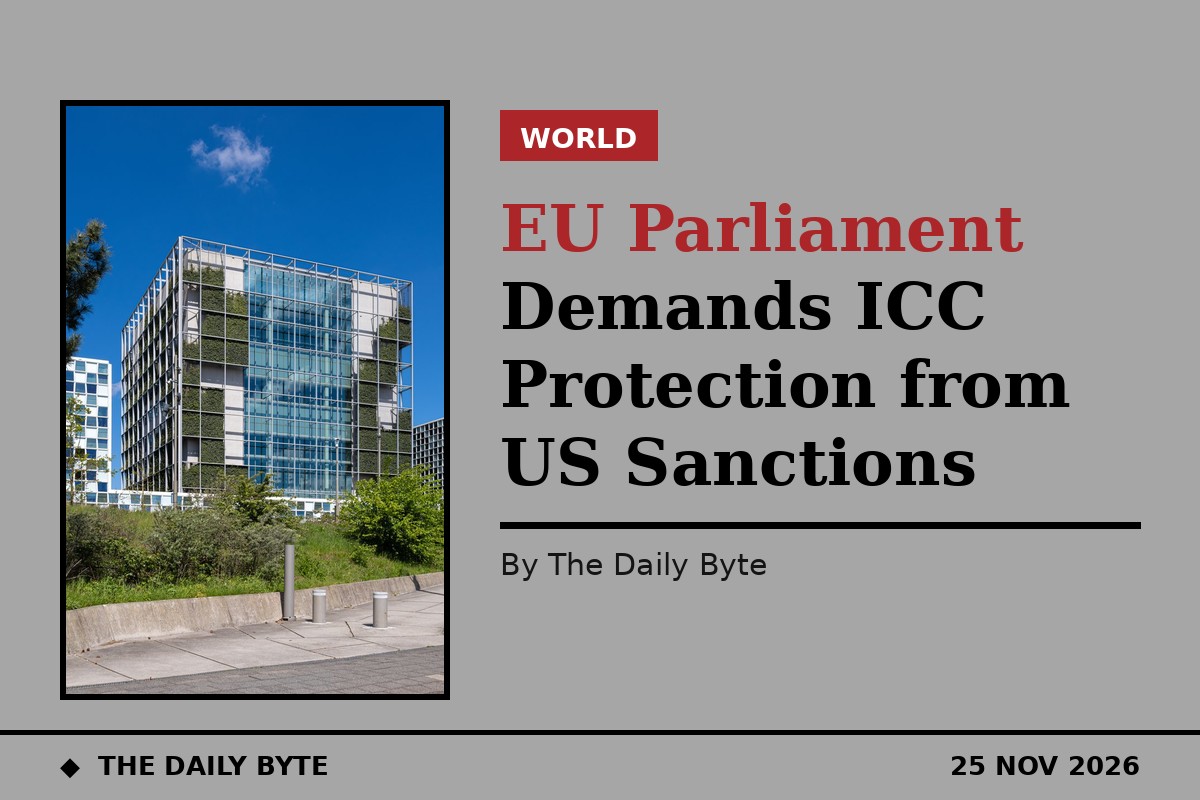
The European Parliament has called on the European Union to draw up a coordinated strategy to protect the international justice system, and the International Criminal Court in particular, from foreign pressure including sanctions imposed by the United States. MEPs adopted the report on Wednesday, 25 November, by 438 votes in favour, 168 against and 38 abstentions.
The report warns that the international justice system faces unprecedented threats, as the court and its officials are subject to coercive pressure, unilateral sanctions and campaigns to undermine their credibility and independence. Since last year, the US Administration has imposed sanctions on ICC officials, freezing their assets and prohibiting any material or financial support. Other measures have targeted UN mandate holders and partner non-governmental organisations, according to the Parliament.
MEPs also warned that the sanctions have created a climate of concern among European banks, insurance companies and digital service providers, leading to overcompliance that impedes essential payments and services relating to international justice.
Blocking statute and strategic autonomy
At the heart of the report is a call for the EU to update and activate its blocking statute, the law designed to protect European operators against the extraterritorial effects of coercive measures imposed by third countries. Parliament wants the statute triggered as a matter of urgency, a demand pressed by the report's rapporteur, Mounir Satouri of the Greens/EFA group.
MEPs also proposed reducing the EU's structural dependencies on non-European financial and digital infrastructure, and making use of the bloc's anti-coercion instrument. They insisted on working with partner democracies to mitigate the pressure, through trade agreements and political dialogue, and stressed the need to make it easier for witnesses and human rights defenders working on accountability to obtain visas, so that legal evidence before international courts is preserved.
Reaffirming the universality of the ICC, the report calls on the European Council to explicitly integrate the Rome Statute, the treaty that established the court, into the EU's body of law. It emphasises the vital role international justice plays in upholding the rule of law, ensuring accountability and protecting victims everywhere.
What Parliament wants next
The report asks the European Commission and the EU's High Representative for Foreign Affairs to propose a strategy and an action plan. That plan should include an evaluation of existing tools to fill gaps, concrete protection mechanisms for judges, prosecutors, witnesses and victims, predictable and robust financial support for international justice mechanisms, and better coordination between EU member states, Eurojust and UN investigative bodies. The Commission should present an annual report on how the strategy is being implemented, the impact of foreign sanctions and the use of EU funds allocated to international justice, MEPs added.
Satouri described the report as Parliament's answer to the current attacks on international law and the US Administration's sanctions against the ICC. "We stand for EU sovereignty and international justice without double standards. Now it's up to the executive to act firmly: trigger the Blocking Statute as a matter of urgency and launch a coordinated strategy to protect the ICC," he said.
The vote does not itself activate the blocking statute or create new law: as an own-initiative report, it sets out Parliament's demands, and any action now rests with the Commission and member states. The vote follows Parliament's decision on 22 October to award the 2026 Sakharov Prize for Freedom of Thought to the ICC and its officials, with the award ceremony due to take place on 15 December during the plenary session in Strasbourg.


