EU Softens 2035 Petrol Car Ban in Key Vote
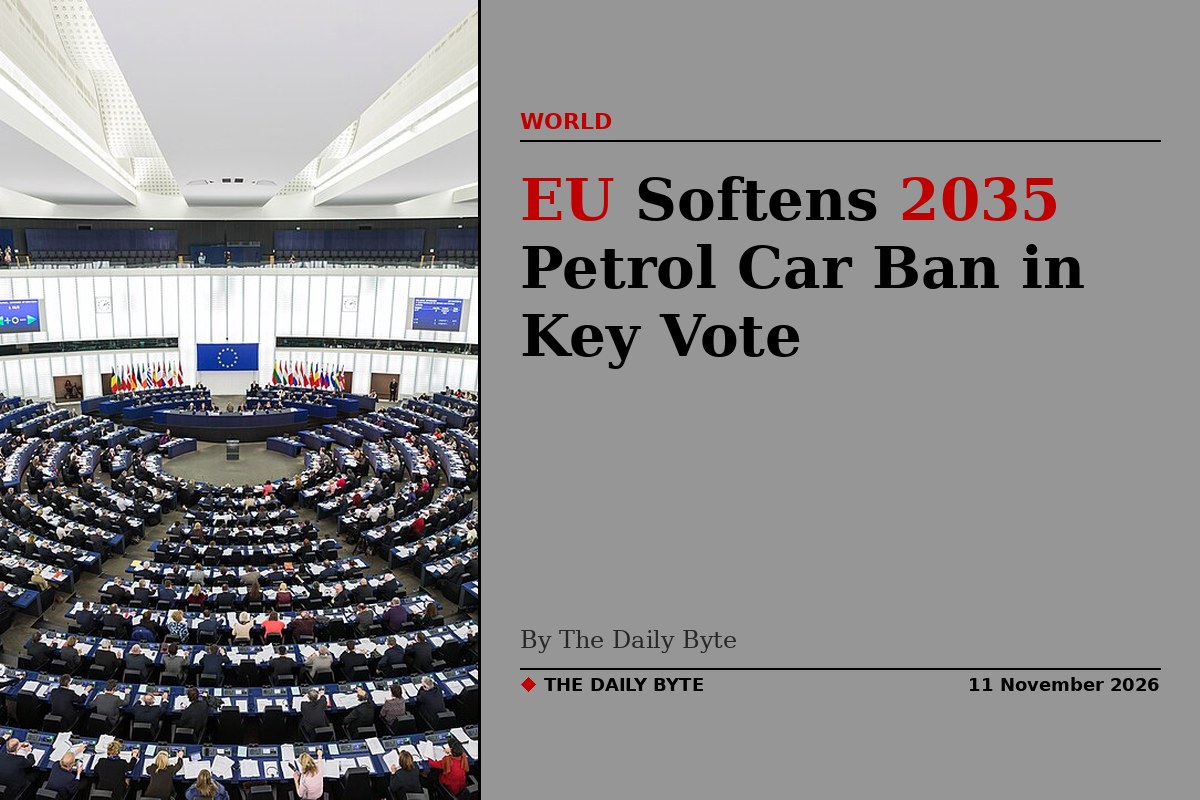
The European Parliament’s environment committee has voted to soften the EU’s 2035 target for new cars, cutting the required reduction in fleet carbon dioxide emissions from 100 per cent to 87.5 per cent and leaving the door open for new petrol and hybrid cars to be sold after 2035.
The committee, known as ENVI, adopted its position on 4 November by 48 votes to 30, with two abstentions. The vote is a step towards changing the landmark rule that would have effectively ended the sale of new petrol and diesel cars in the EU from 2035, but it does not change the law by itself.
Under the committee’s position, carmakers would have to cut average tailpipe emissions from new cars by 87.5 per cent against 2021 levels by 2035. Up to a further 7.5 percentage points could be met through credits for low-carbon steel made in the EU, bringing the total reduction to 95 per cent. The target for vans would fall to 80 per cent.
A step further than the Commission proposed
The committee went further than the European Commission, which had proposed in December 2025 that the 2035 target be lowered to a 90 per cent tailpipe cut, with the remaining 10 per cent made up through low-carbon steel and alternative fuels.
The committee’s position was backed by the Parliament’s three mainstream groups: the centre-right European People’s Party (EPP), the Socialists and Democrats (S&D) and the liberal Renew Europe. The EPP, the Parliament’s largest group, described the outcome as a major victory for the car industry. The committee’s rapporteur, Italian MEP Massimiliano Salini of the EPP, led the work on the file.
Industry reaction was mixed. The European Automobile Manufacturers’ Association and Italy’s automotive industry association welcomed the proposals, while Germany’s VDA group said there were clear improvements over the Commission’s proposal but that the framework did not go far enough to protect Europe’s competitiveness as a manufacturing base.
What happens next
The full European Parliament is expected to vote on the package during its December plenary session, with 14 December given as the indicative date, to set its negotiating position before talks with EU governments begin. Until Parliament and the Council of the EU, which represents the member states, agree a final text, the existing 100 per cent target for 2035 remains the law.
The committee’s text also changes what counts towards the target. Cars and vans that run only on eligible renewable and low-carbon fuels would be counted as zero-emission vehicles, so a combustion engine could sit inside the zero-emission definition. The proposal does not change the rules on used-car sales, and combustion-engine cars already on the road would remain permitted after 2035.
The environment committee was the last of the Parliament’s three lead committees to vote on the revision of the EU’s CO2 emission standards for new cars and vans, after the industry and transport committees backed the package on 22 October. Read the reports from TalkMarkets and AutoTrader NZ.


