EU sanctions NoName057(16) hacker group over DDoS
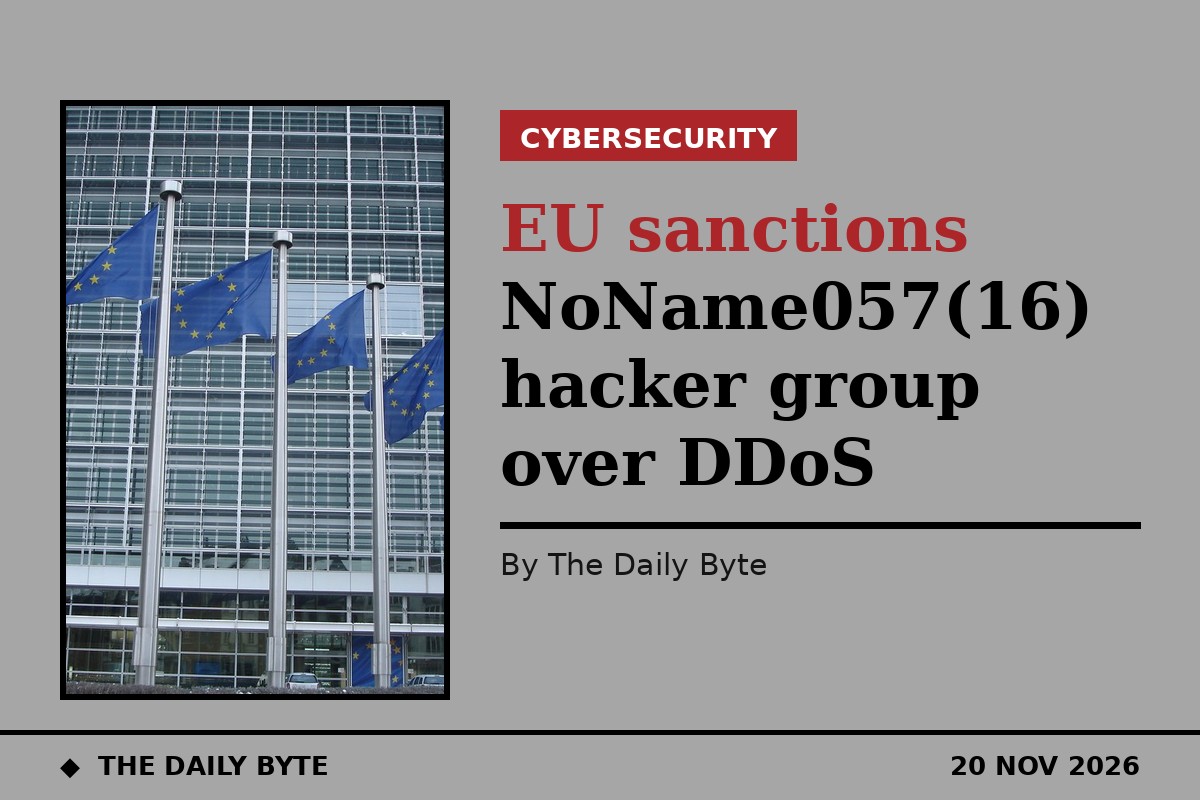
The Council of the European Union has sanctioned the pro-Russian hacker group NoName057(16) for cyberattacks on European government bodies, critical infrastructure and companies, adding the group to the EU's cyber sanctions list on 16 November 2026.
The listing was part of a package in which the Council added 30 individuals and two entities to its restrictive measures over Russian information manipulation and malicious cyber activity. The other entity listed was the Social Design Agency, a Moscow-based public relations and political technology company which the Council says carries out large-scale information manipulation projects funded, directed and supervised by the Russian Presidential Administration. Twenty-four people working for the agency were listed alongside it.
Who NoName057(16) are
NoName057(16) first emerged in March 2022, following Russia's invasion of Ukraine, and claims responsibility for cyberattacks on government bodies, critical infrastructure and private companies in Ukraine, the United States and EU member states. In the EU, the Council says, the group has targeted websites and portals from multiple sectors using denial-of-service attacks, flooding sites with traffic until they stop responding.
The sectors named by the Council are energy, finance and transport, along with water supply facilities and political parties and candidates during electoral processes. The group carries out its attacks with a tool known as DDoSia, and Europol has said it paid volunteers in cryptocurrency. It announces its targets on Telegram, where its channels are watched by threat researchers as an early warning of coming attacks.
What the listing does
Those listed face an asset freeze and a travel ban preventing them from entering or transiting through EU member states, and EU citizens and companies are forbidden from making funds available to them directly or indirectly. The listing was made under the EU's cyber-attacks regulation, through Council Decision (CFSP) 2026/2546 and Council Implementing Regulation (EU) 2026/2550, published in the Official Journal of the EU on 16 November and in force on publication.
With this listing, the EU's horizontal cyber sanctions regime now applies to 27 individuals and 12 entities. The group's entry also records its aliases: 05716nnm, Nnm05716, NoName057 and NoName05716. The broader package also covered the agency's Doppelgänger campaign, which clones real news websites to spread false stories, and the Council described the whole set of listings as its largest sanctions package yet targeting foreign information manipulation and interference.
Sanctions are not a technical fix
A listing does not stop a denial-of-service attack. It freezes assets, blocks travel and cuts off EU funds, and it puts the group formally on every sanctions screening list in the bloc, so banks, vendors and employers must check against the name. The practical defence against the group's attacks remains unchanged: websites and portals in the named sectors need denial-of-service protection in place before the group announces its next target, not after. The listing matters because it removes any doubt about how the EU assesses the group — as a state-linked threat actor, not a loose collection of volunteers — and because it was highlighted again in SecurityWeek's weekly cybersecurity roundup on 20 November as one of the week's significant developments.