EU States Demand UK Tuition Fee Pledge Before Summit
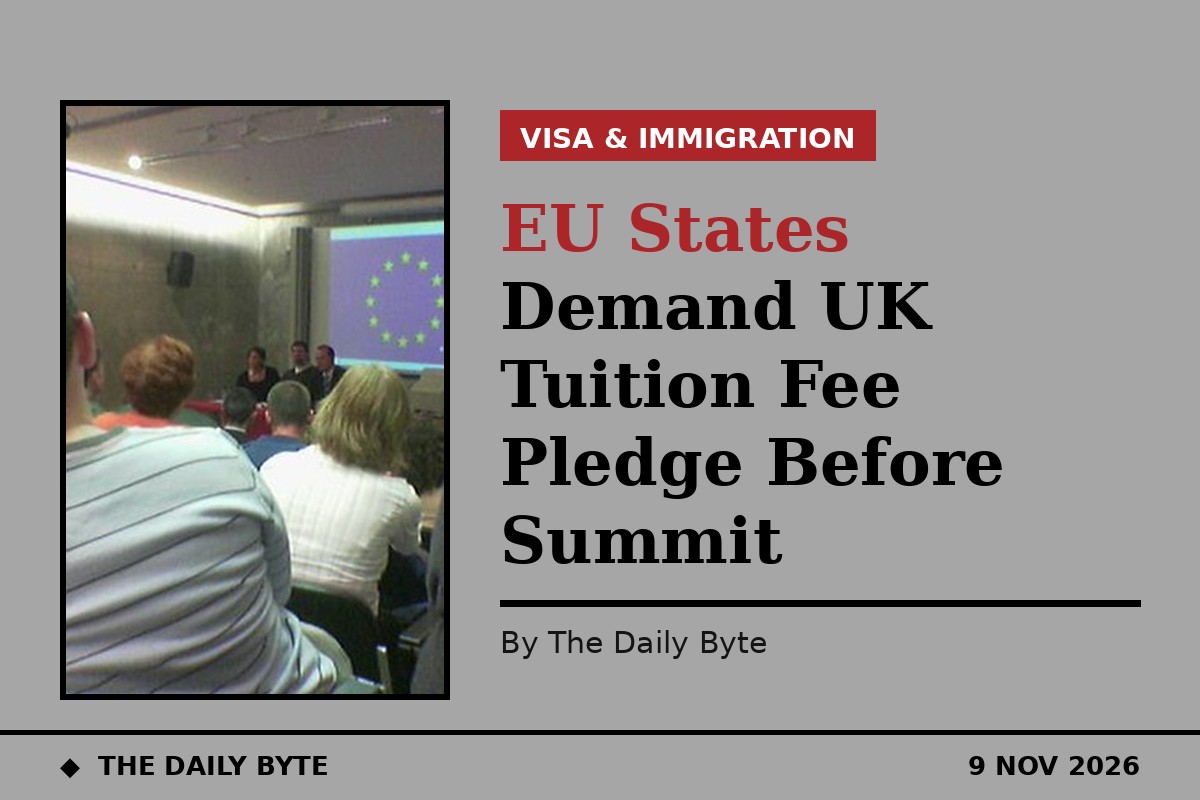
At least six European Union member states are demanding a firm British commitment to restoring discounted university tuition fees for European students before the UK-EU summit on 20 November, according to reports based on Guardian reporting.
The governments concerned oppose a proposal from the European Commission to postpone agreement on the issue for another six months. They argue that progress on fees should come alongside the wider economic agreements being negotiated, rather than being deferred until after the summit.
A draft declaration seen by the publication Rapporteur sets a target of sorting the fees question within six months. It says the EU and the UK will work towards a supplementary agreement to the Trade and Cooperation Agreement providing for equal treatment with nationals as regards tuition fees for EU students in the UK and for UK students in the EU.
The dispute has become one of the remaining obstacles to Prime Minister Andy Burnham's attempt to secure a wider reset in relations with the European Union. The summit in Brussels on 20 November is also expected to cover agreements on food and drink trade, emissions trading and a youth experience scheme for young people to live, work and study across the Channel.
Before Brexit, European students generally paid the same tuition fees as domestic students. That changed for most new EU students starting courses from August 2021, and many now face international fees several times higher than the home rate. In England, the fee cap for domestic undergraduate courses is £9,790 in 2026-27.
The change has affected recruitment. Research from the University of Oxford's Migration Observatory found that applications from EU residents for undergraduate courses in Britain fell by about 58 per cent between 2020 and 2024.
Ministers in London have reportedly considered spending up to £450 million a year to compensate universities for the income they would lose from charging EU students less. The Guardian reported that the offer has been linked to securing British access to the EU's proposed Made in Europe industrial programme, which would give preferential treatment to businesses established inside the Union.
That linkage is itself contested. The Russell Group of research-intensive universities has put the cost of home fee status for EU students at around £570 million and wants the issue kept out of any deal, according to higher education publication Wonkhe. Universities outside the elite group have told the government they cannot afford to drop fees for EU citizens without compensation.
Other ideas have also been discussed. In October, the Telegraph reported that the EU side had floated a halfway rate of around £13,000 a year, roughly the average cost of delivering a degree. Wonkhe notes that delivering such a rate through regulation would be difficult, because the fee cap in England only covers undergraduates at providers that have opted into the regime, and does nothing for postgraduate fees.
The question of who would qualify is also unresolved. Before Brexit, the test was nationality plus three years of ordinary residence in the European Economic Area or Switzerland. The Council's negotiating mandate links fee equal treatment to the youth experience scheme, while the draft declaration talks more broadly about EU students in the UK.
Student support is excluded from the plan. The EU mandate says equal treatment should not extend to study and maintenance grants or loans, so EU students paying the home rate would have to pay upfront in cash, without the tuition fee loan that home students receive.
Scotland raises a further complication. Under Scottish regulations, Scottish students pay no tuition fees, so EU students would also pay nothing there, while students from the rest of the UK pay £9,790. Wonkhe notes that nobody in the summit coverage appears to have addressed who would pay for that.
The British government has confirmed that any youth experience arrangement would be capped, time-limited and subject to visas, rather than restoring unrestricted freedom of movement. No agreement on tuition fees has been reached, and the terms could still change before the summit. Anyone planning to study in the UK should check the official GOV.UK pages for the rules that apply to their situation, as immigration and fee rules change.