EU Moves to Safeguard Traditional Sports and Games
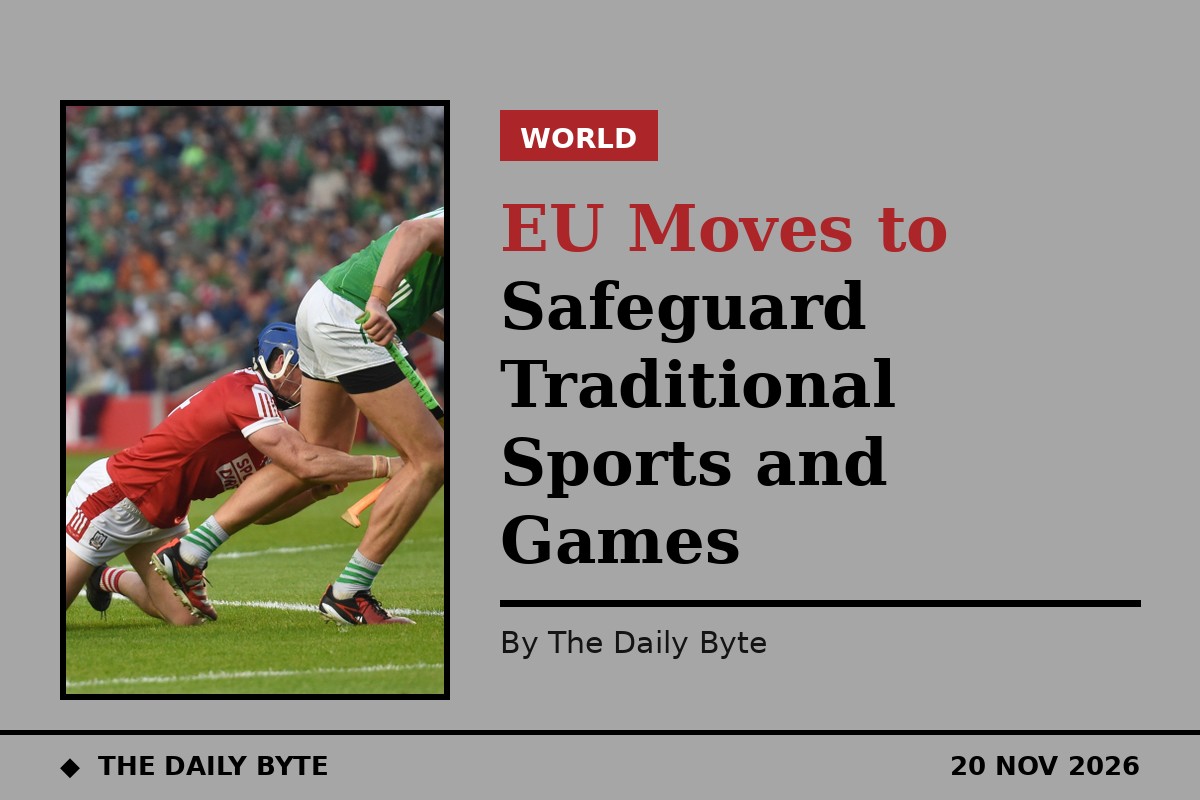
EU ministers have agreed a plan to safeguard Europe's traditional sports and games, from Irish hurling to Finnish pesäpallo, urging countries to raise their profile and get more young people playing.
The Council of the EU approved conclusions on traditional sports and games on Friday at its Education, Youth, Culture and Sport Council meeting in Brussels, chaired by Charlie McConalogue, Ireland's Minister of State for Sport.
“Europe's traditional sports and games are a vital part of our shared cultural heritage. They reflect the history, identity and traditions of communities across our continent,” McConalogue said. “By raising awareness and encouraging more people to take part, we can ensure that these traditions continue to thrive in the future.”
Games rooted in local communities
Traditional sports and games are physical activities and competitive practices rooted in the cultural traditions of specific communities, passed down through generations by community-based learning, according to the International Council of Traditional Sports and Games.
Examples named by the Council include hurling in Ireland, aizkolaritza, competitive log-chopping, in the Basque country, nohejbal, or football tennis, in the Czech Republic, and pesäpallo, Finnish baseball, in Finland. A number of traditional sports are included in UNESCO's Representative List of the Intangible Cultural Heritage of Humanity, and they feature in the EU Work Plan for Sport 2024–2027.
The Council highlights the beneficial role of these sports in preserving local traditions, promoting physical and mental wellbeing, fostering social cohesion and resilience, encouraging healthy lifestyles, and strengthening exchange between generations.
What ministers are asking for
The conclusions call on member states to raise awareness of traditional sports and games and enhance their visibility at national and regional level, and to take steps to preserve them as part of Europe's cultural heritage, such as including them in national inventories.
Countries are also urged to encourage wider and more inclusive participation, particularly among children and young people and people from minority backgrounds, to support volunteering and community-based organisations that safeguard and pass on the games, and to strengthen cross-border and EU-wide cooperation and knowledge-sharing, including through UNESCO.
The Council calls on the European Commission to support these efforts through relevant EU initiatives such as the European Week of Sport, by helping countries share good practice, strengthening cooperation between different policy areas, and making use of EU funding initiatives such as Erasmus+ and the European Social Fund Plus. It also invites stakeholders in the traditional sports community to promote inclusive access, improve standards within their structures, and encourage cross-border networking.
A struggle for players and funding
The Council recognises that traditional sports often struggle to attract new participants, because of urbanisation, a lack of financial and human resources, and limited visibility beyond their areas of origin. The conclusions are political recommendations rather than legislation, so they impose no new obligations on member states, but they put the games on the EU's sport agenda as a living part of cultural heritage rather than a curiosity.
The same Council meeting also approved a resolution on the 2027–2030 EU Work Plan for Culture, which will guide European cultural cooperation over the next four years.


