EU Unveils 22nd Russia Sanctions Package
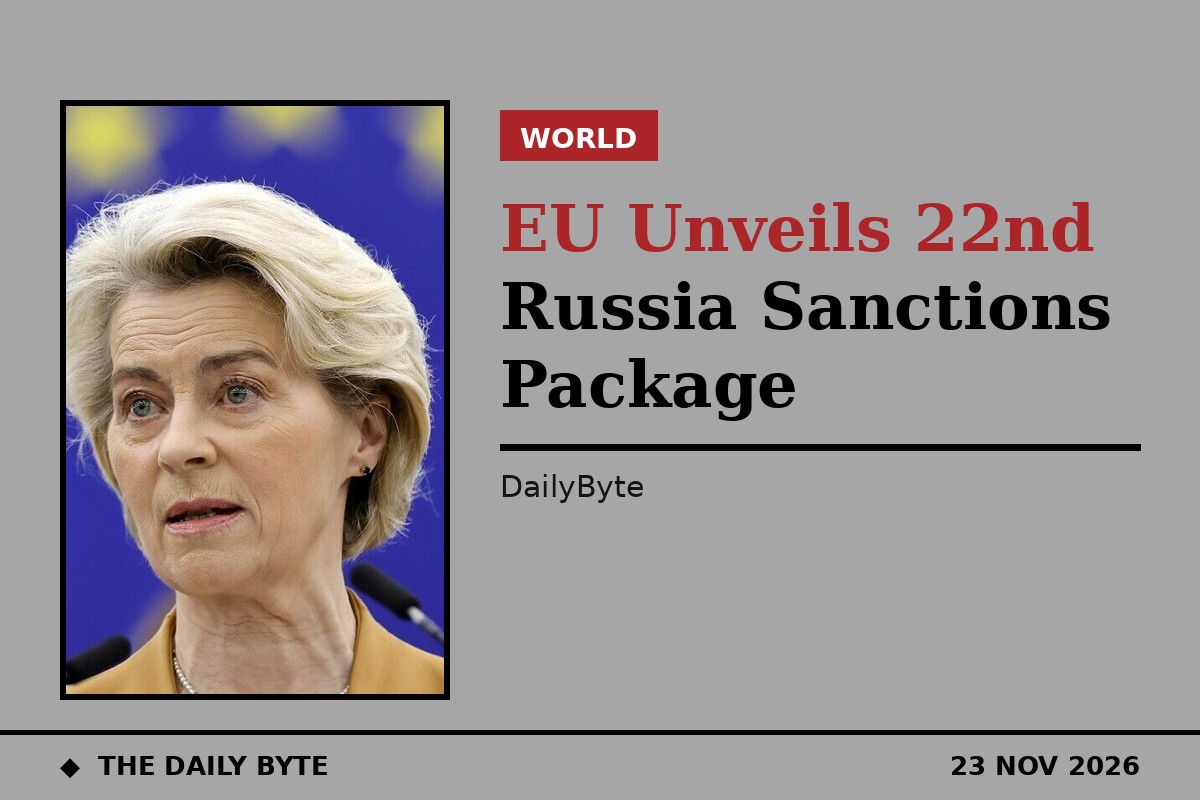
The European Commission has proposed its 22nd package of sanctions against Russia, widening the net to cover banks, cryptocurrency networks, energy services and sport. Commission President Ursula von der Leyen announced the measures on Monday, 23 November 2026, saying the aim was to keep pressure on Moscow to end its war in Ukraine.
“Today, we present our 22nd package of sanctions. The aim is to keep pressure on Russia to end their war of aggression in Ukraine, and we will continue to propose new sanctions until Russia shows genuine intent for lasting peace in Ukraine,” von der Leyen said in a video address, as reported by Reuters.
The package is a proposal at this stage. It must still be agreed by the European Union’s member states before it becomes law, and governments have in the past amended Commission drafts during negotiations.
Banks and crypto in the firing line
At the centre of the package is a further squeeze on Russia’s financial system. Von der Leyen said the transaction ban would be extended to about 60 more Russian banks, all of which would be removed from the SWIFT international payments system.
The Commission also plans to step up action against the cryptocurrency and payment networks that Moscow is accused of using to move money around existing restrictions. A dedicated task force will work on sanctions against crypto asset platforms, and the package targets third countries that help Russia evade EU measures.
“This is a major focus of our new package and an important area where we want to align efforts with international partners. And this is the reason why we have also launched a crypto sanction task force to support this work,” von der Leyen said.
Energy, shipping and the shadow fleet
The proposals also extend the EU’s ban on energy services to cover electricity services for the first time, closing a gap in the existing restrictions on Russia’s energy sector.
On shipping, the Commission said it had listed more than 70 additional vessels belonging to Russia’s so-called shadow fleet, the ageing tankers used to carry Russian oil outside the reach of Western price caps and insurance rules. Von der Leyen added that the EU was proposing to ban all tanker vessels insured in Russia.
Sport, visas and company boards
The package breaks new ground on sport. Under the proposals, Russian teams and athletes would be barred from competing under the Russian flag at sports events held in the European Union, and the display of official Russian symbols would be banned. The Commission also wants to restrict financial flows from Russian sponsors to European-based sports and cultural associations, and to limit Russians holding posts in the governing bodies of European sports federations.
European citizens would also be prohibited from continuing to hold positions on the governing bodies of companies in Russia, a step aimed at cutting the remaining business links between the EU and Russian firms.
On visas, the Commission is proposing a way to put into practice a travel ban on Russian former combatants, an idea agreed in principle in the previous sanctions package pending a check on whether it could be enforced. “We have recently seen an escalation in non-conventional kinetic activities of Russian operatives in Europe. And this ban is a part of our response. Russian ex-combatants pose a security risk to Europe. They cannot be allowed to wander freely across our countries,” von der Leyen said, as reported by Europe Says.
What happens next
Member states will now examine the draft in the Council, where unanimity is required for sanctions decisions. The timing of agreement is not yet clear, and earlier packages have taken days or weeks of negotiation as governments weighed exemptions and enforcement details.
Von der Leyen closed her announcement with a message aimed at both Kyiv and Moscow. “Our position is clear. We are giving Ukraine the strength to secure peace and Russia every reason to choose it,” she said.


