EU Upgrades Syria Ties in Major Association Move
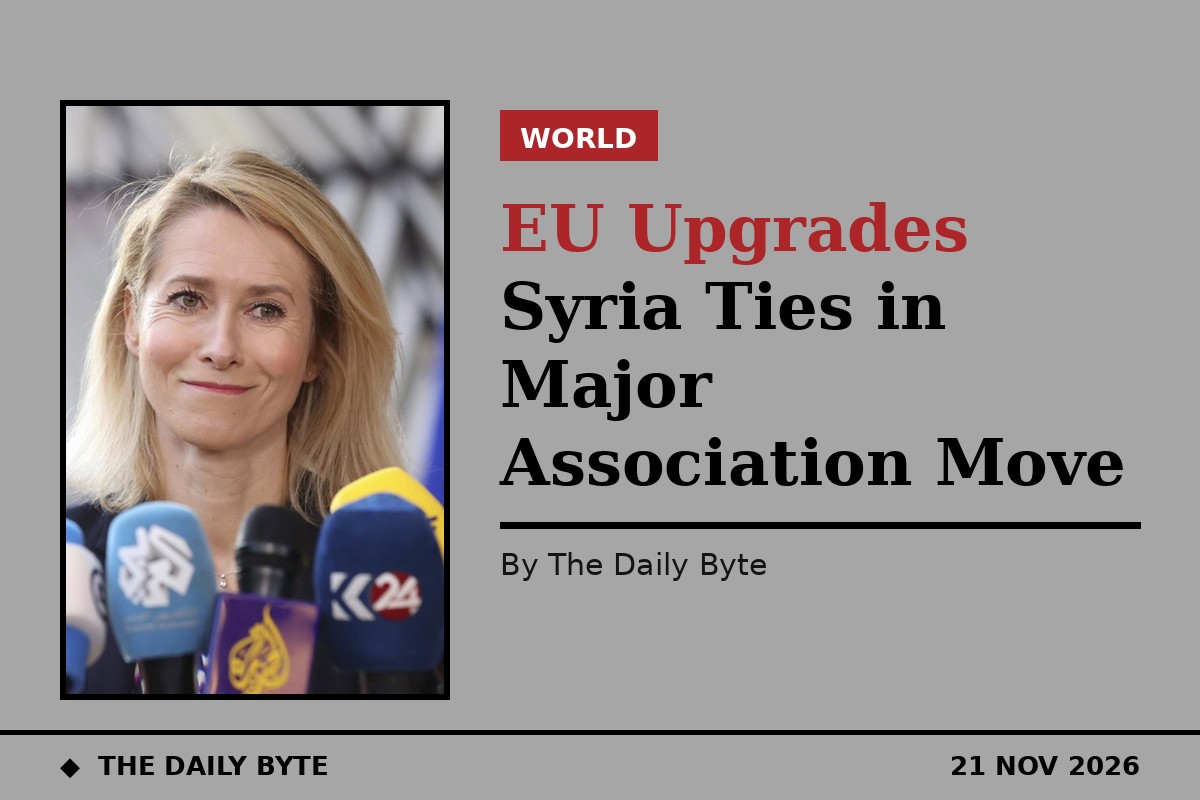
European Union foreign ministers agreed on Monday to move ahead with an EU-Syria Association Agreement, in what the bloc's foreign policy chief called a "major upgrade" in its ties with Damascus, reviving an accord first drafted in 2008 that was never signed.
"The EU seeks a major upgrade in its ties with Syria, and today ministers supported moving ahead with the EU-Syria Association Agreement," Kaja Kallas told reporters after the monthly Foreign Affairs Council meeting in Brussels on 16 November. She said diplomats would now work through the technical and legal details to prepare the agreement for signature, creating a framework for free trade, political dialogue and broader cooperation.
In parallel, the Council will seek a new mandate to negotiate a modernised version of the agreement. Kallas said the 2008 text would be signed first and revisions negotiated afterwards, taking account of issues such as human rights conditionality and Damascus's past support for Russia in the war in Ukraine. "Everybody said that we need to engage with Syria because if we don't engage, then this vacuum will be filled by other players," she said.
620 million euros committed
The decision follows the resumption of the EU's long-standing cooperation agreement with Syria and the first high-level political dialogue between Brussels and Damascus in May. The EU has committed 620 million euros ($718 million) in support for Syria in 2026 and 2027, covering humanitarian assistance and socio-economic recovery.
The move comes less than two years after Bashar al-Assad's fall ended decades of authoritarian rule. Syria's new authorities have sought foreign investment to rebuild after nearly 14 years of civil war that devastated infrastructure and crippled the economy.
Refugees and trade
The scale of the task was underlined in a UN Security Council briefing on Monday, where humanitarian officials said about 1.8 million refugees and 2 million people displaced inside Syria had voluntarily returned home since December 2024, about 30 percent of the total number made homeless during the war.
In 2010, the year before the war started, the EU was Syria's top trading partner, accounting for about 22 percent of its total external trade. That trade stopped during the last years of the Assad regime, largely because of sanctions; European and American sanctions have since been lifted.
Syria's engagement with Gulf states is also moving forward. During President Ahmad al-Sharaa's visit to Saudi Arabia this month, a defence cooperation accord was signed, together with agreements on energy, industry, development, health, housing and infrastructure. Syria has also signed a defence agreement with Türkiye and economic deals with Qatar, Kuwait and the UAE, and last month the Gulf Cooperation Council approved a comprehensive plan of action with Syria.
NATO is still debating whether to work collectively with Syria, with no decision made because of opposition from some members, although important members are already engaging. The United States has persuaded Syria to join the Global Coalition Against Daesh, making it the group's 90th member.


