EU-Western Balkans summit meets without Serbia
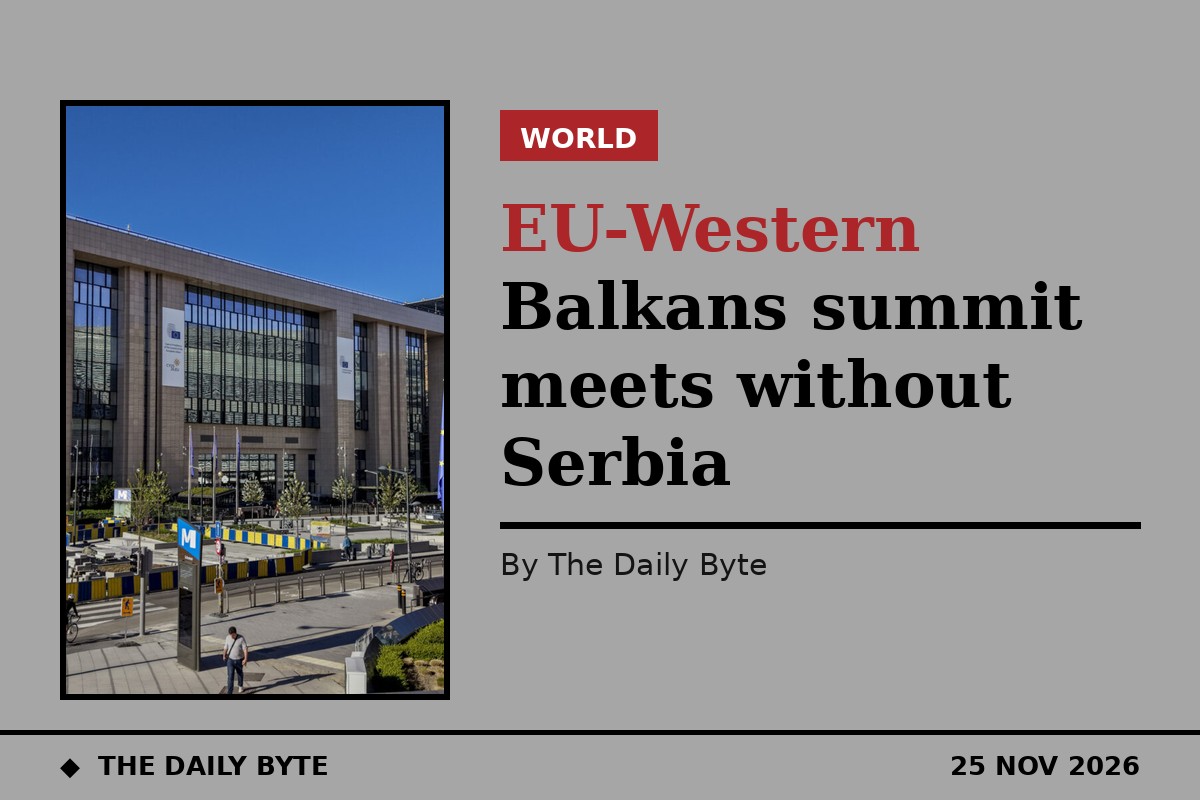
Leaders of the European Union and the Western Balkans met in Brussels on Wednesday for their ninth summit, with enlargement, economic integration and security at the top of the agenda.
European Council President Antonio Costa and European Commission President Ursula von der Leyen co-hosted the meeting. It was the second such summit of the year, after Tivat in June.
Serbia, the region's largest country, was absent. Its acting president and parliamentary speaker, Aleksandar Cupic, was invited but did not attend, citing urgent parliamentary business while a new government is still being formed after October's parliamentary election. Belgrade was also not expected to endorse the summit declaration.
Montenegro closest to joining
Montenegro is the furthest advanced of the candidate countries, with Brussels aiming to have its accession treaty ready for signature by June. Obstacles remain: a border dispute with Croatia and a proposed ten-year probation period for new members.
EU officials said more than 100 negotiating chapters had been opened or closed across the region this year, a pace Brussels described as not seen in 25 years. Leaders were also due to discuss the EU's six-billion-euro Growth Plan for the Western Balkans, launched in 2023 to speed up economic convergence and gradual integration into the single market, alongside the 29-billion-euro Economic and Investment Plan already being rolled out.
Security and gradual integration
The summit was also expected to cover security and defence cooperation, including resilience against cyber and other hybrid threats, and plans to extend the EU's roaming-free mobile phone regime to the region. A joint declaration was proposed, calling on partners to reject glorification of war criminals, genocide denial or revisionism. A joint press conference by Costa and von der Leyen was scheduled for the evening after the plenary session.


