European Unions Call Joint Protests on 20-22 November
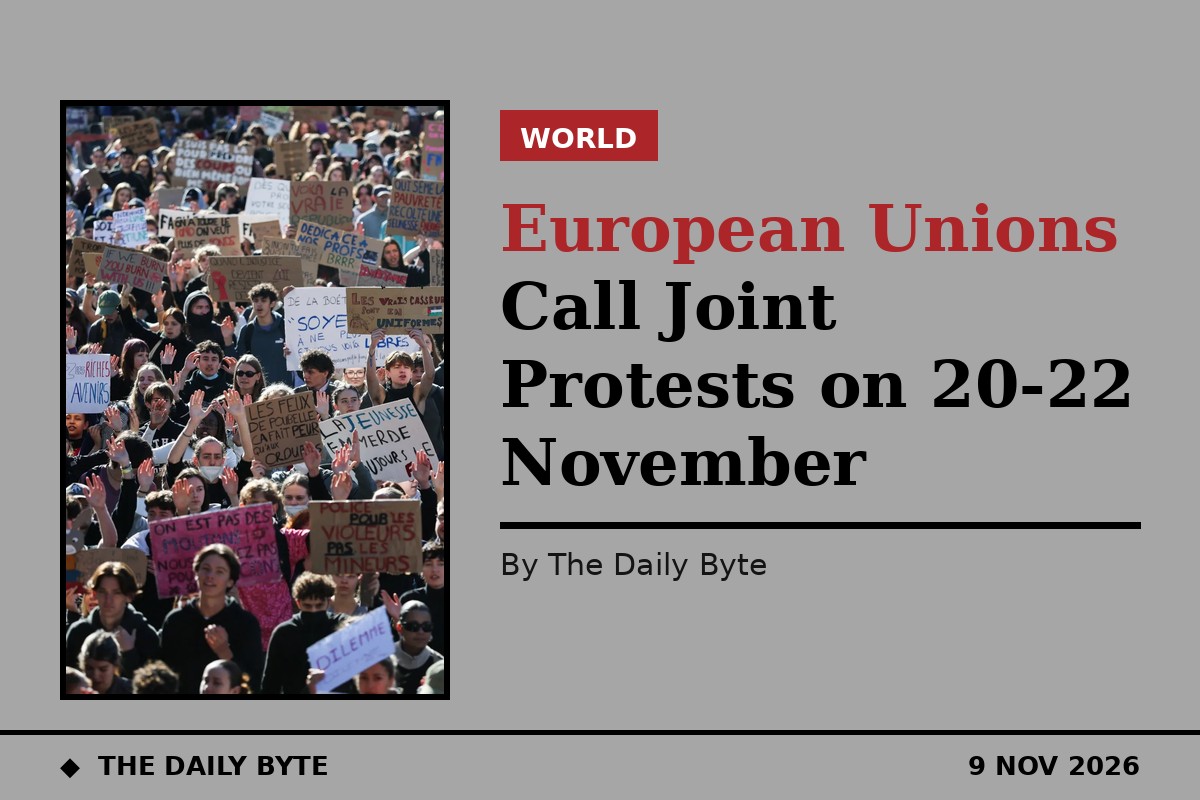
Trade unions and social organisations from seven European countries have called coordinated protests against the rising cost of living for 20-22 November 2026. Groups from France, the United Kingdom, Belgium, Greece, Spain, Portugal and Italy signed a joint statement agreeing to the action, after a meeting in Paris on Tuesday, 3 November.
The meeting was held on the initiative of the Confederation of Tenants' Unions, and brought together groups campaigning for the right to housing, workers' unions and climate movements. In the agreed text, the organisations denounce what they call the runaway escalation of the cost of living, with housing out of reach and basic food and transport becoming more expensive. Their common programme calls for guaranteeing the right to housing, lowering the price of housing, food and energy, raising wages and pensions, and strengthening public services.
A protest wave that began in France
The call comes after weeks of unrest across Europe. Protests began in France in October with student-led marches over deteriorating school conditions, teacher shortages and a perceived collapse of the education system, and then widened into broader grievances about unaffordable housing, stagnant public services and the cost of living. On 17 October, demonstrations across France drew an estimated 550,000 people according to the French Ministry of the Interior, while organisers put the figure at 800,000.
The unrest has since spread. In Belgium, protests have centred on unaffordable housing and public transport strikes. In Italy, more than a million people have taken to the streets, according to the Committee for a Workers' International, and workers have taken part in a further general strike. Germany has seen demonstrations against energy price hikes and housing shortages, while Spain and Portugal have seen coordinated strikes over wage stagnation and healthcare cuts.
More strikes already planned
Further action is already scheduled before the 20-22 November weekend. Portugal has joined Spain in calling a one-day general strike on 11 November, and in Ireland a one-day public sector general strike is planned for 12 November, when EU leaders meet in Dublin. The European Trade Union Confederation and national unions have also been pressing for a European-wide 24-hour general strike to unify the separate national struggles.
The figures behind the anger are stark. According to Eurostat, the cost of food and non-alcoholic drinks in the EU rose by 34 percent over five years, from August 2021 to August 2026. In Portugal, housing prices have more than doubled since 2017, leaving rents increasingly unaffordable for young people. In France, the education protests that started the wave have continued, with students and teachers demanding better funding for schools, smaller classes and more teachers.
Whether the coordinated protests on 20-22 November turn into a sustained movement will depend on turnout in each country and on how governments respond. For now, the joint statement gives the separate national protests a common date and a common set of demands for the first time. Demócrata reported the agreement on 3 November, and the Committee for a Workers' International set out the wider strike calendar on 8 November.