EU Parliament opens Strasbourg plenary week
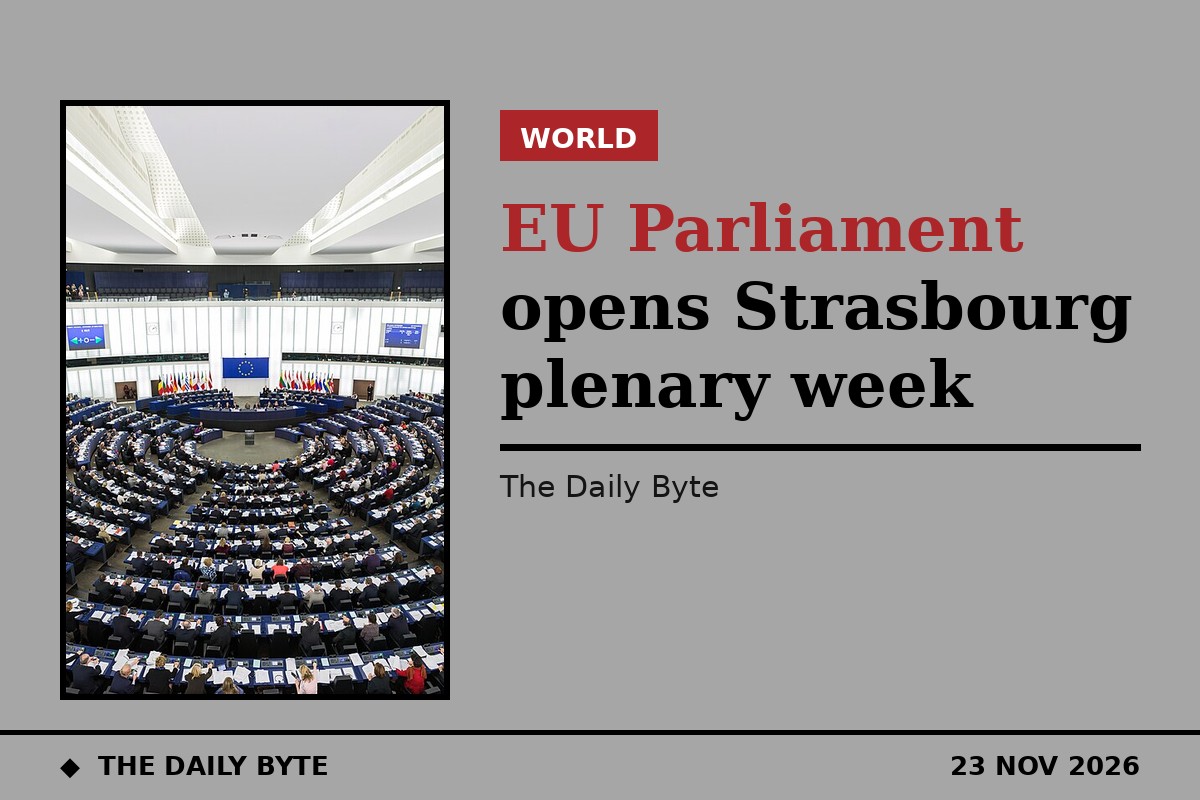
The European Parliament opened a four-day plenary session in Strasbourg on Monday, 23 November 2026, with votes due this week on the EU's 2027 budget, a major reform of medicines law and measures to cut red tape for businesses. The session runs until Thursday, 26 November, and also includes debates on the EU's next seven-year budget, Ukraine, Hungary and Gaza.
One of the week's biggest decisions comes on Wednesday, 25 November, when MEPs are expected to approve the EU budget for 2027, the last annual budget under the current long-term spending framework. Parliament and EU member states reached a conciliation agreement on 11 November providing for about €199.7 billion in commitment appropriations and €211.5 billion in payment appropriations, including special instruments. The agreement includes increases over the European Commission's proposal for research, humanitarian aid, Erasmus+, civil protection, border management and European infrastructure, with Parliament securing more than €300 million in extra funding for its priorities, including €30 million more for humanitarian aid, €21.5 million for Horizon Europe and €14 million for Erasmus+.
Medicines reform and shortages on Wednesday
Also on Wednesday, MEPs are due to give final approval to a reform of the EU's general pharmaceutical legislation, which the Commission first proposed in April 2023. According to the European Parliament, the package aims to widen access to medicines, cut red tape and boost innovation, with eight years of data protection and one year of market protection for new medicines, and conditional extensions taking the combined total to a maximum of 11 years.
MEPs will also vote on the separate Critical Medicines Act, designed to reduce shortages and support European production of essential medicines such as antibiotics, insulin, vaccines and treatments for chronic diseases. Under the compromise, the Commission would run joint procurement when at least five member states request it, and strategic projects to make critical medicines in Europe could receive administrative and scientific support and easier access to finance.
Business, climate and farming votes on Tuesday
Tuesday, 24 November, is dominated by files aimed at reducing administrative burdens on businesses. MEPs will vote on extending some compliance concessions to small mid-cap companies with fewer than 1,000 employees, on digital product documentation, and on organic farming, where the turnover ceiling for certification exemptions for small sellers would rise from €20,000 to €40,000 averaged over five years.
Tuesday also brings a vote on the market stability reserve of the EU emissions trading system. The compromise retains the invalidation of allowances above the reserve ceiling but raises the threshold from 400 million to 700 million allowances. The Commission will also present its autumn European Semester package on Tuesday, launching the 2027 cycle of economic coordination, and MEPs will debate inflation, energy prices and housing costs.
Long-term budget debate ahead of leaders' summit
On Wednesday, MEPs will debate the new compromise proposal for the EU's 2028–2034 long-term budget put forward by European Council President António Costa, ahead of an extraordinary meeting of EU leaders on 26–27 November. The debate is not a final vote: under the treaties, the multiannual financial framework requires unanimity in the Council and the Parliament's consent.
Other items on the agenda include a debate on Tuesday about the rule of law in Hungary following its April 2026 elections, a debate on the humanitarian situation in Gaza, a vote on Wednesday on the EU–Switzerland agreements signed in March 2026, a resolution on media freedom and the rule of law in Czechia, and a review of the COP31 climate summit outcome on Thursday. The agenda remains subject to change during the session.
Frequently asked questions
When does the Strasbourg plenary session run? From Monday, 23 November to Thursday, 26 November 2026.
When is the 2027 EU budget vote? Wednesday, 25 November 2026. The conciliation agreement provides for €199.7 billion in commitments and €211.5 billion in payments.
What is the Critical Medicines Act? EU legislation to improve the availability and supply of critical medicines, including joint procurement when at least five member states request it and support for European manufacturing capacity.


