39 Countries Back European Security Charter in Dublin
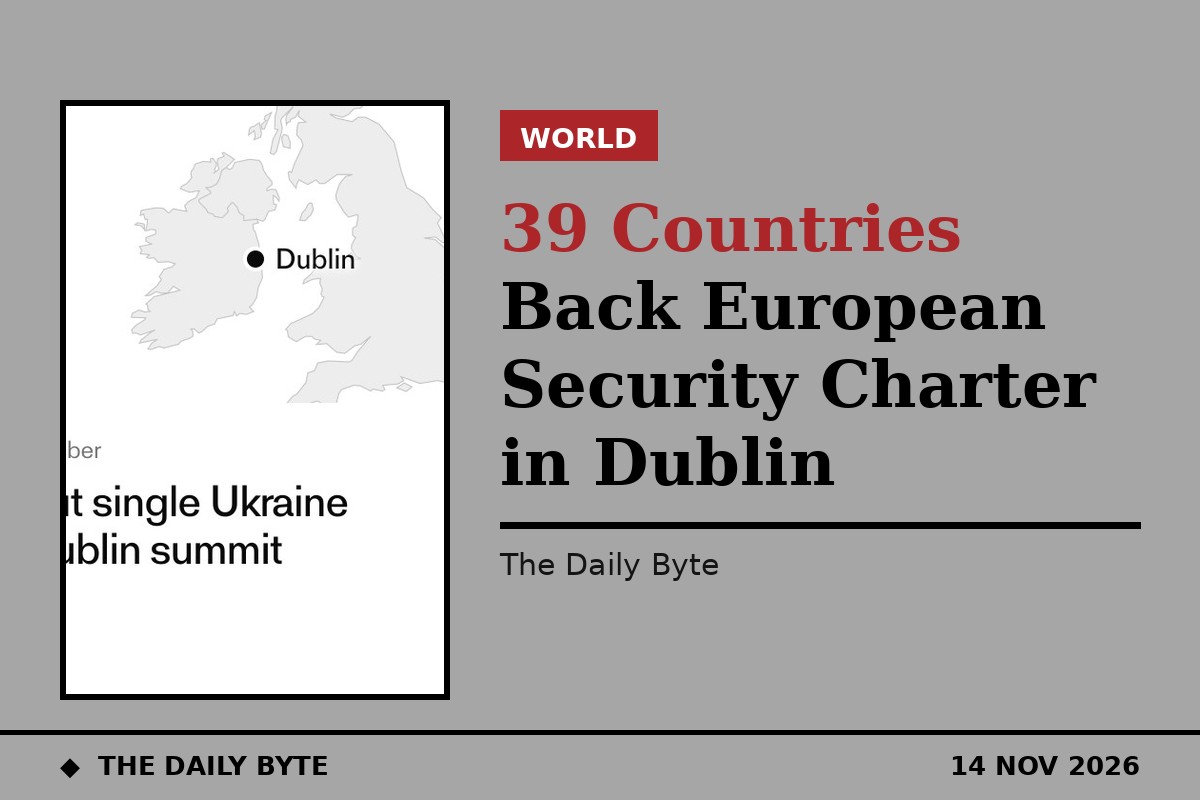
Thirty-nine European states have adopted a charter setting out the key principles of European security at a summit in Dublin, in a French-led initiative that declares any matter affecting European security must be decided with the Europeans. The text was adopted on Thursday at the ninth summit of the European Political Community, which brought together more than 40 heads of state and government.
The charter reaffirms the existing foundations of European security and extends them to newer threats. The text, which the AFP news agency was able to view, refers to the United Nations Charter and the NATO and EU treaties. The signatories recognise that European states are "taking greater responsibility for security in Europe", which will have a "positive impact on global and transatlantic security".
Security decided with Europeans
The draft states that "every issue affecting European security must be decided together with Europeans" and that "the path to peace in Ukraine should be decided with Ukraine". French President Emmanuel Macron spoke in Dublin of "common principles for the future security of Europe". The principles reaffirmed include the United Nations Charter, the Helsinki Final Act, the sovereign equality of states, the inviolability of borders and the right of each state to choose its own alliances.
The charter also covers the fight against terrorism, drug trafficking and migrant smuggling. The signatories "strongly condemned" Moscow's "intensified hybrid campaigns" and undertook to "develop instruments" to prevent "destabilising actions below the threshold of an armed attack" and, if necessary, to respond to them, with a "360-degree approach" against information interference in particular.
Talks with Russia only after peace
However, the 39 countries only want to talk to Russia about key security issues after the end of the Ukraine war. The statement said it supported discussions on additional risk management and risk reduction mechanisms that would contribute to stability in Europe, but such talks can only take place when peace has been restored in Europe. Both military risks and risks arising from actions below the threshold of armed aggression, such as sabotage and disinformation campaigns, could be addressed.
British Prime Minister Andy Burnham said in Dublin that it was "important" to mention NATO in the statement because ultimately NATO had to "secure" the situation after the Ukraine war. Before the European statement, there had been speculation as to whether the Americans might be able to discuss a new European security order bilaterally with the Russians, following US-brokered talks between Ukraine and Russia in Abu Dhabi.
Bulgaria signs with reservations
Some European states, including Armenia, Azerbaijan, Bosnia-Herzegovina and Switzerland, did not sign the declaration. Among the EU states, only Bulgaria initially refused, with no reasons given at first. Bulgaria later confirmed it had signed, with reservations about the wording. Prime Minister Rumen Radev submitted written objections to the preamble, requesting that its wording be adjusted to reflect the current stage of peace negotiations and avoid hindering efforts to reach a common solution.
According to the German news agency DPA, cited by BTA, the statement was approved by 39 countries, while the list published on the Élysée website names 40 states, including Bulgaria. The Bulgarian government said Sofia supports the initiative but has reservations about parts of its political message, and that it would continue working to strengthen security in the Black Sea region. The European Political Community has existed since 2022, founded on Macron's initiative to bring the European Union and the other European states closer together. Forty-seven states were invited to the Dublin summit.


