Eurozone wage growth quickens to 2.57% in Q3
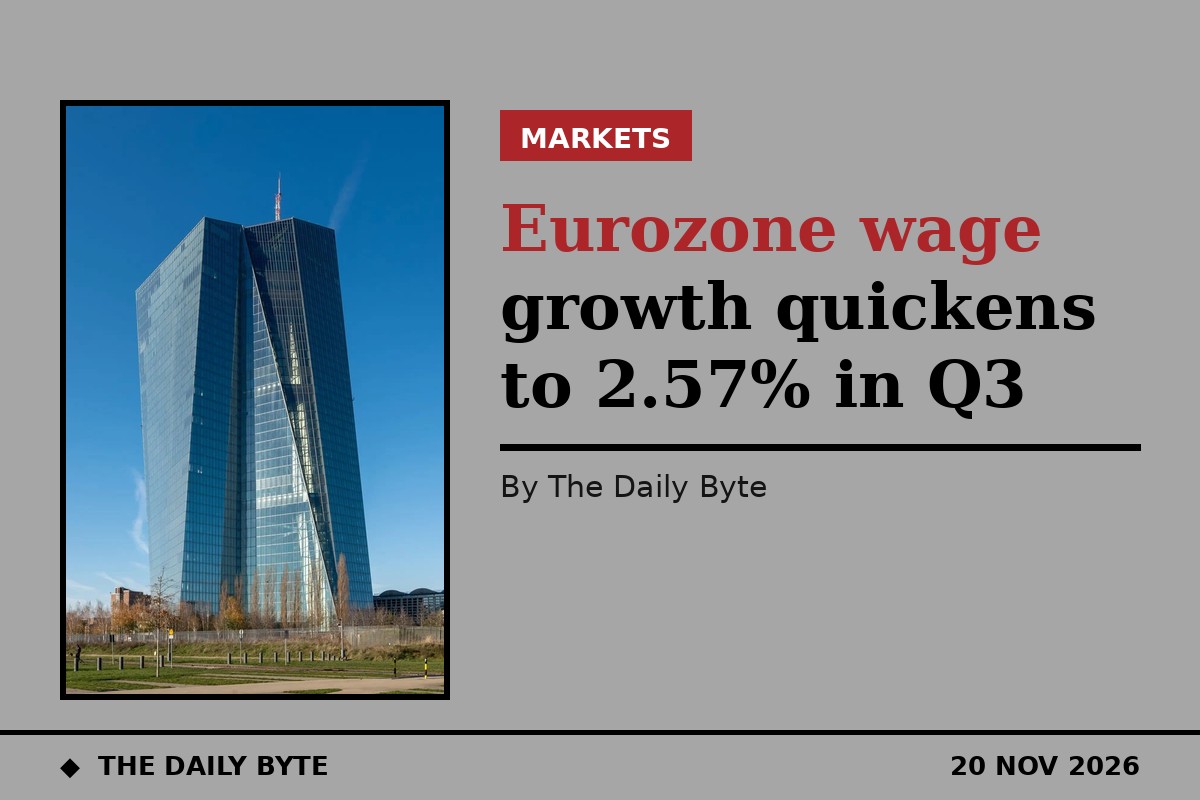
Negotiated wages in the eurozone rose 2.57% in the third quarter compared with a year earlier, the European Central Bank said on Friday, quickening slightly from 2.45% in the second quarter but remaining modest by the standards of recent years.
The figures suggest pay pressures are building only slowly, despite a fresh pickup in inflation. Annual inflation in the eurozone rose to 4% in October, from 1.9% in February, after energy prices jumped following the outbreak of war between the United States and Iran.
For the ECB, the wage numbers are a central piece of evidence in judging whether higher energy costs are feeding through into lasting inflation, or fading without a damaging wage-price spiral.
Why the ECB watches pay deals so closely
ECB officials have repeatedly said the outcome of wage negotiations is the key test of whether the energy shock will keep inflation above their 2% target. So far, they say, it has not.
"What we don't see at the moment is second-round effects, not yet," Bank of France Governor Emmanuel Moulin said in an interview on Thursday.
The ECB has raised its key rate twice in 2026, in June and September, as it seeks to contain price pressures without choking growth. The modest pace of wage growth gives policymakers room to argue that underlying inflation remains broadly stable, even as headline inflation has risen.
Negotiated wage growth remains well below the 5.55% peak recorded in 2024, when workers were catching up with the surge in living costs that followed the pandemic and the energy crisis.
What the wage tracker points to next
The ECB's forward-looking wage tracker, updated on 4 November, points to a similar picture in the months ahead. It puts negotiated wage growth at 2.7% in the second half of 2026 and 2.8% in the first half of 2027, easing to 2.4% in the third quarter of 2027.
Excluding one-off payments, the tracker averages 2.8% across the first three quarters of 2027, slightly above the 2.6% average for 2026 as a whole.
But the ECB is careful to stress the limits of those readings. The tracker only captures agreements already signed, and coverage thins as it looks further ahead, falling from 46.2% of employees for 2026 to 31.8% in the first half of 2027 and 23.3% in the third quarter. The bank says the forward-looking figures should not be read as a forecast.
What it means for households and rates
For workers, the picture is one of pay rising slowly while prices rise faster. The European Commission estimates that wages adjusted for inflation will increase by just 0.4% for the year as a whole, a sharp slowdown from 1.8% in 2025.
For the ECB, the combination of modest negotiated pay growth and weak real wage gains supports the case that inflation pressures from the labour market remain contained. That leaves the focus on energy prices and the path of the wider economy as officials weigh their next move on interest rates.
Sources
The Wall Street Journal: Eurozone wage growth accelerates, but remains modest
Dow Jones Newswires: Eurozone wage growth accelerates, but remains modest (update)
European Central Bank: ECB wage tracker suggests slightly higher wage growth in first three quarters of 2027 (4 November 2026)
Trading Economics: Euro Area Negotiated Wage Growth