Exxon Signs Venezuela Oil Deal With PDVSA
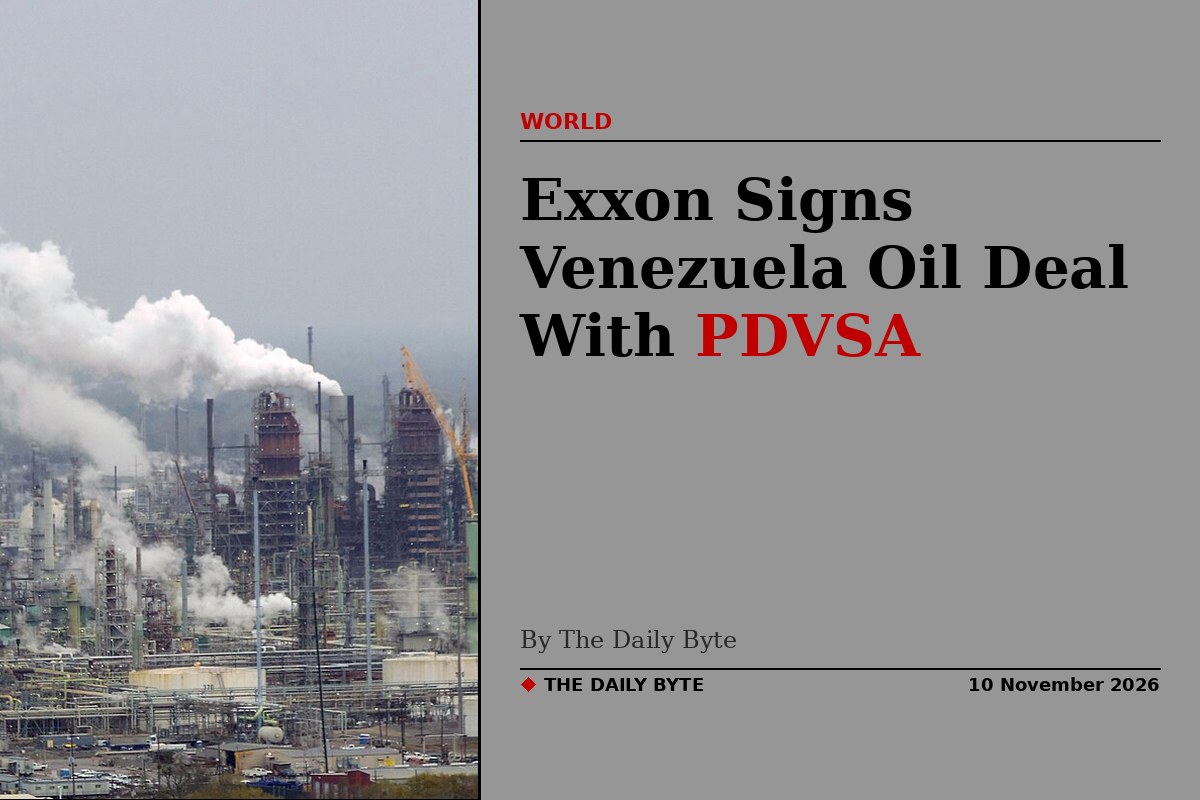
ExxonMobil has signed a preliminary, non-binding memorandum of understanding with Venezuela's state-owned oil company PDVSA to assess upstream oil opportunities in the country, Reuters reported on Monday 9 November. The deal marks a possible return to Venezuela nearly two decades after the company's assets were expropriated.
The agreement is an evaluation deal only. The two companies did not disclose any capital expenditure, designated acreage or target production volumes for a potential venture. The discussions cover fields in the Orinoco Belt, which hold estimated underground oil reserves of 50 billion barrels.
A return 19 years after expropriation
ExxonMobil exited its Venezuelan operations 19 years ago. Before the country's assets were nationalised in 2007, the company held a 41.67 per cent equity interest in the Cerro Negro heavy oil project. Together, ExxonMobil and ConocoPhillips hold $13 billion in cumulative arbitration awards against Venezuela stemming from the past expropriations.
The memorandum is a striking change of tone from earlier this year, when ExxonMobil chief executive Darren Woods called Venezuela "uninvestable" given the condition of the country at the time. Woods has remained cautious in his recent public comments, given that the company has had its assets in Venezuela nationalised twice in the last 50 years.
Chevron moved first
ExxonMobil is not the first American oil major to move back towards Venezuela. Rival operator Chevron previously agreed to invest $7 billion over a five-year horizon in the country, aiming for a production rate of 600,000 barrels per day.
The ExxonMobil deal comes as Washington presses Caracas on a political transition following the US military removal of former President Nicolas Maduro in January. The country is now run by an interim government led by Delcy Rodriguez, Maduro's former vice president. US President Donald Trump told reporters on Monday that elections in Venezuela would take place at some point, without giving a date.
What happens next
For now, the memorandum commits ExxonMobil to nothing beyond assessing the opportunity. Any decision to invest would follow that evaluation, and no timetable has been given. The obstacles remain formidable: the unresolved $13 billion in arbitration awards, an unsettled political transition, and the question of how far US sanctions relief will go.
If the assessment leads to a deal, it would be one of the largest Western oil investments in Venezuela in a generation, centred on the Orinoco Belt's vast heavy crude reserves. If it does not, the memorandum will stand as a low-cost option on a country whose oil industry, once among the world's largest, is still waiting for the capital and expertise to rebuild it.


