F1 plans two-team engine limit for 2030 V8 era
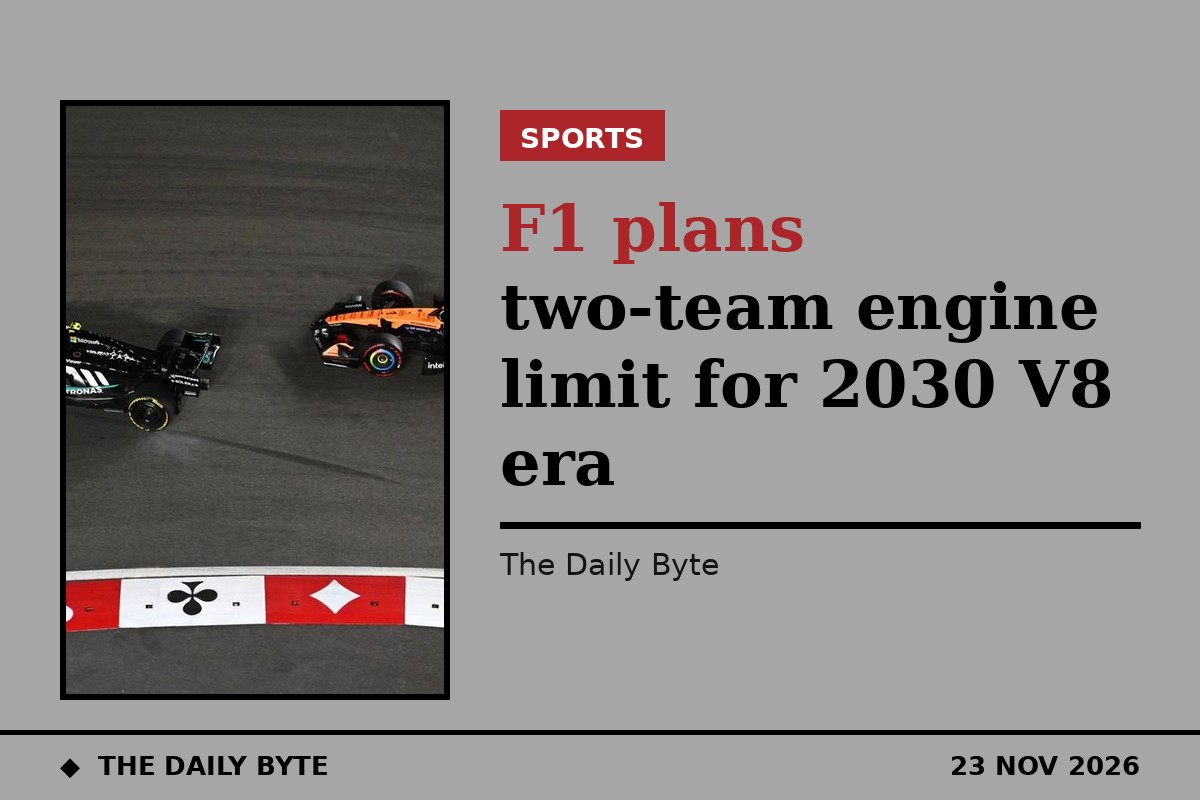
Formula 1 is planning to limit each power-unit manufacturer to supplying just two teams from 2030, a change that would force two of Mercedes' three current customer teams to find a new engine supplier. The plan emerged in a wide-ranging document on the 2030 framework produced by the FIA, and was reported by Autosport on 22 November 2026.
The limit would cover a manufacturer's works team as well as its customers, leaving only one external supply available per manufacturer. That is a sharp change for Mercedes, which currently supplies McLaren, Williams and Alpine alongside its own works team. Under the framework, two of those three teams would need another supplier if the proposal is approved.
What the 2030 framework proposes
The FIA announced on 20 November 2026 that a unanimous agreement had been reached on the 2030 power-unit technical framework between the governing body, Formula 1, the teams and the power-unit manufacturers. The framework proposes a 2.1-litre turbocharged V8 engine, with a maximum of 200 kilowatts of electric power and the use of sustainable fuels. The aim, according to the FIA, is an engine that is simpler, lighter and cheaper than the current power units. FIA says the next step is to present a definitive 2030 regulatory framework to the FIA World Motor Sport Council meeting in Shanghai next month.
Autosport reported that the six 2030 power-unit manufacturers had agreed to supply just two teams each. One aim, it reported, is to reduce the political influence of manufacturers supplying a large share of the grid, notably Mercedes and Ferrari. Manufacturers were also said to be willing to downsize because supplying engines is a loss-making operation, with supplies capped at just 18 million dollars per season. Autosport reported the two-team limit on 22 November 2026.
Why Mercedes faces the biggest question
Mercedes High Performance Powertrains currently supplies its works team in Brackley plus McLaren, Williams and Alpine. Alpine's parent company Renault recently abandoned and sold its in-house engine operation, so Alpine has no works supply of its own to fall back on. Autosport reported that both McLaren and Williams fancy their chances of remaining with Mercedes, while McLaren chief executive Zak Brown said the team had no intention of building its own engine. "It's something we've looked at in the past, but we're very happy with HPP," Brown said in Las Vegas. "I think we've proven that we can win championships with them, so we don't have any intention to have anything in the back of our car other than a Mercedes."
Ferrari's position is less exposed. Ferrari currently supplies its works team, Haas and Cadillac, but Cadillac will move to in-house engines from 2030, so that question largely resolves itself. Red Bull Powertrains will supply Red Bull Racing and Racing Bulls, two teams already, while Audi, Aston Martin partner Honda and Cadillac shareholder General Motors will each have their own works team as their only confirmed customer.
What still has to be decided
Nothing is final yet. The framework still needs approval from the FIA World Motor Sport Council, which is due to consider it in Shanghai next month. An "obligation to supply" clause would remain, meaning the FIA could force a manufacturer to supply an additional, third team if a team cannot arrange a deal. Autosport also reported that the FIA's proposed third-party, off-the-shelf engine plan is now dead, and that the power-unit cost cap will remain at 190 million dollars for 2030 before falling by 7.5 million dollars a year to 160 million dollars for 2034. With six manufacturers each able to supply two teams, there would be at least 12 power-unit supplies available for 11 teams.
Frequently asked questions
How many teams could each F1 engine maker supply in 2030? Two teams in total, including its own works team, leaving one external customer supply per manufacturer, under the framework reported by Autosport.
Which Mercedes customers would be affected? McLaren, Williams and Alpine are Mercedes' three current customers; two of the three would need a new supply if the proposal is approved as reported.
Has the 2030 engine plan been approved? No. The FIA, Formula 1, teams and manufacturers have unanimously agreed the framework, but it still needs approval from the FIA World Motor Sport Council in Shanghai next month.
What engine is planned for 2030? A 2.1-litre turbocharged V8, with a maximum of 200 kilowatts of electric power and sustainable fuels, under the FIA framework announced on 20 November 2026.