FastUnlock flaw lets anyone run code on locked Windows PC
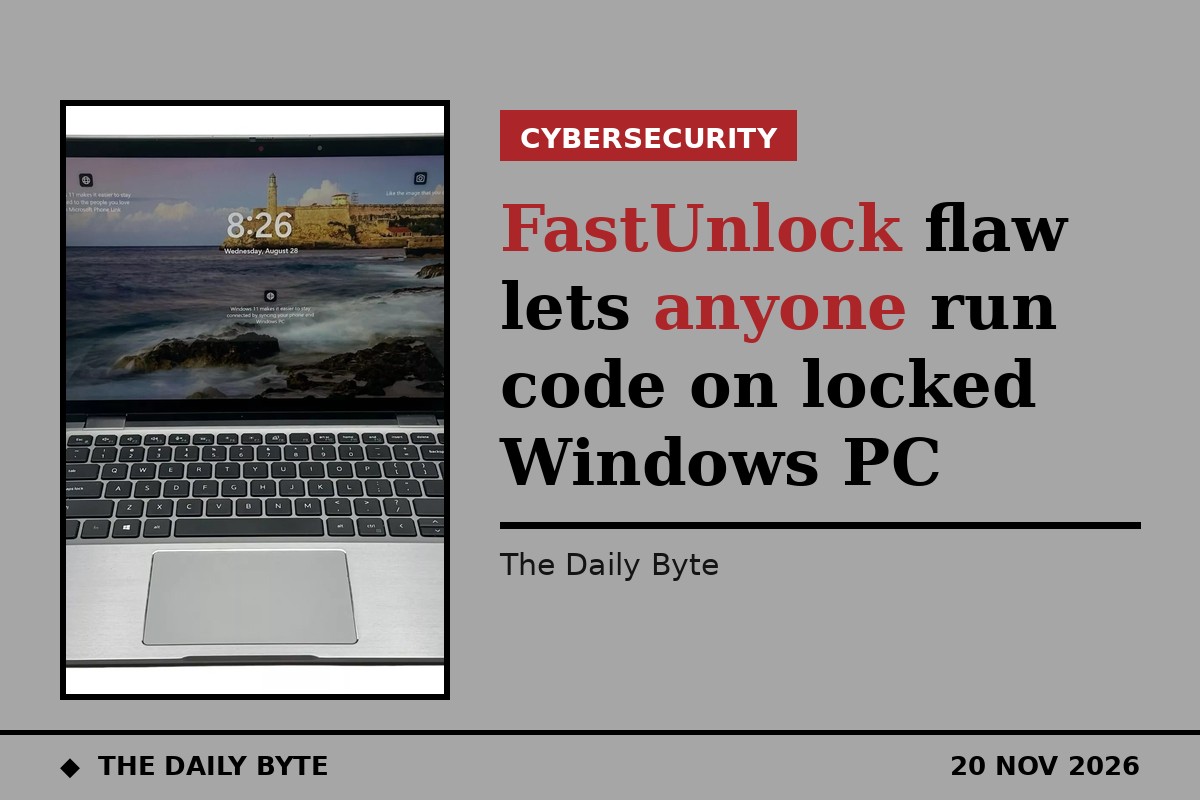
A researcher has disclosed an unpatched Windows flaw that lets anyone with physical access to a locked computer run programs on it without signing in. FastUnlock was posted to GitHub on 19 November by the researcher MSNightmare, and ThreatLocker confirmed it works the same day.
Microsoft has issued no fix, CVE number or public statement, and nothing suggests the method has been used in a real attack.
How it works
The attack starts on the lock screen's account-recovery page — the "I forgot my PIN" link tied to a Microsoft account. Pressing Win+U there launches Narrator, Windows' built-in screen reader, which focuses on an invisible background window. Caps Lock and arrow keys then reach a link labelled "Math reading settings".
From Settings, Bluetooth & devices and AutoPlay lead to code execution: plug in a USB drive, open it in File Explorer and launch a file. Anything started this way runs as WSIAccount, the lock screen account — not as an administrator. The researcher says he reached that point in five minutes on a fully patched Windows 11 26H2 machine, without running the final USB step himself.
BitLocker no help
BitLocker does not block the attack in the usual setup: the TPM chip unlocks the drive automatically at startup, so by the time the lock screen appears the files are already readable. FastUnlock does not break the encryption or recover its key. It needs physical access and at least one account linked to a Microsoft account.
Until there is a patch
ThreatLocker recommends a BitLocker startup PIN, which protects a machine that is powered off or hibernated — not one already on the lock screen. Microsoft's guidance is the same: use a startup PIN and shut down or hibernate machines when they leave their owner's control.
Sources: The Hacker News; Cybernews.


