FCDO Warns of Sudden Escalation in Middle East
The Foreign Office has updated its travel advice for 15 countries and regions across the Middle East, warning British travellers that the situation remains “deeply unpredictable” and the risk of sudden escalation is high.
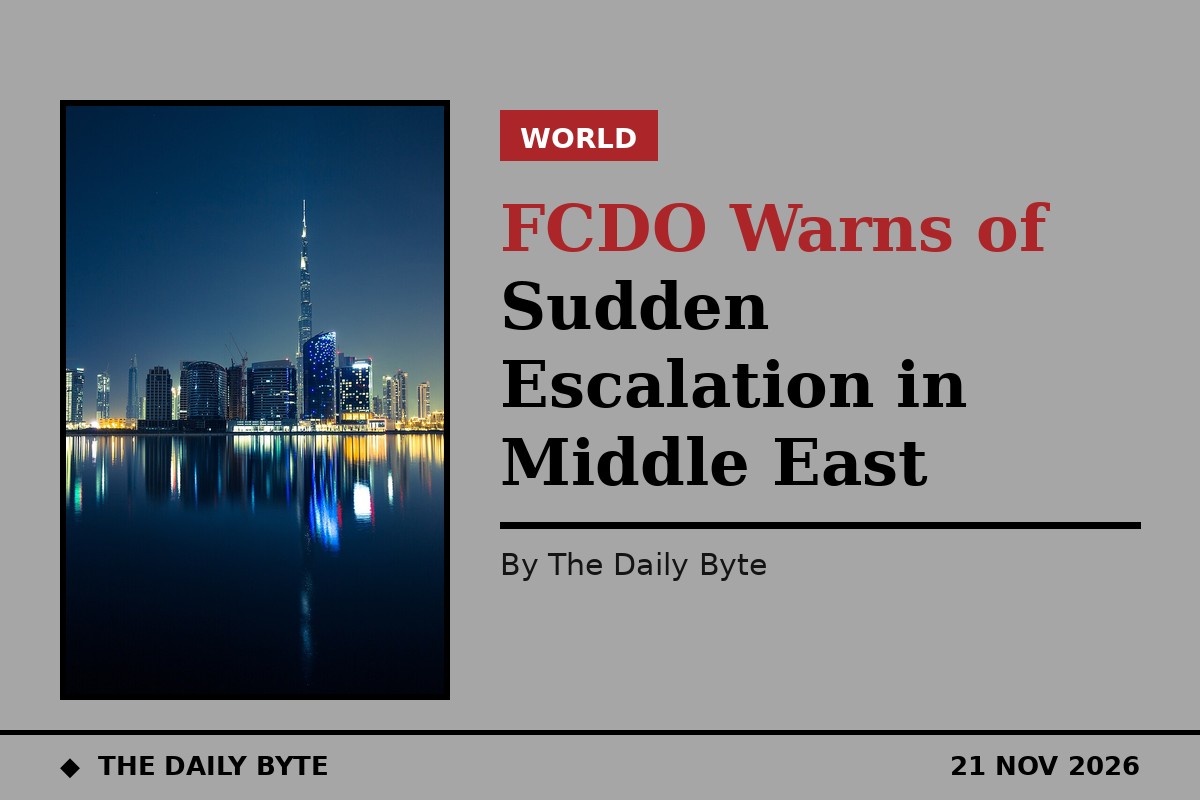
The updates were published on Wednesday, 18 November, and cover Turkiye, the United Arab Emirates, Qatar, Bahrain, Saudi Arabia, Oman and Jordan, as well as Israel, Palestine, Pakistan, Kuwait, Syria, Yemen, Iraq and Iran. They come as the region heads into what is normally the peak season for winter sun holidays in destinations such as Dubai.
In its regional warning, the Foreign, Commonwealth and Development Office said: “The context in the Middle East remains deeply unpredictable and the risk of sudden escalation is high. Since conflict began in early 2026, Iran has stated its intention to target locations associated with the US and Israel, including, but not limited to, organisations, businesses, facilities, and institutions.”
The advice adds: “There have been strikes and retaliatory attacks by Iran and others across the region against civilian and military infrastructure. There remains a risk of further attacks across the region at short notice.”
Flights and airspace could be disrupted
British nationals in, or planning to travel through, the Middle East should be prepared for possible flight cancellations, airspace closures and travel disruptions, the advice says. Travellers are told to follow the instructions of local authorities, monitor local and international media, and keep an eye on updates about airports and airspace, which can close at short notice.
The updates were issued as reports emerged of drone attacks early on Wednesday by Iran against US military bases in Kuwait and Bahrain, in an apparent escalation of the conflict. The strikes came hours after the US reportedly hit sites on Iran’s Qeshm Island in the Strait of Hormuz, in response to attacks on ships in the waterway.
Kuwait said it had activated its air defences to counter drone strikes, the first such incident since early September. Bahrain said it had blocked an Iranian attack early on Wednesday, a day after the US struck a missile launch site on Qeshm Island.
What travellers should do
The advice does not tell British travellers to cancel holidays to the main resort areas. The Foreign Office still does not advise against travel to Dubai, Qatar or the Mediterranean coast of Turkiye, and the areas it does advise against are unchanged and lie well away from the main holiday destinations.
But the warning matters for anyone booked to travel in the coming weeks, and for anyone connecting through Dubai or Doha on the way to the Maldives, Asia or Australia. Airports and airspace in the region can close at short notice, and a change in the advice after booking can affect travel insurance cover, since travelling against Foreign Office advice can invalidate a policy.
Travellers should check the latest advice for their destination on GOV.UK before they travel, keep their departure plans under review, keep passports and other documents up to date, and sign up for the Foreign Office’s email alerts, which arrive whenever a country’s advice changes.
The conflict between the US and Israel on one side and Iran on the other began in February 2026 and is now in its ninth month, with fighting also spreading to Yemen and the Red Sea. The Foreign Office warning underlines that, nine months on, British travellers cannot assume the region is settling down.