FDA Orders Eye Warning on Ozempic and Zepbound
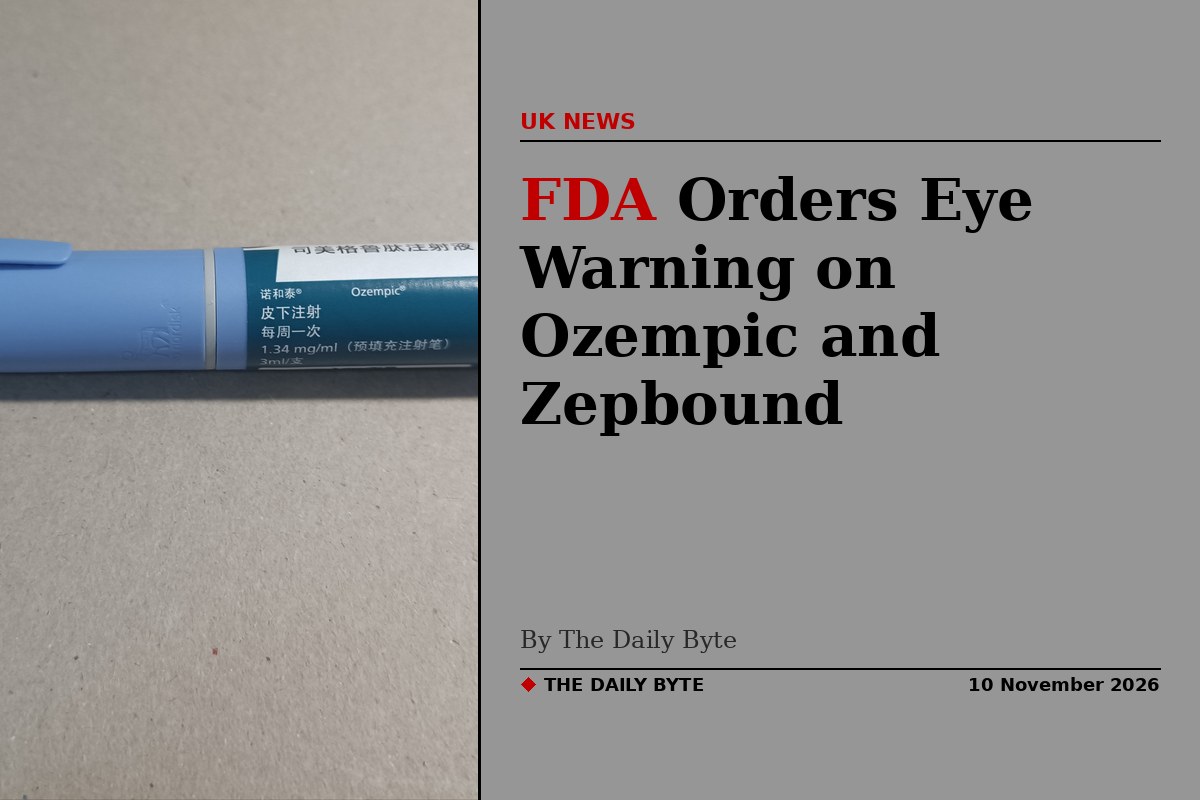
The US Food and Drug Administration (FDA) has ordered makers of every GLP-1 weight-loss and diabetes drug, including Ozempic, Wegovy, Mounjaro and Zepbound, to add a warning about a rare eye condition that can cause sudden, permanent vision loss.
The requirement, announced in a drug safety communication on Monday, 9 November 2026, covers all glucagon-like peptide-1 receptor agonists (GLP-1 RAs). Manufacturers must add information about the potential increased risk of non-arteritic anterior ischemic optic neuropathy, known as NAION, to the Warnings and Precautions section of each drug's label.
What NAION is
NAION happens when blood flow to the front of the optic nerve drops. The FDA describes it as a rare condition that can result in acute, painless, decreased vision in one eye, including permanent vision loss. Its underlying cause is not completely understood.
The symptoms to watch for are sudden, painless vision loss in one eye, which people may first notice when they wake up, along with blind spots or tunnel vision, distorted colours and reduced central sharpness. The FDA advises patients to report any such change immediately and to be referred promptly to an ophthalmologist.
Risk factors for NAION overlap with conditions common in people taking GLP-1 drugs, including smoking, diabetes, high blood pressure, sleep apnoea, anaemia and kidney disease.
What the FDA's review found
The review began after a study published in July 2024 in JAMA Ophthalmology reported an association between semaglutide and NAION. The FDA said that study had several limitations, but decided the possible risk warranted a closer look, and examined clinical trial data, animal data and post-marketing reports, including observational studies and case reports.
Its meta-analysis pooled 126 randomised controlled trials covering 134,253 patients and 288,879 person-years of exposure. It found 15 probable NAION events: 10 in patients taking a GLP-1 drug, five in patients on a placebo, and none in patients taking another glucose-lowering drug. That gave an incidence rate of 6.4 events per 100,000 person-years on GLP-1 drugs, against 3.8 per 100,000 in the comparison groups.
A separate real-world study using the FDA's Sentinel data system, covering adults with type 2 diabetes who started a GLP-1 drug or another common diabetes medicine between 2019 and 2024, found NAION rates of 26 to 32 events per 100,000 person-years across the groups. There was no statistically significant increase in risk against SGLT-2 inhibitors, but an increased risk was seen against DPP-4 inhibitors. The FDA said published observational studies consistently reported an increased risk in people with type 2 diabetes who started GLP-1 drugs, compared with those starting DPP-4 or SGLT-2 drugs.
The agency was clear about the limits of the evidence. Its review of animal data found no mechanism by which GLP-1 drugs could raise the risk, and the number of events in the trials was small. Novo Nordisk, which makes Ozempic and Wegovy, told Reuters it continues to believe the data do not establish a cause-and-effect relationship.
Which drugs are covered
The labelling change applies to about a dozen products. The FDA's list includes semaglutide (Ozempic, Wegovy and Rybelsus), tirzepatide (Mounjaro and Zepbound), liraglutide (Victoza and Saxenda), dulaglutide (Trulicity), the combination products Xultophy and Soliqua, and orforglipron (Foundayo), which was approved earlier this year. NAION cases have been reported for every GLP-1 product currently on the market, the agency said.
European regulators moved earlier on semaglutide. Last year the European Medicines Agency's safety committee said NAION may affect up to 1 in 10,000 people taking semaglutide for at least a year, according to Reuters.
The drugs are widely used in the UK as well as the US, for type 2 diabetes and for weight management, with Mounjaro available on the NHS under strict criteria and other products available privately. The FDA action is a US labelling change, not a UK one, and it does not mean the drugs have been withdrawn. Patients who notice a sudden change in their vision should seek urgent medical advice and should not stop treatment without speaking to a clinician first.