Felix Ngole wins Court of Appeal discrimination case
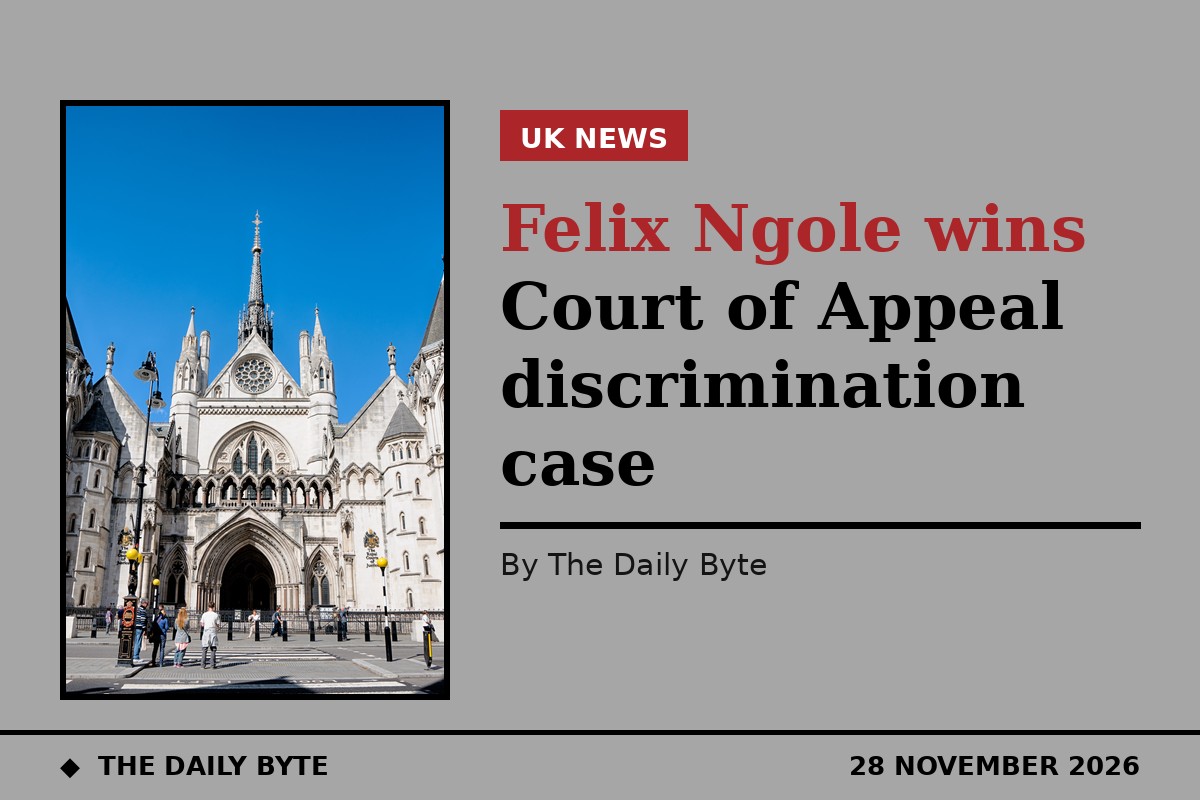
The Court of Appeal has ruled that a Leeds mental-health charity unlawfully discriminated against a Christian social worker when it refused him a job because of his religious views on same-sex marriage. In a two-to-one majority decision handed down on Friday, 27 November, the court found in favour of Felix Ngole, a social worker from Barnsley, and dismissed the charity's cross-appeal.
The case concerned a job with Touchstone, a Leeds-based mental-health charity. In May 2022 Mr Ngole was offered the role of hospital discharge mental health support worker, supporting patients leaving Pinderfields Hospital in Wakefield. Weeks later the charity withdrew the offer after an online search uncovered news reports about an earlier court case Mr Ngole had brought against the University of Sheffield. Touchstone told him his views went against its own position, but offered to reconsider if he could show his beliefs would not affect his work. After a second interview, the charity decided not to offer him the post, saying service users could find his comments upsetting and offensive.
A dispute with roots in 2015
The earlier case dated back to 2015, when Mr Ngole was studying for a master's degree in social work at the University of Sheffield. The university removed him from the course after he wrote on Facebook, during a discussion about a county clerk in the United States who had refused to issue marriage licences to same-sex couples, that homosexuality was a sin and that he opposed same-sex marriage. Mr Ngole challenged the decision, and in 2019 the Court of Appeal ruled in his favour, finding the university had wrongly confused the expression of religious views with discrimination. It was reports of that case that Touchstone found when it searched for his name.
Tribunals and the Court of Appeal
In 2024 an employment tribunal ruled that Touchstone had directly discriminated against Mr Ngole by withdrawing the original job offer, but it rejected his complaints about the second interview and the final decision not to employ him. In February this year an employment appeal tribunal judge found the tribunal had made an error of law in its analysis of some of the complaints and sent the case back for reconsideration. Mr Ngole challenged that decision, and the Court of Appeal heard the appeal in September.
Lady Justice Elisabeth Laing and Lord Justice Miles formed the majority. Lady Justice Laing said Mr Ngole's public expression of his beliefs had happened long before he applied for the job, and that she could not accept that a lawful expression of belief could become objectionable simply because of the nature of the job he sought. Lord Justice Miles said Touchstone had been significantly influenced by media reporting about Mr Ngole's views, which he said might offend many people but had been expressed in an objectively unobjectionable manner. Lord Justice Bean dissented, taking the view that the charity's concerns about vulnerable patients justified its decision.
The court also refused Touchstone permission to appeal to the Supreme Court. The majority held that the charity had committed direct discrimination, the most serious form of discrimination under the Equality Act 2010, and that no further tribunal hearing was needed to decide liability. The judgment turned in part on Higgs v Farmor's School, a 2025 Court of Appeal decision that drew a line between discrimination because of a protected belief and proportionate action in response to an objectionable way of expressing it. The court found Mr Ngole's case fell on the discrimination side of that line.
Reaction
Mr Ngole, who was supported throughout by the Christian Legal Centre, described the ruling as an important victory for his family and for Christians across the country. He said he had never discriminated against anyone, and that there was no evidence he would treat any service user without dignity, compassion and respect.
The ruling is likely to be studied closely by employers and charities, because it limits the scope for refusing a job to someone on the basis of views they have expressed publicly in the past, even where an employer fears the effect on its reputation or on the people it serves. Touchstone had argued it acted out of concern for vulnerable service users, and Lord Justice Miles accepted the charity had been benignly motivated, but the majority held that a benign motive was no answer to a claim of direct discrimination.


