FinCEN Takes Systems Offline After Cyber Intrusion
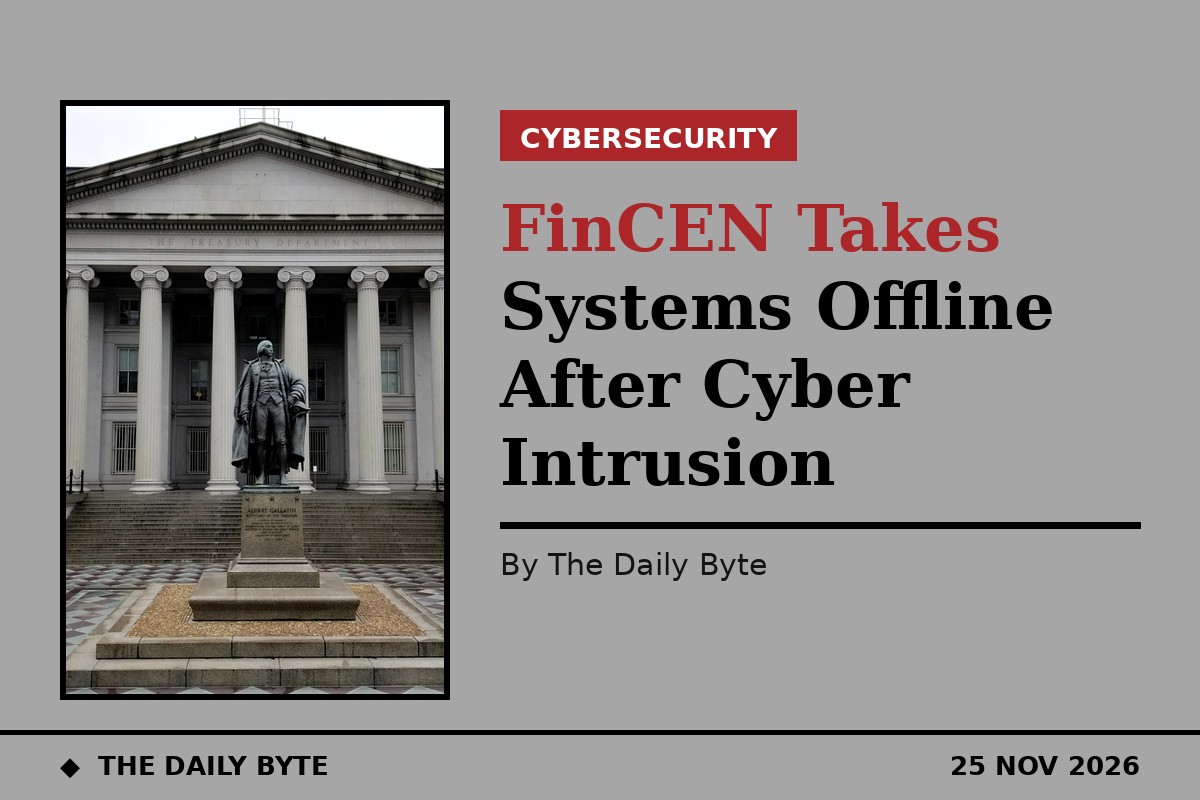
The US Treasury's Financial Crimes Enforcement Network, known as FinCEN, has taken some of its systems offline after a cybersecurity incident gave an intruder unauthorised access to a limited subset of its systems. The bureau disclosed the incident on Tuesday, and said it was working with the FBI, the Cybersecurity and Infrastructure Security Agency and outside forensic examiners to establish the scope and impact.
FinCEN is the Treasury bureau that collects suspicious activity reports and other Bank Secrecy Act filings from banks and financial institutions, and analyses them to fight money laundering and terrorist financing. It holds some of the most sensitive financial intelligence in the US government, which is why even a limited intrusion has drawn close attention. The bureau has not said which systems the intruder reached, when the access began, whether any data was viewed or taken, or who was responsible. No group has publicly claimed the intrusion.
Filing deadlines extended to 30 December
The disruption is already affecting the bureau's day-to-day work. The Bank Secrecy Act E-Filing website remains up, but FinCEN says some services may be temporarily unavailable. Filing providers had reported failures in automated batch submissions since 18 November, and the bureau posted a notice about disruption to its Secure Direct Transfer Mode, the channel banks use to send batches of reports directly from their own servers, late last week. FinCEN has not said whether the intrusion caused those outages.
To support filers caught by the disruption, FinCEN issued a relief order, FIN-2026-R002, on Tuesday. Covered reports originally due between 18 November and 29 December can now be submitted until 30 December. The relief covers financial institutions that used Secure Direct Transfer Mode as of 18 November, companies required to file a beneficial ownership information report in the covered window, and people required to update a FinCEN Identifier in the same period. All other Bank Secrecy Act duties stay in force, including the duty to monitor for suspicious transactions, and urgent information can still reach law enforcement through the Financial Institutions Hotline, which is not affected.
No evidence that key databases were breached
A FinCEN official told reporters there was no evidence of any breach of the Bank Secrecy Act database or the beneficial ownership databases, while stressing that the forensic analysis is still under way and that assessment could change. That is the most important unanswered question in the incident: whether the intruder reached the filing data itself, or only the systems around it. Until the investigation reports back, neither possibility can be ruled out.
The incident is not the Treasury Department's first in recent years. In December 2024, a China-linked group used a compromised BeyondTrust API key in a breach that reached department systems and documents. No link between that incident and this one has been reported, and FinCEN has given no indication of who is behind the current intrusion.
What happens next
For now, the practical effect falls on the institutions that file with FinCEN. Banks and other filers that cannot submit through the disrupted channels have until 30 December for the covered reports, but they must keep monitoring for suspicious activity in the meantime. The bureau says it will provide an update when its systems are restored. Until then, the incident is a reminder of how much of the financial system's defences rest on a single bureau's filing infrastructure, and how quickly a limited intrusion can ripple into compliance deadlines across the industry.