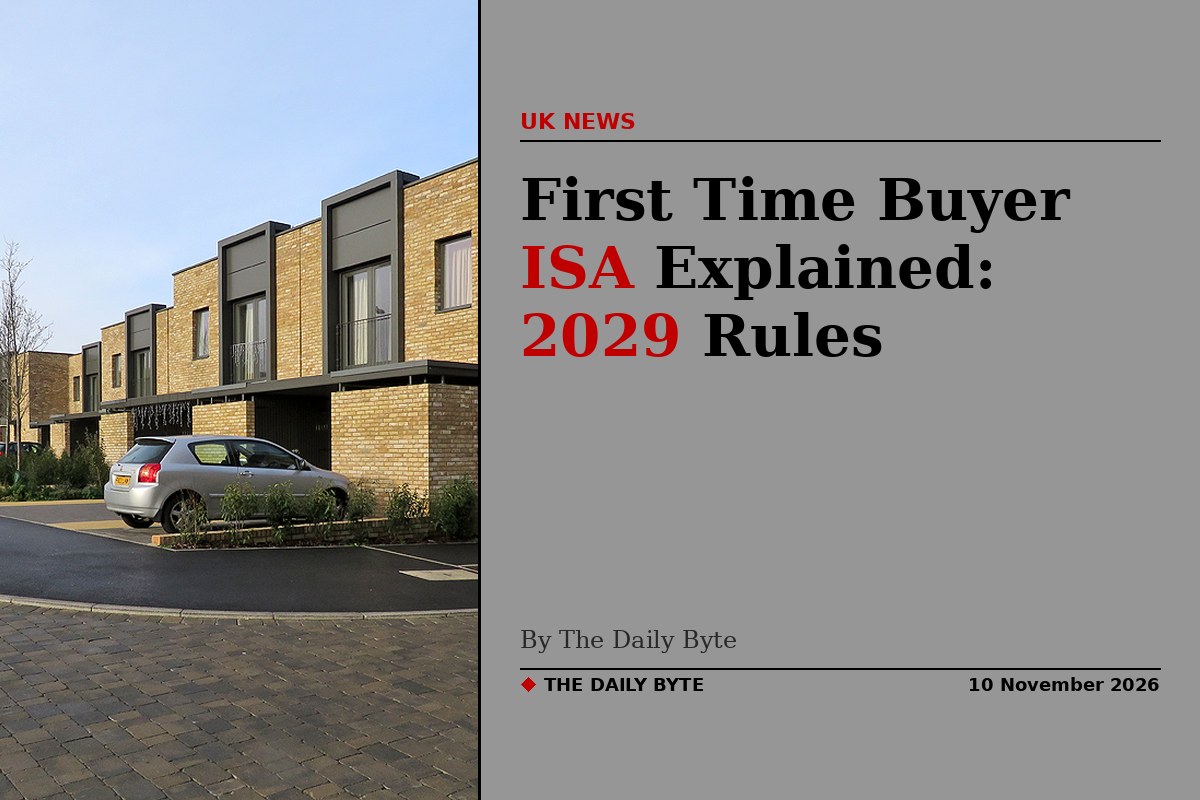
First Time Buyer ISA Explained: 2029 Rules
The First Time Buyer ISA is a new savings account announced in the Autumn Budget 2026 that will replace the Lifetime ISA for new savers from 6 April 2029. Savers will be able to put in up to £4,000 a year, and the government will add a 25% bonus when the money is withdrawn to buy a first home, up to a total bonus of £20,000. The home must cost no more than £450,000, and there will be no upper age limit for opening the account.
Chancellor John Healey announced the change in his first Budget, delivered on 28 October 2026. The new account cannot be opened yet, and the detailed rules have not been published in full, so anyone saving for a first home today still uses the existing Lifetime ISA. This guide sets out what has been confirmed, what changes for people who already hold a Lifetime ISA, and what remains undecided.
What is the First Time Buyer ISA?
The First Time Buyer ISA is a tax-free savings account designed for one purpose: helping people save a deposit for their first home. It was announced in Budget 2026 as the replacement for the Lifetime ISA for new savers. The government has confirmed the main figures, but the account will not launch until 6 April 2029, and providers will need time after that date to offer it.
The confirmed details are straightforward. Savers will be able to contribute up to £4,000 in each tax year. A government bonus of 25% will be paid on the value of the account when the money is withdrawn for a qualifying first-home purchase. The total bonus a saver can receive over the life of the account will be capped at £20,000. The home bought with the money must cost no more than £450,000. Unlike the Lifetime ISA, the new account will have no upper age restriction, so older first-time buyers will not be shut out by an age limit.
The timing matters. The Budget document states that the new First Time Buyer ISA will launch from 6 April 2029. That is more than two years after the announcement, so the account is a plan for the future rather than something savers can open now. Anyone who wants to start saving for a first home before then will need to use the accounts that already exist.
How is it different from the Lifetime ISA?
The biggest difference is when the government bonus is paid. Under the current Lifetime ISA, the 25% bonus is added as the saver pays money in, up to £1,000 of bonus in each tax year. Under the First Time Buyer ISA, the bonus will instead be paid when the money is withdrawn for a qualifying first-home purchase, calculated on the value of the account balance at that point.
That change removes one of the most criticised features of the Lifetime ISA: the withdrawal charge. At present, taking money out of a Lifetime ISA for any reason other than a qualifying first-home purchase, or after the age of 60, or because of terminal illness, normally triggers a 25% charge on the whole withdrawal, which can eat into the saver's own contributions as well as the bonus. The Budget document says the new design avoids the need for any withdrawal charge, because the bonus is only paid when the money is used for a qualifying purchase in the first place.
The second difference is the age rule. The Lifetime ISA can only be opened by people within a set age range, which has excluded some older first-time buyers. The First Time Buyer ISA will have no upper age restriction, according to the Budget document. The government has not yet confirmed every other eligibility rule, such as how long the account must be held before a purchase, so those details should be checked when the full rules are published.
The third difference is the total bonus. Under the Lifetime ISA, the bonus is £1,000 a year at most. Under the First Time Buyer ISA, the bonus will be 25% of the account balance on withdrawal, capped at £20,000 in total. A saver who reaches the £20,000 cap would need an account balance of £80,000 at withdrawal, which shows that the cap is aimed at long-term savers rather than at people saving for a single year.
What are the First Time Buyer ISA limits?
The limits confirmed in Budget 2026 are:
- Annual contribution limit: up to £4,000 in each tax year.
- Government bonus: 25% of the account balance, paid on withdrawal for a qualifying first-home purchase.
- Maximum total bonus: £20,000 over the life of the account.
- Maximum property price: £450,000 for the first home bought with the money.
- Launch date: from 6 April 2029.
- Age limit: no upper age restriction for opening the account.
- Who it replaces: the Lifetime ISA, for new savers only.
Those figures should be treated as the announced design. The government still has to pass legislation and publish detailed rules, and providers have to build the product, so small details could change before April 2029. The headline figures, however, were set out in the Budget documents published on 28 October 2026, and they are the figures savers should use when planning.
What happens to existing Lifetime ISA holders?
Existing Lifetime ISA holders will be able to continue contributing to and using their accounts under the current rules. The government has been clear on this point: the Lifetime ISA is not being closed for people who already hold one, and the First Time Buyer ISA replaces it only for new savers.
There is also an immediate change that already helps some existing holders. From 29 October 2026, the Lifetime ISA withdrawal charge falls from 25% to 20% for existing holders who use their savings to buy a first home above the current £450,000 property price cap, provided the purchase otherwise meets the qualifying rules. The standard 25% charge still applies to other withdrawals that do not qualify, so the cut is narrow, but for buyers in higher-priced areas it means they no longer lose part of their own contributions through the charge in the way they did before.
That change took effect the day after the Budget, while the new account is still more than two years away. It is a useful reminder that the two changes work on different timetables: the withdrawal-charge cut is already in force, and the First Time Buyer ISA is a future product.
What else did the Budget change for first-time buyers?
The First Time Buyer ISA was not the only first-time buyer measure in the Budget. The government also announced a new Your First Home scheme, which could allow eligible buyers to purchase qualifying new-build properties in England with a deposit of just 2.5%, supported by a government-backed equity loan. The scheme is aimed at helping 70,000 people onto the property ladder, according to reports of the Budget announcement, but its detailed eligibility rules have not been published in full.
The Budget also reversed a planned cut to the cash ISA allowance. The annual cash ISA limit for savers under 65 had been due to fall, but it will remain at £20,000. That matters for first-time buyers who keep their deposit savings in cash while they decide when to buy, because the full £20,000 allowance stays available.
Taken together, the measures point in the same direction: the government wants first-time buyers to be able to save more, with less risk of losing money to a withdrawal charge, and with a lower deposit for new-build homes. None of the measures, on its own, solves the problem of high house prices, and the First Time Buyer ISA in particular will not help anyone who needs to buy before April 2029.
Should you wait for the First Time Buyer ISA?
For most people, waiting is not the right approach. The new account cannot be opened until April 2029, and a saver who waits until then loses more than two years of saving time. Someone who plans to buy before 2029 should look at the Lifetime ISA, and at ordinary cash savings, on the rules that apply today.
Someone who already holds a Lifetime ISA should not rush to close it. Existing holders keep their accounts under the current rules, and the withdrawal charge for a first home above the £450,000 cap has already fallen to 20%. Closing an account now, and paying a withdrawal charge to do so, would be a costly way to wait for a product that does not yet exist.
Someone who does not yet hold a Lifetime ISA, and who expects to buy after April 2029, still has a choice to make. Opening a Lifetime ISA now starts the clock on the account, and the bonus is added as savings are paid in. Waiting until 2029 means starting from nothing, but with a product that has no withdrawal charge and no upper age limit. The right choice depends on when the buyer expects to purchase, how much they can save each year, and whether they meet the current Lifetime ISA age rules. Because the full rules for the new account have not been published, no one can yet make a firm comparison, and savers should check the official guidance when it appears.
What is still not decided?
Several important details remain undecided. The government has said it will work with the investment industry on the detailed design of the new account, and legislation will be needed before providers can offer it. The questions that still need answers include the minimum holding period before a purchase, the exact definition of a qualifying first home, what happens if a saver changes their mind and does not buy, and whether the account can be used alongside other ISAs in the same tax year.
The Your First Home scheme also needs detailed rules, including which new-build properties qualify, who is eligible, and how the equity loan is repaid. Until those rules are published, buyers should treat the headline figures as announcements, not as a finished product they can apply for.
The safest approach is to follow the official Budget documents and GOV.UK guidance as they are updated. The figures in this guide come from the Budget 2026 documents published on 28 October 2026, and they will be updated here if the government changes them.
Frequently asked questions
When does the First Time Buyer ISA launch? From 6 April 2029, according to Budget 2026. It cannot be opened before then.
How much can I save in a First Time Buyer ISA? Up to £4,000 in each tax year, with a 25% government bonus on withdrawal for a qualifying first-home purchase, capped at £20,000 in total.
What is the maximum house price? The first home bought with the money must cost no more than £450,000.
Is there an age limit? The new account will have no upper age restriction, unlike the Lifetime ISA.
What happens to my Lifetime ISA? Existing holders can keep contributing and using their accounts under the current rules, and the withdrawal charge for a first home above £450,000 fell from 25% to 20% on 29 October 2026.
Can I open a First Time Buyer ISA now? No. The account launches in April 2029, and providers have not yet been able to offer it.
Sources: Budget 2026: Overview of tax legislation and rates, GOV.UK and Barclays, Autumn Budget 2026: Key takeaways. This is general information, not financial advice. Check the official GOV.UK guidance, as the rules may change before the account launches.